Pocket Tissue Production Line: Equipment Needed to Produce Travel Tissue Packs
A pocket tissue production line is an automated system that converts large tissue rolls into retail-ready packs. It involves a series of specialized machines for unwinding jumbo rolls, embossing, folding, cutting, and packing tissues. Key equipment includes unwinding systems, folding machines, and cutting/counting systems for precision manufacturing. The setup accommodates varying pack sizes and integrates automatic packing and labeling systems for efficiency. Further exploration reveals insights about manufacturing processes, equipment choices, and operational requirements.
Key Takeaways
- The pocket tissue production line converts large rolls into retail-ready packs using advanced converting machines and automated processes.
- Key stages include unwinding jumbo rolls, embossing, folding, cutting, packing, and labeling for efficient output.
- Essential equipment includes jumbo roll unwinding systems, folding machines, and cutting/counting systems for precise production.
- Automatic packing machines wrap products in flexible film, while resealable label applicators enhance branding and user convenience.
- Quality control measures ensure packaging integrity, appearance, and compliance with specifications throughout the production process.
What Is a Pocket Tissue Production Line?
A pocket tissue production line is a specialized tissue converting and packaging system that efficiently transforms large parent tissue rolls into folded, counted, wrapped, and retail-ready travel tissue packs. This complete pocket tissue production line involves a sequential pocket tissue manufacturing process, utilizing advanced pocket tissue converting machines to cut and fold the tissue sheets. The output can include various formats, such as six-sheet, eight-sheet, and scented tissues. Following conversion, a pocket tissue packaging machine securely wraps these products, ensuring they are ready for retail distribution. Automation levels vary, with options for automatic pocket tissue machines enhancing efficiency. Manufacturers must select equipment based on product specifications, output targets, and packaging requirements to optimize production. Additionally, the incorporation of advanced technologies can significantly improve production speed and quality. DeChangYu offers integrated solutions for this industry.
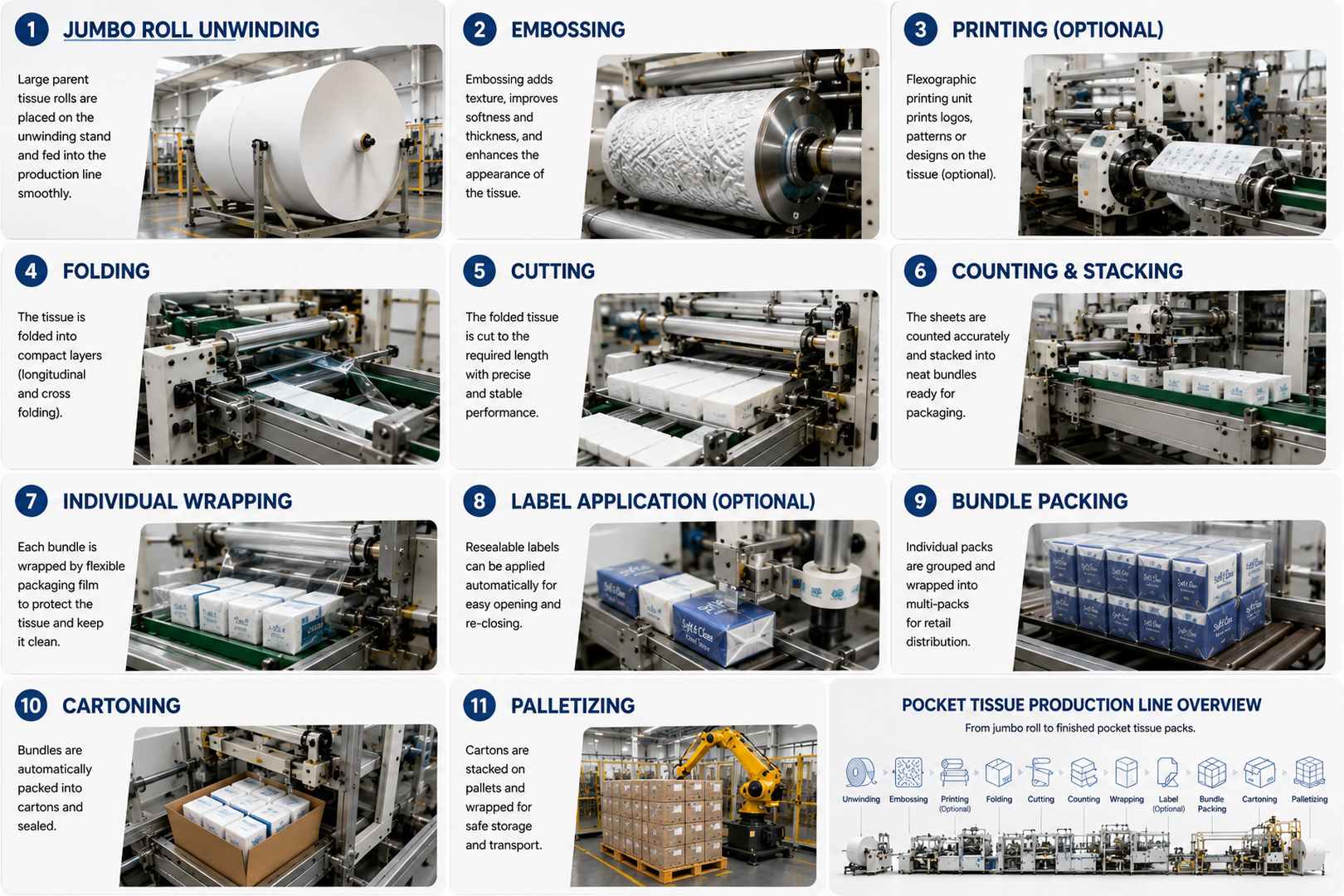
How Are Pocket Tissues Manufactured?
Manufacturing pocket tissues involves a continuous sequence of converting and packaging operations that transforms jumbo tissue rolls into retail-ready products. The process typically follows these stages:
| Stage | Description |
|---|
| Unwinding | Jumbo rolls are unwound for processing. |
| Gofragem | Texture is added to improve softness and appearance. |
| Folding and Cutting | The pocket tissue folding machine folds and cuts the tissue into the required size. |
| Packing | The pocket tissue packing machine wraps and bundles the finished tissue packs. |
Production lines may utilize integrated machines to streamline operations, reducing manual handling and improving consistency. Alternatively, separate machines connected via conveyors can be employed, enhancing flexibility in the travel tissue production line. Ultimately, the choice of equipment, such as handkerchief tissue machines, is essential for optimizing output and efficiency. Additionally, advanced automation and smart technology play a crucial role in optimizing production speed and accuracy.
Equipment Needed for a Pocket Tissue Production Line
The equipment needed for a pocket tissue production line is critical for achieving efficiency and quality in manufacturing. Essential components include a Jumbo Roll Unwinding System, an Embossing and Ply-Bonding Unit, a Flexographic Printing Unit, a Pocket Tissue Folding Machine, and a Cutting and Counting System. Each machine plays a specific role in the production process, ensuring that the final product meets industry standards and consumer expectations. Additionally, incorporating automated packaging systems can significantly enhance workflow efficiency and minimize the risk of errors during production.
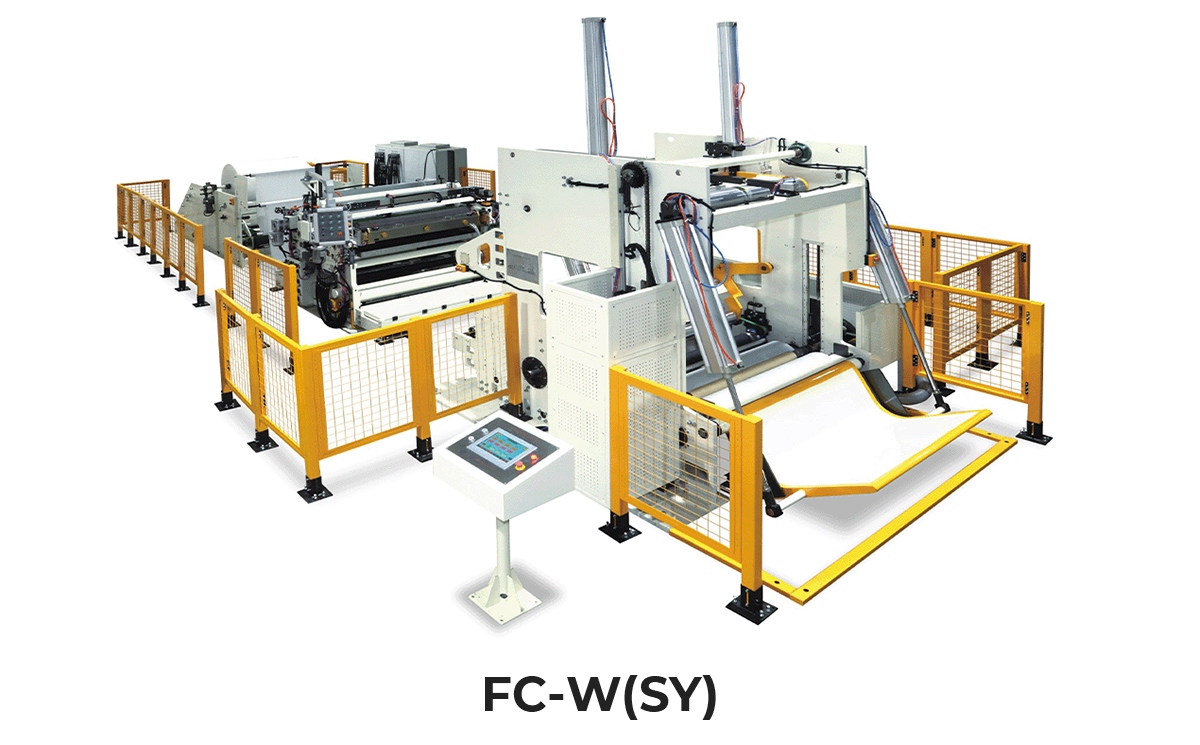
Jumbo Roll Unwinding System
Critical to the efficiency of a pocket tissue production line, the jumbo roll unwinding system serves as the backbone for feeding large parent tissue rolls into the manufacturing process. This system supports multiple plies while ensuring stable paper feeding, which is essential for the accuracy of the pocket tissue machine. It maintains controlled web tension, preventing wrinkles and paper breaks that can compromise product quality. Features such as pneumatic shaft loading, automatic tension control, and web guiding enhance performance. Additionally, splicing assistance and low-paper detection facilitate seamless operation and automatic roll changing minimizes downtime. A stable unwinding process is crucial for producing consistent finished packs in both pocket tissue and travel tissue packing machines, thereby enhancing overall production efficiency. Furthermore, integrating high-speed operation ensures minimal downtime, boosting productivity across the entire line.
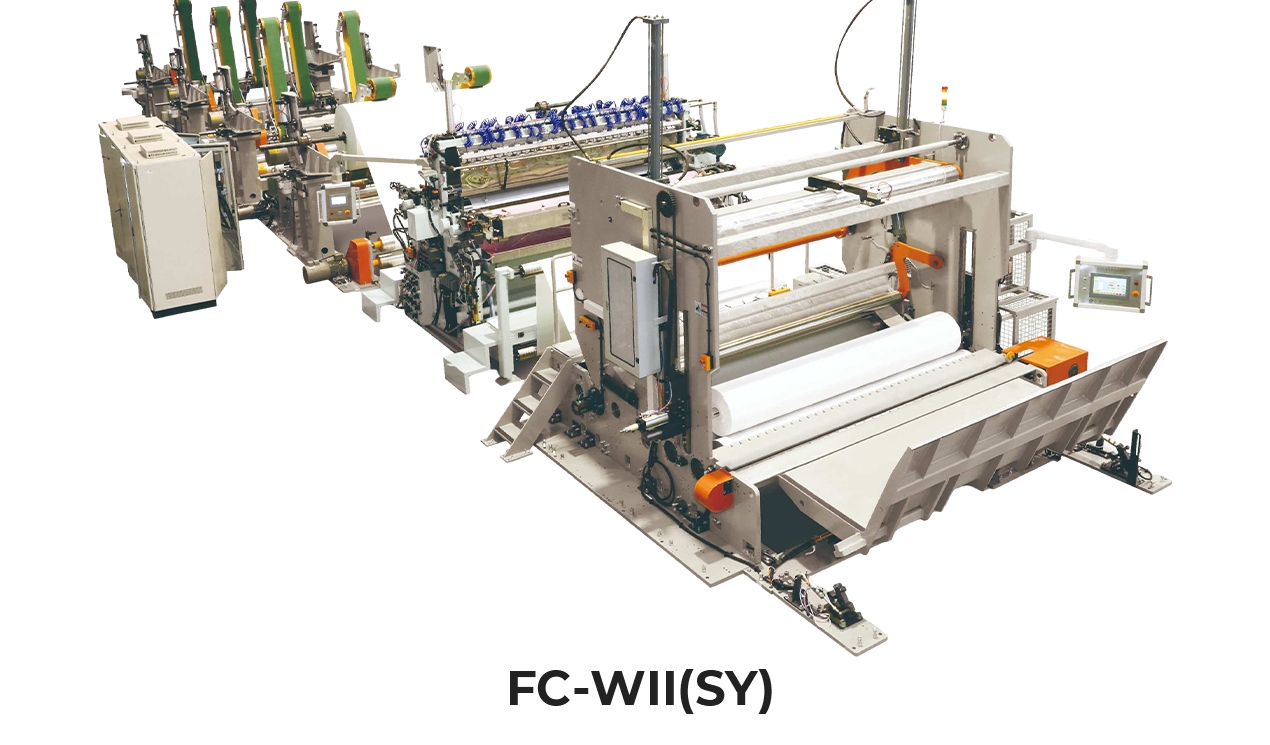
Embossing and Ply-Bonding Unit
Embossing and ply-bonding units play an essential role in enhancing the quality and appeal of pocket tissues. The embossing process introduces texture that improves aesthetics, increases perceived softness, and reinforces ply adhesion. Common embossing methods include steel-to-rubber, steel-to-steel, edge embossing, point-to-point, decorative, and logo embossing—each tailored to suit specific material properties and brand positioning. It is imperative that the embossing design aligns with the tissue material, ply count, and desired product appearance. Additionally, for enhanced ply bonding, manufacturers may incorporate lamination or glue-bonding systems. This guarantees that the final product not only meets consumer expectations but also maintains structural integrity during usage. Proper selection of these units is essential for optimizing production efficiency and product quality. Moreover, utilizing precision tissue embossing techniques can significantly elevate the overall performance of the napkins produced.
Flexographic Printing Unit
A flexographic printing unit serves as an optional yet valuable component in a pocket tissue production line, particularly for manufacturers aiming to enhance product appeal and brand recognition. This unit enables various printing options to cater to diverse market needs, such as:
- One-color and two-color printing capabilities
- Custom logo printing for branding
- Decorative patterns to attract consumers
- Utilization of water-based inks for eco-friendliness
- Advanced printing registration control for accuracy
As production speeds increase, maintaining printing accuracy becomes essential to prevent misalignment and guarantee high-quality output. This unit is especially beneficial for promotional tissue packs, branded tissues, and private-label products, thereby elevating the overall marketability of the tissue offerings. Additionally, the use of flexographic printing technology ensures efficient and cost-effective production while providing excellent print quality on delicate substrates.
Pocket Tissue Folding Machine
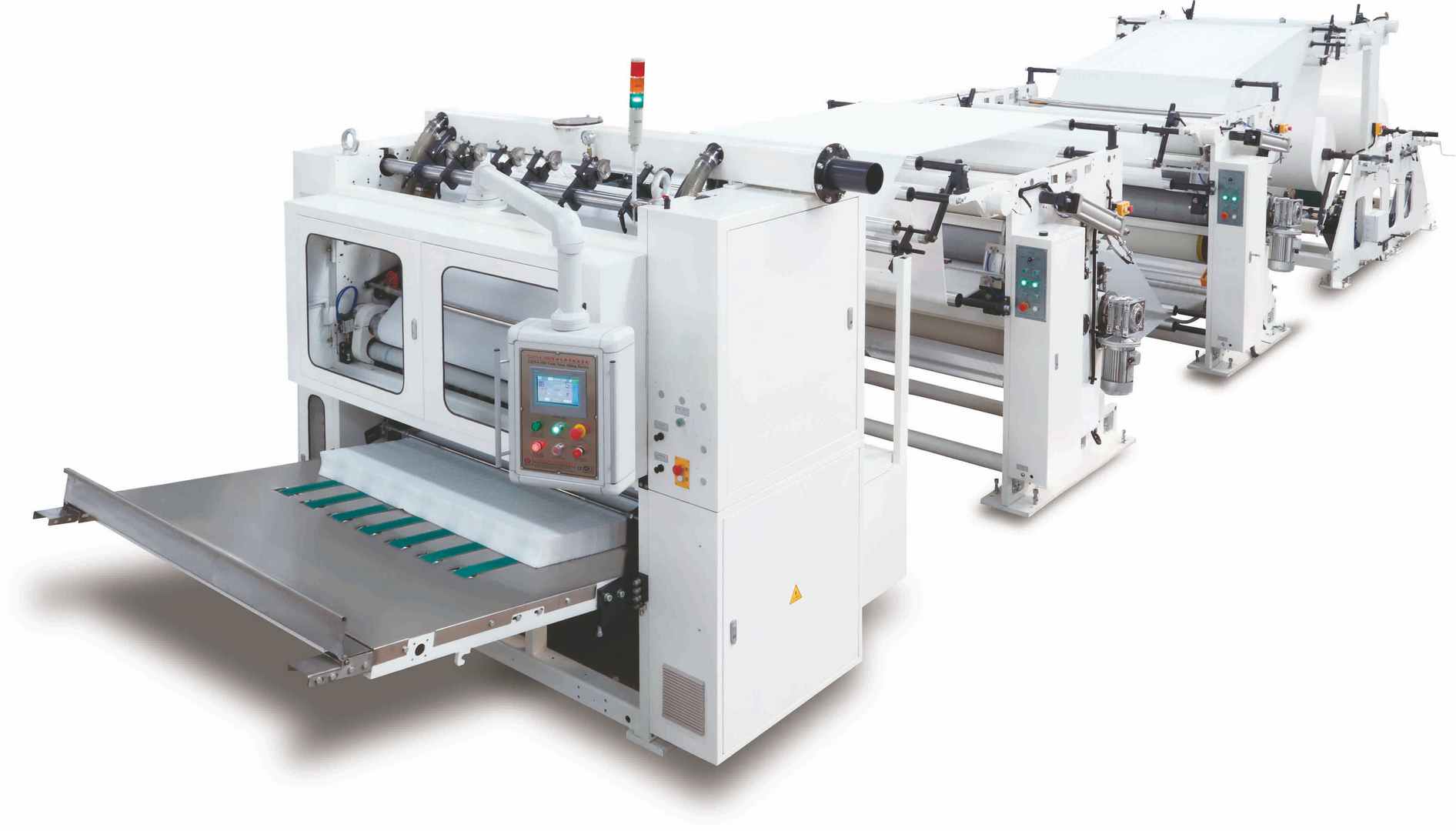
The pocket tissue folding machine serves as the central converting unit within a pocket tissue production line, playing a pivotal role in transforming raw tissue webs into finished products. Key functions include feeding the tissue web, combining multiple plies, longitudinal folding, cross folding, cutting tissues to length, counting sheets, arranging tissues into stacks, and transferring those stacks to the packing machine. This equipment is designed for high-output tissue lines, ensuring efficient production and quality output.
| Function | Description |
|---|
| Folding Styles | V-fold, Z-fold, W-fold, and Multifold configurations |
| Adjustable Parameters | Unfolded sheet size, folded tissue size, sheet count per pack, ply count, cutting length, and production speed |
Manufacturers must verify their finished-product specifications to ascertain compatibility with the machine’s design and capabilities before ordering.
Cutting and Counting System
Critical to the efficiency of a pocket tissue production line, the cutting and counting system guarantees that the continuous stream of folded tissues is accurately separated into specified retail pack quantities. This system enhances product uniformity and guarantees compliance with packaging standards, thereby fostering brand integrity and customer satisfaction. Key features of the cutting and counting system include:
- Servo-controlled cutting for precision
- Automatic sheet counting to guarantee accuracy
- Stack separation to facilitate handling
- Pack quantity adjustment for flexibility in production
- Jam detection and abnormal-pack rejection mechanisms to minimize downtime
Implementing these advanced technologies allows manufacturers to maintain consistent output and quality, thereby optimizing the overall production process. Significantly, companies like DeChangYu offer integrated solutions to enhance these capabilities. Moreover, the use of advanced technologies in these systems can significantly improve operational efficiency and sustainability in tissue production.
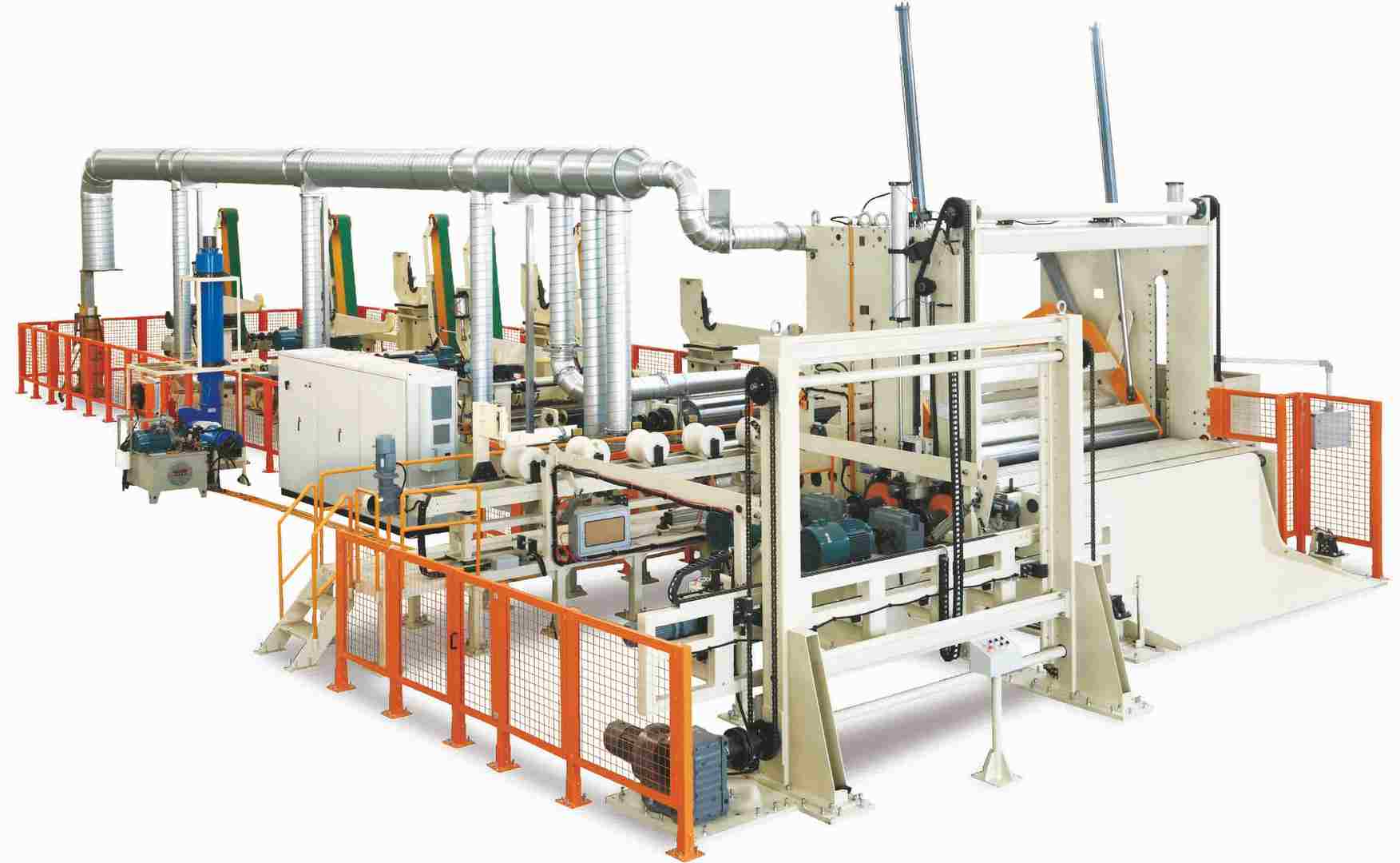
Automatic Pocket Tissue Packing Machine
When considering the efficiency of a pocket tissue production line, the automatic pocket tissue packing machine plays a vital role in ensuring that each stack of tissues is wrapped effectively in flexible packaging film. This machine typically performs functions such as film feeding, product positioning, film cutting, folding, heat sealing, side sealing, end sealing, date coding, and pack discharge. Common packaging materials include BOPP, CPP, PE-based films, printed laminated films, and recyclable mono-material films, as applicable. It is essential that the packing machine is matched to the pack dimensions, film type, sealing method, and desired output speed. Optional features like easy-open perforation and barcode printing enhance functionality and product appeal, facilitating efficient production and distribution.
Resealable Label Applicator
Effective packaging of pocket tissue packs often incorporates a resealable label applicator, which enhances user convenience and aligns with modern consumer preferences. This equipment is essential for accurately applying labels that maintain the opening position, support repeated opening and closing, and improve overall convenience for consumers. Additionally, it plays a critical role in supporting private-label branding efforts.
Key considerations for selecting a resealable label applicator include:
- Label size specifications
- Adhesive performance and durability
- Application speed and efficiency
- Positioning accuracy during application
- Compatibility with existing production lines
Bundle Packing or Multi-Pack Machine
A well-designed pocket tissue production line typically incorporates a bundle packing or multi-pack machine, which streamlines the grouping of individual tissue packs into retail-ready bundles. Common configurations include six, eight, ten, and twelve-pack bundles, as well as promotional mixed packs that enhance market appeal. Packaging methods employed by these machines range from flow wrapping and shrink wrapping to bag packing and printed multi-pack film, each offering distinct advantages in presentation and protection. The integration of bundle packing markedly reduces manual labor, facilitating efficient product preparation for retail distribution. This automation not only enhances throughput but also improves consistency in packaging quality, making it an essential component of an effective pocket tissue production line, with suppliers like DeChangYu providing integrated solutions. Moreover, the choice of Embrulho flow or pillow pack machines can significantly impact the overall efficiency and cost-effectiveness of the production line.
Cartoning and Case Packing Equipment
After the bundle packing stage, the next step in the pocket tissue production line involves the integration of cartoning and case packing equipment, which is essential for preparing finished products for transport and storage. This equipment streamlines the packaging process, ensuring efficient handling of pocket tissues.
Key components include:
- Automatic cartoning: Automates the loading of bundles into cartons.
- Case erecting: Forms cases from flat material for product containment.
- Product grouping: Organizes bundles for ideal placement within cartons.
- Case loading: Transfers grouped products into erected cases.
- Carton sealing: Secures the cartons for safe transport.
As production output increases, the role of end-of-line equipment becomes increasingly valuable to maintain efficiency and reduce labor costs.
Palletizing and Stretch Wrapping System
In the context of a pocket tissue production line, the integration of a palletizing and stretch wrapping system is critical for optimizing the efficiency of final product handling and storage. Large factories often employ automatic palletizing solutions, including robotic and layer palletizing, to prepare cartons for warehousing and shipment. This automation enhances load consistency and minimizes the risks associated with heavy manual handling. Additionally, pallet transfer systems streamline the movement of products to and from the palletizing area. Stretch wrapping guarantees the stability of loads during transport, while pallet labeling aids in inventory management. Integrating these systems within a warehouse framework not only improves operational efficiency but also supports a seamless workflow, essential for modern tissue production environments. Furthermore, the adoption of energy efficiency features in these systems can significantly reduce operational costs and enhance sustainability.

Pocket Tissue Production Line Configurations
Pocket tissue manufacturers do not always require the same level of equipment. The most suitable configuration depends on the factory’s existing machinery, target production capacity, labor availability, packaging requirements, and future expansion plans.
Some factories only need a folding machine because they already operate compatible packing equipment. Others may require an integrated line that automatically converts jumbo tissue rolls into individually wrapped, bundled, cartoned, and palletized finished products.
| Production Line Configuration | Main Equipment Included | Suitable For | Automation Level |
|---|
| Folding-Only Line | Unwinding, embossing, folding, cutting, and counting | Factories with existing packing equipment | Low to medium |
| Folding and Individual Packing Line | Pocket tissue folding machine and single-pack wrapping machine | Small and medium tissue converters | Medium |
| Complete Pocket Tissue Line | Folding, individual wrapping, bundle packing, and conveyor systems | Growing manufacturers seeking higher output and reduced manual handling | Medium to high |
| Fully Automatic Turnkey Line | Complete converting, individual wrapping, bundling, cartoning, and palletizing equipment | High-output factories and new tissue manufacturing projects | High |
A folding-only line offers a lower initial investment and is suitable when downstream packaging equipment is already available. However, tissue stacks may still require manual transfer, depending on the existing packing system.
A folding and individual packing line provides a more integrated production process by connecting tissue converting with single-pack wrapping. This configuration can improve packaging consistency and reduce the amount of manual handling between production stages.
A complete pocket tissue line adds bundle packing and conveyor systems, allowing individually wrapped packs to be grouped into retail multipacks. It is well suited to manufacturers expanding into supermarket, private-label, hospitality, or regional distribution markets.
A fully automatic turnkey line connects the entire process from jumbo roll unwinding to finished carton or pallet preparation. Although it requires a higher initial investment, it can reduce labor requirements, improve production consistency, and support higher-volume manufacturing.
For many factories, a modular pocket tissue production line provides the most practical approach. Manufacturers can begin with essential converting and individual packing equipment, then add bundle packing, cartoning, inspection, and palletizing systems as production demand increases. When planning a modular line, buyers should confirm that future equipment can be integrated with the existing machine speed, product-transfer method, control system, and factory layout.
Typical Pocket Tissue Production Capacity
Production capacity is one of the first specifications manufacturers evaluate when selecting a pocket tissue production line. However, there is no single standard output because machine performance depends on product specifications, line configuration, and the level of automation.
Manufacturers typically compare production lines by packs per minute (PPM) or finished packs per hour, as these measurements more accurately reflect actual production than machine speed alone.
| Production Level | Typical Output* | Suitable For |
|---|
| Entry-Level Line | 50–100 packs/min | Small factories, local brands, and startups |
| Medium-Speed Line | 100–180 packs/min | Regional tissue manufacturers and contract converters |
| High-Speed Line | 180–300+ packs/min | Large-scale manufacturers, private-label suppliers, and export-oriented factories |
*Typical output ranges are for general reference only. Actual production capacity varies depending on product specifications and machine configuration.
Factors That Affect Production Capacity
The maximum speed advertised by a machine manufacturer does not always represent real production output. Several factors influence how many finished pocket tissue packs can be produced during continuous operation, including:
- Number of sheets per pack (6, 8, 10, 12 sheets, etc.)
- Tissue dimensions before and after folding
- Ply count (2-ply, 3-ply, or 4-ply)
- Tissue basis weight (GSM) and paper quality
- Embossing and printing requirements
- Packaging film type and sealing performance
- Resealable label application
- Bundle pack configuration
- Machine changeover frequency
- Operator experience and production management
- Integration between converting and packaging equipment
Higher levels of automation can also improve overall productivity by reducing manual handling, minimizing downtime between production stages, and maintaining stable product flow throughout the line.
Capacity Should Match Your Production Goals
Rather than choosing the highest-speed machine available, manufacturers should select a production capacity that matches their business objectives, available labor, factory space, and expected market demand.
For example:
- Entry-level lines are often suitable for new tissue manufacturers, local brands, and companies entering the pocket tissue market with moderate production volumes.
- Medium-speed lines provide a balance between investment cost and productivity, making them a common choice for growing tissue converters and OEM manufacturers.
- High-speed fully automatic lines are designed for large-scale production, continuous operation, and customers supplying supermarkets, hospitality groups, distributors, or private-label retail brands.
When comparing equipment, buyers should request production data based on their actual tissue specifications, sheet count, pack dimensions, and packaging format, rather than relying solely on the machine's maximum theoretical speed. This provides a more accurate estimate of real production performance under normal operating conditions.
Raw Materials Used to Produce Pocket Tissues
The production of pocket tissues requires specific raw materials to guarantee quality and functionality. Key components include parent tissue rolls, which serve as the primary material, alongside packaging film for protective layering, labels for branding, and cartons for distribution. Additionally, various consumables are necessary for the operation of machinery and overall production efficiency. The selection of raw materials plays a crucial role in determining the overall product performance and environmental footprint.
Parent Tissue Rolls
Parent tissue rolls serve as the foundational raw materials for producing pocket tissues, greatly influencing the quality and performance of the final product. Selecting the right material is essential, as variations in composition and specifications can lead to operational inefficiencies. Manufacturers typically consider the following factors when evaluating parent tissue rolls:
- Virgin wood pulp tissue for superior softness and strength
- Recycled tissue for cost-effectiveness and sustainability
- Bamboo pulp tissue for eco-friendly alternatives
- Mixed-fiber tissue for balanced performance characteristics
- Lotion-treated tissue for added user comfort
Attention to specifications such as basis weight, roll width, and tensile strength is important, as weak or inconsistent tissue may lead to web breaks, folding problems, and uneven packing, ultimately affecting production efficiency and product quality. Additionally, integrating eco-friendly materials in the selection process can further enhance sustainability and market appeal.
Packaging Film
Effective packaging film is essential in the production of pocket tissues, as it directly impacts both product preservation and consumer appeal. Key specifications include confirming film thickness, print registration, sealing temperature, friction coefficient, tensile strength, barrier performance, and recyclability requirements. Each parameter plays a vital role in ensuring the film adequately protects the tissues while maintaining aesthetic integrity. Additionally, testing the packaging film with the selected wrapping machine prior to mass production is critical to avoid inefficiencies and quality issues. Manufacturers must evaluate the compatibility of the film with their production line to optimize operational performance. Ensuring these factors align will enhance both the functionality and marketability of the final product, ultimately contributing to the packaging’s effectiveness.
Labels, Cartons, and Consumables
In the domain of pocket tissue production, the choice of labels, cartons, and consumables plays a pivotal role in determining overall efficiency and product quality. The quality of these materials directly influences packaging speed, seal strength, appearance, and machine reliability. Manufacturers should consider the following consumables:
- Resealable labels for enhanced customer convenience
- Hot-melt adhesive for strong, durable seals
- Printing ink for high-quality branding and information
- Cartons designed to protect the integrity of the product
- Coding ribbon for effective product traceability
Selecting appropriate materials is essential as they contribute to the effectiveness of the production line. By ensuring high-quality inputs, manufacturers can optimize their operations and improve customer satisfaction, with suppliers like DeChangYu providing integrated solutions for these needs. Moreover, focusing on energy efficiency options can significantly reduce operational costs and align with sustainability goals.
Pocket Tissue Pack Sizes and Product Specifications
Selecting the appropriate pocket tissue pack sizes and product specifications is vital for manufacturers aiming to meet market demands and consumer preferences. Key specifications include unfolded tissue length and width, which define the raw material dimensions, and folded tissue dimensions that determine consumer usability. The number of sheets per pack, number of plies, and tissue basis weight directly influence product quality and customer satisfaction. Additionally, embossing patterns can enhance tactile appeal, while the choice between printed or unprinted tissue affects branding and marketing strategies. Individual pack dimensions, bundle quantities, and packaging-film types are important for retail presentation, while label size and positioning guarantee regulatory compliance. Properly defining these parameters aids in optimizing production efficiency and marketability. Customisation options, such as branding and design, can further enhance the appeal of pocket tissues in competitive markets.
Optional Features That Improve Production Efficiency
While many manufacturers focus on the core machinery for a pocket tissue production line, incorporating optional features can greatly enhance production efficiency and operational flexibility. These systems provide automation and quality control, ensuring consistent output while minimizing downtime. Key optional features include:
- Automatic jumbo roll loading
- Servo-drive control
- Dust extraction
- Vision inspection
- Production-data monitoring
Additionally, integrating fully automated production processes can help reduce labor costs and improve product hygiene. Buyers should carefully evaluate which features address their specific production challenges rather than opting for every available option. For instance, automatic roll changing and broken-paper detection can considerably reduce manual intervention, while automatic counting and stack transfer streamline operations. By prioritizing systems that align with actual production needs, manufacturers can achieve ideal efficiency and maintain high-quality standards in their pocket tissue production processes.
Pocket Tissue Production Line Layout and Space Planning
Properly configuring a pocket tissue production line layout is essential for maximizing efficiency and guaranteeing smooth workflow from raw materials to finished products. The layout must accommodate essential areas, including jumbo roll storage, material loading zones, and dedicated spaces for folding and converting equipment. Additionally, packaging machines require sufficient room, alongside access for operators and maintenance personnel. Effective arrangement involves organizing equipment to facilitate a linear material flow, minimizing backtracking. Buyers should request layout drawings encompassing machine dimensions, operator positions, and material flow paths, alongside electrical connection points and maintenance clearances. Incorporating areas for finished-product accumulation, cartoning, palletizing, and quality inspection guarantees a streamlined production process, ultimately enhancing operational efficiency and productivity. Furthermore, considering automation capabilities can significantly improve throughput and reduce manual intervention in the production line.
Utilities and Factory Requirements
Before the installation of a pocket tissue production line, it is essential for buyers to thoroughly evaluate the factory’s infrastructure to confirm compatibility with equipment requirements. This assessment guarantees peak performance and minimizes operational disruptions.
Key utilities and factory requirements include:
- Electrical voltage and frequency tailored to machinery specifications
- Compressed-air pressure and air consumption to support automation
- Adequate ventilation, temperature, and humidity controls
- Robust dust extraction systems to maintain air quality
- Sufficient lighting and internet access for remote support
It is vital to recognize that utility requirements may vary based on line speed and the level of automation implemented. Additionally, considerations for fire safety and packaging-material storage must not be overlooked to facilitate efficient production processes. To maximize productivity, it is also important to ensure that the facility is equipped with advanced technology solutions that can adapt to various operational requirements.
Labor Requirements for Pocket Tissue Production
The labor requirements for pocket tissue production are closely linked to the specific configuration of the production line chosen by manufacturers. In a semi-automatic setup, several operators may be needed for tasks such as jumbo roll loading, film and label replacement, machine operation, quality inspection, carton loading, and pallet handling. Conversely, an integrated line can minimize manual handling, thereby reducing labor demands. Responsibilities also include routine cleaning and maintenance to guarantee peak machine performance. The number of operators needed varies based on the machinery utilized and production output, making it critical for manufacturers to assess their operational needs accurately. Efficient labor allocation enhances productivity and ultimately contributes to the overall success of tissue production. Additionally, tailored solutions can significantly improve efficiency and address specific production challenges faced by manufacturers.
How to Choose the Right Pocket Tissue Production Line
Selecting the appropriate pocket tissue production line necessitates a careful evaluation of several critical factors. Manufacturers must first define the finished product specifications, followed by establishing realistic production targets that align with market demands. Additionally, considerations regarding automation levels, product flexibility, and packaging quality are essential to guarantee the line meets operational efficiency and consumer expectations.
Define the Finished Product First
Defining the finished product is a critical first step in choosing the right pocket tissue production line, as it directly influences the selection of machinery and production configurations. Manufacturers must articulate specific product characteristics to guarantee compatibility with their production goals.
- Tissue size and ply count: Determine dimensions and layers for ideal consumer usability.
- Packaging type: Choose between single packs or multi-pack options based on market demand.
- Material specifications: Define paper quality and sourcing requirements for desired softness and strength.
- Branding and design: Establish aesthetic elements for packaging to align with brand identity.
- Regulatory standards: Ensure compliance with safety and environmental regulations relevant to the target market.
Additionally, understanding the tissue paper converting processes involved can further aid in selecting the most suitable machinery for production.
Preparing these details upfront will streamline the machinery selection process and enhance operational efficiency.
Set a Realistic Production Target
Establishing a realistic production target is essential for manufacturers aiming to optimize their pocket tissue production line. The target must align with expected sales forecasts, working hours, and production schedules. Manufacturers should consider factors such as changeovers, which can impact output during product shifts, and maintenance requirements that may cause downtime. Additionally, the production target should account for future growth potential, ensuring that the facility can scale operations without significant overhauls. Careful analysis of market demand and production capabilities will enable manufacturers to set achievable goals that maximize efficiency while meeting customer needs. Ultimately, a well-defined production target serves as a foundation for selecting appropriate equipment and configuring the production line effectively. Furthermore, understanding the demand for eco-friendly products is pivotal in aligning production targets with market trends and consumer preferences. DeChangYu offers integrated solutions to support these objectives.
Choose the Appropriate Automation Level
How can manufacturers determine the appropriate automation level for a pocket tissue production line? The choice hinges on balancing investment costs, labor requirements, and production efficiency.
- Lower Investment: Manual labor increases operational costs but lowers initial capital outlay.
- Higher Investment: Automation reduces labor needs, enhancing efficiency and reducing long-term costs.
- Modular Automation: Allows manufacturers to gradually enhance automation, aligning with growth and demand fluctuations.
- Fully Integrated Production: Provides streamlined processes from raw material input to finished product packaging, minimizing manual intervention.
- Production Volume: Higher volumes typically necessitate greater automation to meet output targets effectively.
Additionally, incorporating features like advanced calender technology can further enhance product quality and operational efficiency. Selecting the right automation level ultimately depends on strategic business objectives and available resources, with suppliers like DeChangYu offering tailored solutions to meet diverse needs.
Confirm Product Flexibility
Flexibility in product offerings is an essential factor for manufacturers when selecting a pocket tissue production line, as it directly impacts market responsiveness and profitability. Key considerations include the ability to support various configurations and attributes of the tissue products.
| Product Feature | Consideration |
|---|
| Different Sheet Counts | Yes / No |
| Different Pack Dimensions | Yes / No |
| Multiple Ply Counts | Yes / No |
| Printed and Unprinted Tissue | Yes / No |
| Different Film Materials | Yes / No |
| Different Labels | Yes / No |
| Different Bundle Formats | Yes / No |
Moreover, reducing changeover time is equally crucial to guarantee that manufacturers can quickly adapt to shifting consumer demands without sacrificing efficiency. This strategic flexibility maximizes production capabilities while minimizing downtime. Investing in customizable configurations can enhance the adaptability of the production line to meet diverse market needs.
Evaluate Packaging Quality
Evaluating packaging quality is essential for manufacturers seeking to optimize their pocket tissue production lines. Guaranteeing high-quality packaging is critical, as it directly impacts product integrity and consumer satisfaction. Key aspects to assess include:
- Seal strength to prevent product contamination
- Pack appearance for market appeal
- Film alignment to guarantee proper sealing
- Label accuracy for compliance and customer information
- Tissue position for consistency in presentation
Additionally, manufacturers should consider pack tightness, tear-open performance, and barcode readability. Each of these factors contributes to a reliable packaging process, minimizing waste and enhancing efficiency. By carefully evaluating these elements, manufacturers can select the right equipment for their production line, guaranteeing a high-quality end product that meets market demands. DeChangYu offers integrated solutions for these requirements. Moreover, incorporating fully integrated production lines can enhance overall efficiency and streamline operations.
Review Machine Reliability and Maintenance
Selecting the right pocket tissue production line hinges on a thorough understanding of machine reliability and maintenance requirements. Key factors include the availability of component brands, spare parts, and access for maintenance. Proper lubrication and timely wear-part replacement are critical for peak performance. Additionally, manufacturers should evaluate the level of troubleshooting support available and the training provided to operators. Offering 24-hour online technical support can also significantly aid in the maintenance and optimization of machinery performance.
| Maintenance Factor | Considerations |
|---|
| Component Brands | Compatibility and manufacturer reputation |
| Spare Parts Availability | Local and global sourcing options |
| Lubrication Requirements | Lubrication frequency and recommended lubricant type |
| Operator Training | Depth and quality of training programs offered |
Choosing equipment with a strong support system, like that offered by DeChangYu, can greatly enhance operational efficiency.
Check Line Integration
Guaranteeing the right integration of machinery in a pocket tissue production line is essential for optimizing overall efficiency and output. Proper alignment of folding and packing machines, along with reliable transfer systems, plays a significant role in maintaining production flow and reducing downtime.
Key considerations for effective line integration include:
- Speed Matching: Align machine speeds to prevent bottlenecks.
- Transfer Systems: Utilize efficient conveyors or robotic solutions for seamless shifts.
- Modular Design: Select machines that can be easily adapted to changing production needs.
- Automation Level: Assess the required degree of automation for labor efficiency.
- Quality Control: Incorporate inspection systems to guarantee product consistency throughout the process. Additionally, selecting high-quality facial tissue interfolders can significantly improve packaging efficiency and overall output in the production line.
Request Product Testing
When determining the ideal pocket tissue production line, it is essential for manufacturers to prioritize product testing to guarantee compatibility with their specific tissue, film, and labeling materials. Conducting thorough testing allows manufacturers to assess the performance of their chosen machinery under real production conditions. This includes evaluating the strength and absorbency of the tissue, the durability of the film, and the accuracy of labeling. Manufacturers should request samples of their actual materials for testing before final acceptance of the equipment. By ensuring that all components work seamlessly together, manufacturers can reduce downtime and enhance overall production efficiency. Engaging with suppliers like DeChangYu can facilitate this process, as they offer integrated solutions tailored to specific production requirements.
Compare Total Cost, Not Only Purchase Price
Evaluating the total cost of a pocket tissue production line extends beyond the initial purchase price of the equipment. Manufacturers must consider various factors that impact the overall financial commitment and operational efficiency.
- Labor costs associated with operation and maintenance
- Energy use efficiency of the machinery
- Packaging waste management for sustainable practices
- Changeover time to minimize production interruptions
- Maintenance cost and availability of spare parts
Additionally, installation and training expenses, along with potential production downtime, can greatly influence the total cost. Future expansion capabilities should also be assessed to guarantee scalability. By considering these elements, manufacturers can make informed decisions that align with their long-term operational goals. Adopting lean manufacturing principles can further enhance productivity and reduce costs. DeChangYu offers integrated solutions to help optimize these considerations.
Common Problems in Pocket Tissue Production
Even a well-designed pocket tissue production line can experience production issues if the tissue material, machine settings, packaging materials, or maintenance practices are not properly managed. Identifying the root cause of these problems can help manufacturers reduce downtime, improve product consistency, and maintain higher production efficiency.
The following table outlines some of the most common issues encountered during pocket tissue production and their possible causes.
| Problem | Possible Cause | Recommended Solution |
|---|
| Tissue web breaks | Excessive web tension, poor-quality parent rolls, damaged paper edges, incorrect tension settings | Adjust web tension, inspect parent rolls before loading, and maintain stable unwinding conditions. |
| Uneven or inaccurate folding | Misaligned folding plates, unstable paper feeding, worn folding components | Realign the folding system, inspect wear parts regularly, and ensure consistent web guiding. |
| Incorrect sheet count | Sensor calibration issues, cutting timing errors, inconsistent paper feeding | Recalibrate counting sensors, verify servo synchronization, and perform regular quality checks. |
| Loose or uneven tissue stacks | Incorrect folding pressure, unstable stack transfer, inconsistent tissue thickness | Optimize folding settings and inspect stack transfer mechanisms for smooth operation. |
| Film misalignment during wrapping | Poor film registration, unstable film tension, incorrect film installation | Adjust film tracking, maintain proper film tension, and use packaging materials that match machine specifications. |
| Weak or incomplete package seals | Incorrect sealing temperature, pressure, or incompatible packaging film | Optimize heat-sealing parameters and verify that the packaging film is suitable for the sealing system. |
| Wrinkled or poorly formed packs | Product transfer issues, incorrect film tension, oversized tissue stacks | Fine-tune product positioning and ensure the pack dimensions match the wrapping machine settings. |
| Incorrect resealable label position | Sensor errors, timing mismatch, or applicator misalignment | Calibrate the label applicator and regularly inspect positioning sensors. |
| Frequent machine stoppages | Material inconsistency, poor synchronization between machines, lack of preventive maintenance | Establish routine maintenance schedules, inspect key components, and monitor line synchronization. |
Preventive Maintenance Improves Production Stability
Many production problems can be prevented through regular machine maintenance and consistent process control. Routine inspection of bearings, belts, sensors, cutting blades, embossing rollers, and sealing components helps reduce unexpected downtime and extend equipment service life.
Operators should also monitor tissue quality, packaging film performance, and machine settings throughout production. Small variations in parent roll quality or packaging materials can affect folding accuracy, sealing quality, and overall production efficiency.
For manufacturers operating integrated pocket tissue converting and packaging lines, preventive maintenance combined with proper operator training can significantly improve product consistency, reduce waste, and maximize overall equipment effectiveness (OEE).
Pocket Tissue Production Line vs Facial Tissue Production Line
Although pocket tissue production lines and facial tissue production lines both convert jumbo tissue rolls into consumer products, they are designed for different product specifications, folding methods, packaging formats, and end-use markets. Understanding these differences helps manufacturers choose equipment that matches their target products and production requirements.
The most significant difference lies in the finished product format. Pocket tissues are compact, individually wrapped packs designed for portability, while facial tissues are typically packaged in boxes or soft packs for household, office, and commercial use. As a result, the folding, cutting, transfer, and packaging systems used by each production line are quite different.
| Recurso | Pocket Tissue Production Line | Facial Tissue Production Line |
|---|
| Finished Product | Compact travel tissue packs | Box facial tissues or soft-pack facial tissues |
| Typical Applications | Retail, travel, hospitality, airlines, restaurants, promotional products | Homes, offices, hotels, healthcare facilities, commercial buildings |
| Folded Tissue Size | Smaller folded sheets for portable packs | Larger sheets for everyday facial use |
| Common Sheet Count | Usually 6–12 sheets per pack | Typically 50–200+ sheets per pack |
| Folding Method | Pocket tissue folding designed for compact stacking | Interfolding (V-fold, N-fold, Z-fold, etc.) for one-at-a-time dispensing |
| Packaging Format | Individual film packs with optional resealable labels | Box cartons or soft-pack packaging |
| Secondary Packaging | Multi-pack wrapping, cartoning, palletizing | Cartoning, case packing, and palletizing |
| Production Focus | High-speed compact pack production | Continuous production of larger tissue packs |
| Typical Customers | Travel tissue brands, private-label manufacturers, promotional product suppliers | Household tissue brands, supermarkets, hospitality suppliers, healthcare distributors |
While both production lines share certain upstream equipment—such as jumbo roll unwinding systems, embossing units, and optional flexographic printing machines—their downstream converting and packaging processes differ significantly.
A pocket tissue production line uses specialized folding, cutting, counting, and wrapping equipment to create compact tissue packs that fit easily into pockets, handbags, or travel kits. Individual packs are usually wrapped in printed film and may include resealable labels before being grouped into retail bundles.
In contrast, a facial tissue production line focuses on producing larger interfolded tissue stacks that are loaded into cartons or soft packs. These machines are designed to ensure smooth one-at-a-time dispensing and consistent sheet presentation rather than compact packaging.
Because of these differences, a standard facial tissue production line cannot simply be converted into a pocket tissue production line by changing machine settings alone. The folding mechanisms, cutting systems, transfer equipment, and packaging machines are specifically engineered for different finished products. Manufacturers planning to produce both product types generally require separate converting lines or customized equipment designed to handle multiple tissue formats.
Before selecting equipment, manufacturers should clearly define their target product dimensions, sheet count, packaging style, production capacity, and intended market. These specifications determine which production line configuration will deliver the best balance of productivity, flexibility, and long-term return on investment.
Is a Turnkey Pocket Tissue Production Line Suitable for a New Factory?
Is a turnkey pocket tissue production line the ideal choice for a new factory? For new investors lacking existing converting or packaging equipment, a turnkey solution presents a complete package, including production planning, machine configuration, and layout design. This approach simplifies the setup process, encompassing essential components such as folding equipment, packing systems, conveyors, and after-sales support. Additionally, installation and training are typically part of the package, ensuring operational readiness. However, experienced tissue converters may find modular upgrades more fitting, as they can enhance specific areas of production without a complete overhaul. Ultimately, the decision hinges on the factory’s existing capabilities and long-term production goals, making a thorough assessment essential before proceeding. Furthermore, a fully automated solution can significantly enhance production efficiency and reduce labor costs, making it an attractive option for new manufacturers.
Frequently Asked Questions
What machines are included in a pocket tissue production line?
A complete pocket tissue production line typically includes a jumbo roll unwinding system, embossing unit, optional flexographic printing machine, pocket tissue folding machine, cutting and counting system, individual wrapping machine, resealable label applicator (optional), bundle packing machine, cartoning equipment, and palletizing system. The exact configuration depends on the desired production capacity, packaging format, and automation level.
What is the difference between a pocket tissue machine and a facial tissue machine?
A pocket tissue machine produces small, portable tissue packs that are individually wrapped for travel and retail use, while a facial tissue machine produces larger interfolded tissue stacks for box or soft-pack packaging. They differ in tissue dimensions, folding mechanisms, sheet count, and packaging systems, so one machine cannot normally produce both product types without significant design changes.
How many pocket tissue packs can a production line produce per minute?
Production capacity varies according to the machine model, tissue specifications, and packaging configuration. Entry-level lines may produce 50–100 packs per minute, while high-speed automatic lines can exceed 300 packs per minute. Actual output depends on factors such as sheet count, ply count, tissue quality, pack dimensions, and packaging requirements.
Can one machine produce different pocket tissue pack sizes?
Many pocket tissue machines support a defined adjustment range, allowing manufacturers to produce different sheet counts or pack dimensions. However, buyers should confirm the supported size range, changeover procedures, tooling requirements, and adjustment time before purchasing to ensure the equipment meets their production needs.
Can logos or patterns be printed on pocket tissues?
Yes. An optional flexographic printing unit can be integrated into the production line to print logos, promotional graphics, decorative patterns, or private-label branding directly onto the tissue. Printing capability depends on the machine configuration and product specifications.
Can the machine produce two-ply, three-ply, and four-ply tissues?
Many pocket tissue production lines can process different ply counts, including 2-ply, 3-ply, and 4-ply tissues. However, this depends on the unwinding configuration, folding system, tissue thickness, and overall machine design. Manufacturers should confirm the required ply configuration during equipment selection.
What packaging film is used for pocket tissues?
Pocket tissues are commonly wrapped using BOPP, CPP, PE-based films, or printed laminated packaging films. Depending on market requirements, some production lines can also be configured to use compatible recyclable packaging materials. The selected film should match the machine's sealing system and finished-pack specifications.
Can a pocket tissue production line include a resealable label?
Yes. Many pocket tissue production lines can be equipped with an automatic label applicator to apply resealable adhesive labels. This feature allows consumers to open and close the package multiple times, helping keep unused tissues clean while improving product convenience and brand value.
How much factory space is required for a pocket tissue production line?
Factory space requirements depend on the production capacity and equipment configuration. In addition to the machines themselves, manufacturers should allow sufficient space for jumbo roll storage, packaging materials, maintenance access, product inspection, finished goods handling, and end-of-line automation such as cartoning or palletizing. A factory layout should always be planned before equipment installation.
How should I choose a pocket tissue production line supplier?
When comparing suppliers, evaluate their experience with similar tissue converting projects, equipment customization capabilities, product testing services, component quality, production line integration, installation support, operator training, spare parts availability, and after-sales service. A reliable supplier should be able to recommend a production line based on your finished-product specifications and long-term production goals.
Conclusão
A pocket tissue production line transforms jumbo tissue rolls into folded, counted, individually wrapped, and retail-ready travel tissue packs through a series of coordinated converting and packaging processes. Depending on the required level of automation, the line may include unwinding, embossing, printing, folding, cutting, counting, individual wrapping, label application, bundle packing, cartoning, and palletizing equipment.
Selecting the right production line involves more than comparing machine speeds. Manufacturers should consider finished-product dimensions, sheet count, ply configuration, production capacity, packaging style, automation level, factory layout, and future expansion plans to ensure the equipment matches both current production requirements and long-term business growth.
Whether you are upgrading an existing tissue converting facility or building a new manufacturing plant, choosing the right equipment configuration can improve productivity, product quality, and operational efficiency.
Build the Right Pocket Tissue Production Line with DeChangYu
Planning to produce pocket tissues or travel tissue packs? Share your tissue dimensions, ply count, sheets per pack, packaging style, target production capacity, and factory layout with DeChangYu. Our engineering team can recommend a customized pocket tissue converting and packaging solution designed to match your production goals and support future business growth.




 English
 Español
 العربية
 Português do Brasil
 Русский