How to Choose the Right Tissue Paper Folding Machine for Your Factory
Choose a tissue paper folding machine by matching the finished product, raw paper, required saleable output, and packaging route. These four decisions establish the machine specification; automation, layout, service, and operating cost determine whether it will work well in your factory.
How to Choose the Right Tissue Paper Folding Machine for Your Factory
A facial tissue interfolder, a dispenser hand towel folder, and a napkin folding machine can all appear under the same broad equipment category. Their folding geometry, sheet handling, and downstream requirements differ. This guide helps factory owners, production managers, and purchasing teams turn a product plan into a clear equipment brief.
Quick answer: Start with approved product samples and a list of the paper grades you will run. Calculate required good packs per minute, confirm folding and dispenser compatibility, and balance the folder with cutting and packaging. Compare quotations on the same operating conditions and validate the proposed line with your own materials before acceptance.
Match the folding machine to your finished product
Begin with the product your customer buys. Specify the open sheet size, folded size, ply count, sheet count per pack, package dimensions, and intended dispensing method. A fold name alone is insufficient because suppliers may use V fold, Z fold, N fold, and interfold terminology differently. Send a sample or dimensioned drawing showing the panel sequence and overlap.
Product family
Machine route to evaluate
Main acceptance check
Pop up facial tissue
Interfolder with counting and stack transfer
Next sheet presentation and reliable first pull
Dispenser hand towel
Folder matched to the required panel geometry
Extraction in the actual dispenser
Table napkin
Napkin folder with required printing or embossing
Fold alignment and printed panel position
Compact or bottom pull tissue
Configured interfolder and secondary handling
Pack orientation and extraction after packing
For facial tissue, test how the sheet presents after the first pull and when the pack is nearly empty. For hand towels, test the stack in the intended dispenser, including a full refill and a nearly depleted stack. A tidy stack leaving the folder does not establish that the finished product will dispense correctly.
Raw paper affects web handling, folding stability, and finished stack size. Give the supplier the basis weight per ply, number of plies, jumbo roll width, roll diameter, core size, and maximum roll weight. State whether the furnish is virgin fiber, recycled fiber, bamboo, or a blend, and provide samples of the grades you actually intend to purchase.
Soft, lightweight tissue may stretch or tear during unwinding and transfer. Bulkier towel stock can create different folding and compression requirements. Papers with similar basis weights can behave differently because their strength, moisture, friction, and bulk differ. Confirm a workable material range through trials rather than treating a GSM range as a complete compatibility guarantee.
Check unwinding and web control
Ask how each unwind stand controls tension as the jumbo roll becomes smaller. Review edge guiding, web break detection, threading access, and the procedure for changing rolls. Where several plies enter the folder, confirm how the machine maintains alignment between them. Ask whether roll loading, splicing, and restart are manual or automatic in the quoted configuration.
Confirm vacuum and dust requirements
Where the folding system uses vacuum, request the vacuum equipment scope, required pressure and flow, filtration arrangement, noise information, and cleaning access. Specify who supplies the ducting and extraction equipment. Paper dust at folding and transfer points can affect sensing and product appearance, so the cleaning procedure should be practical for the available maintenance team.
Calculate capacity in good packs per minute
Machine quotations may state meters per minute, sheets per minute, logs per minute, or packs per minute. These figures describe different process stages. Ask whether a sheet rate applies to one lane or the entire machine, whether one sheet means a complete multi ply tissue or an individual ply, and whether the published rate is design speed or demonstrated production speed.
Convert each proposal to the same saleable product unit. A useful starting calculation is required good packs divided by scheduled production minutes. Then allow for the time and performance losses expected in your factory. Keep the assumptions visible so the supplier can check them.
An illustrative capacity calculation
Assume a factory needs 24,000 good packs during an eight hour shift, with 100 finished tissues per pack. For this illustration, an overall production factor of 75 percent allows jointly for downtime, speed losses, and rejects. This is a planning assumption, not a DCY machine performance claim.
Calculation
Result
Scheduled time
8 × 60 = 480 minutes
Required average saleable output
24,000 ÷ 480 = 50 good packs per minute
Required nominal equivalent at 75 percent overall production factor
50 ÷ 0.75 = 66.7 packs per minute
Folding rate for packs containing 100 tissues
About 6,670 finished tissues per minute across all active lanes
If a supplier states 1,000 finished tissues per minute per lane, seven active lanes would nominally provide 7,000 tissues per minute under that definition. The supplier must still confirm the cutting, stacking, transfer, and packaging capacity for the specified product. Do not multiply a rate by lane count when the quoted rate already covers the full machine.
Avoid counting the same loss twice. If an overall factor already includes rejects and changeovers, do not subtract them again. For a mixed product schedule, include the time spent changing sheet counts, formats, paper grades, and packaging materials.
Select working width and folding formats together
A wider machine can provide more production lanes, but the value depends on the jumbo rolls available locally and the finished product widths. Ask for a lane layout showing usable width, edge trim, slit positions, and finished product dimensions for each priority SKU.
Request a paper utilization calculation for the proposed setup. For example, compare usable finished width with incoming web width after the agreed trim allowance. A machine that needs uncommon parent roll widths may increase purchasing difficulty or leave more waste. Evaluate the paper supply and cutting pattern before committing to maximum width.
Clarify which dimensions are adjustable through settings and which require replacement folding rolls, knives, gears, guides, or other format parts. Obtain the price and delivery time of those parts. A broad advertised size range can involve mechanical changes that matter when your factory runs frequent short orders.
Choose automation around the work operators will perform
Automation should address the handling and setup tasks that constrain your operation. A smaller factory with short runs may accept manual stack transfer when it has adequate staffing and a clear hygiene procedure. A factory supplying steady retail volumes may need automatic counting, stack separation, transfer, cutting, and packaging to maintain its planned rate.
Map the work across a complete shift. Include jumbo roll loading, web threading, film or carton replenishment, inspection, reject removal, cleaning, and pallet handling. Ask for staffing assumptions by task and shift rather than relying on a general labor saving percentage.
Recipe storage can reduce repeated setup work, but ask which parameters it actually stores. Some settings may still require mechanical adjustment. Request a demonstration of the complete changeover, measured from the last acceptable pack of one SKU to the first acceptable pack of the next.
Balance folding with cutting and packaging
An automatic tissue folding machine is only one part of the production route. The cutter must accept the log or stack dimensions, the transfer system must preserve alignment, and the packer must handle the count, compression, and orientation of the finished product.
Ask for one process drawing that shows the folder, accumulator, cutter, wrapper or bagger, bundle packer, and carton handling where included. Mark the capacity and product unit at each stage. Verify what happens when packaging stops: whether upstream equipment slows, products accumulate, or the line stops in a controlled sequence.
Facial tissue and folded hand towel packaging have different handling needs. Select packaging equipment for the actual folded product and package specification. Confirm infeed dimensions, pack compression, film or paper requirements, seal quality, and any bottom pull or first pull features.
A buffer provides time to handle short interruptions; it cannot compensate for a permanent capacity mismatch. Ask for buffer capacity in both product units and minutes at your planned rate. For broader project planning, review these questions to ask before buying a tissue production line.
Define product quality before the machine trial
Write measurable acceptance criteria with the supplier. Include folded dimensions, permitted fold offset, sheet count per pack, stack height, edge quality, visible damage, and acceptable rejects. Define the sampling method and measurement conditions so that both parties judge the same result.
Assess the product after cutting and packing as well as directly after folding. Compression and transfer can change stack shape or extraction behavior. Trial both the easiest and the most demanding paper grades in your planned range, and include representative low and high sheet counts.
Where embossing or ply bonding is required, inspect pattern clarity, tissue feel, ply separation, and folding stability together. Added bulk can change stack height and packaging behavior. Confirm whether embossing, lamination, printing, side trimming, and secondary folding are standard equipment, optional equipment, or outside the quotation.
Check the factory layout and service requirements
Request a general arrangement drawing with the full operating envelope. Include space for unwind rolls, lifting equipment, cabinets, vacuum equipment, maintenance access, packaging materials, and finished goods. The footprint of the main machine alone is insufficient for factory planning.
Have your site team check voltage, frequency, connected load, expected operating consumption, compressed air, vacuum, extraction, floor loading, and access through doors or loading areas. Define the boundary between equipment supply and site work, including cabling, piping, ducting, foundations, and commissioning materials.
Check access to knives, folding rolls, bearings, belts, and vacuum components. Request a spare parts list with critical stock recommendations, part identification, and lead times. Confirm control backups, software access, training language, remote support arrangements, and who can service the electrical and mechanical systems locally.
Compare total operating cost on the same basis
A useful comparison includes equipment, freight, site preparation, installation, commissioning, format parts, consumables, energy, maintenance, labor, and expected paper waste. Compare these costs over the same production period and product mix. Use cost per thousand acceptable packs when pack count and dimensions are identical.
Ask suppliers to distinguish installed power from measured operating demand. For compressed air and vacuum, request consumption under the specified operating conditions. Paper waste should include startup, edge trim, web breaks, changeovers, and rejected finished packs. A low purchase price can be offset by repeated losses on the product your factory runs most often.
Prices depend on width, lane count, material range, automation, folding formats, and included downstream equipment. Obtain an itemized quotation with clear inclusions and exclusions. Reserve capacity or extra automation is useful when supported by a credible demand plan and sufficient packaging and factory space.
Validate the supplier through a structured machine trial
Use a factory acceptance test before shipment to verify the agreed configuration and performance. Provide production grade paper and packaging materials, identify the SKUs to be tested, and agree the trial duration, sampling method, output definition, and handling of interruptions.
Measure good finished packs over the agreed test period and record rejects and stop reasons.
Check folding, sheet count, cutting, packaging, and extraction using the approved product samples.
Demonstrate a material replenishment, a controlled stop and restart, and a representative product changeover.
Confirm guarding, interlocks, alarms, manuals, control backups, spare parts, and operator training.
After installation, repeat the relevant checks at your factory through site acceptance testing. This confirms that the line works with local utilities, operators, materials, and the installed packaging route. Agree the handover criteria and responsibility for outstanding items in the purchase documents.
DCY folding solutions to include in your shortlist
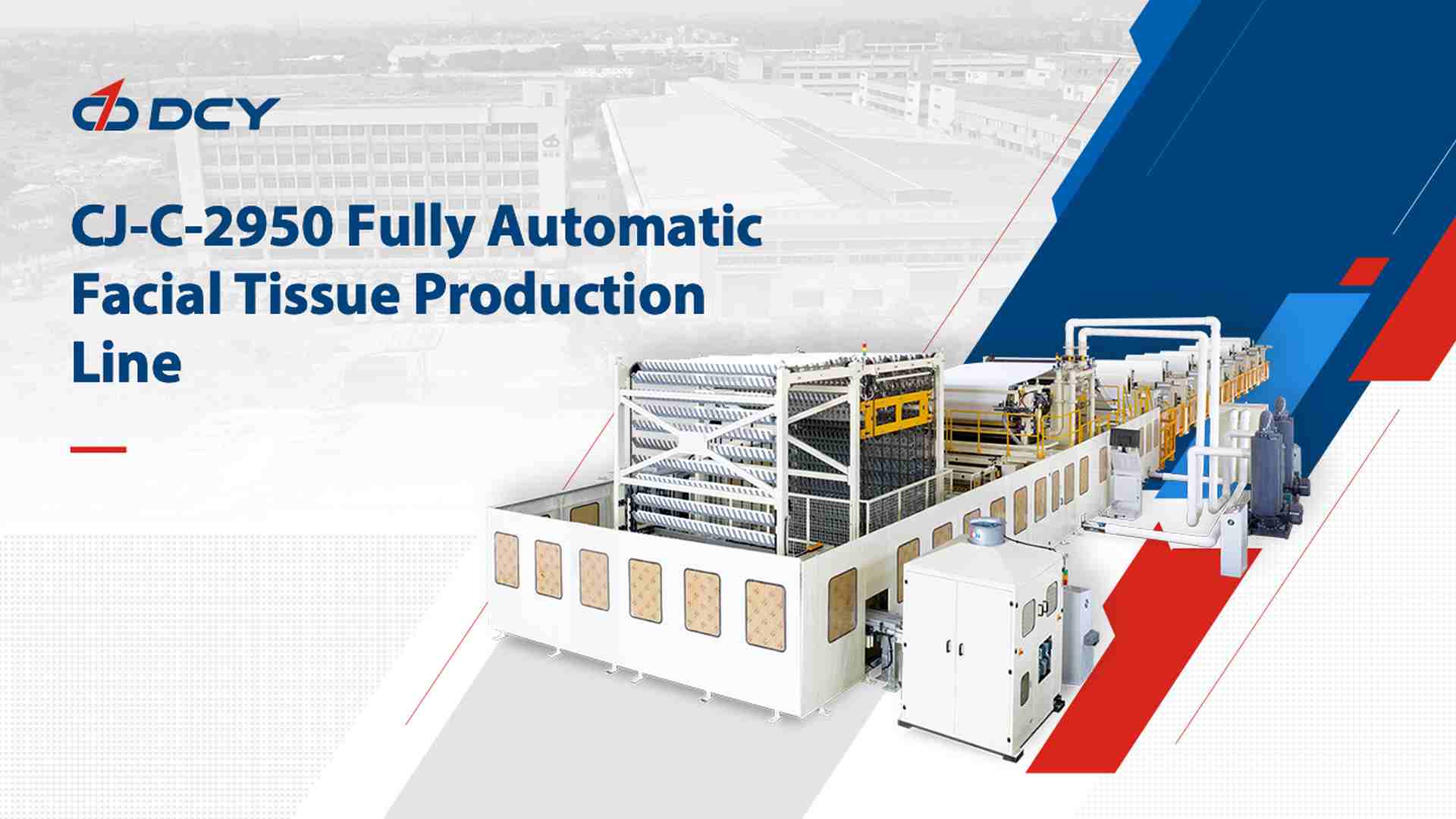
DCY lists separate folding production lines for facial tissue and hand towels. Use the product family as a starting point, then request a configuration based on your samples and factory requirements. Each link below leads to the corresponding official product page.
Fold drawing, dispenser sample, paper stock, and packing route
The machine names above correspond to the CJ-C, CJ-C-A, and CJN-C series. Ask DCY to confirm the included modules, operating units, achievable output, and material range in the project proposal. Keep optional functions and third party equipment identified separately in the equipment list.
Prepare a clear request for quotation
Send the same brief to each shortlisted supplier. This makes their proposals easier to compare and helps expose differences in scope before you negotiate price.
Information to provide
Details to include
Finished product
Samples, fold drawing, open and folded dimensions, ply, tissues per pack, dispenser if applicable
Raw material
Basis weight per ply, roll width and diameter, core, roll weight, intended paper grades
Production plan
Good packs per shift, shifts per day, SKU mix, changeovers, growth requirement
Packaging
Pack samples, dimensions, material, bundle or carton requirements, existing equipment
Factory conditions
Layout, utilities, access, operators, existing control and safety interfaces
Acceptance and service
Test products, output and quality criteria, training, installation, warranty, spares
Frequently asked questions
What is the difference between a tissue folder and an interfolder
A folder forms the required folds in a sheet. An interfolder also overlaps successive sheets so pulling one can present the next. The equipment must match the required dispensing behavior. Confirm the fold drawing and test the product in its final package or dispenser.
Can one machine produce facial tissue and hand towels
Some configurations may support more than one product family, but the raw paper, fold geometry, stack handling, and packaging requirements must all fit. Request trials for both products and a priced list of the parts and adjustments needed for changeover.
How much capacity should a new factory buy
Start with forecast saleable packs, working hours, expected losses, and the planned product mix. Include a justified allowance for growth and check that packaging, staffing, utilities, and storage can support it. The numerical example in this guide shows the calculation method, not a universal capacity recommendation.
Is a wider folding machine always more economical
A wider machine may provide more lanes, but the benefit depends on paper utilization, available jumbo roll widths, product mix, and demand. Compare the complete production cost and setup requirements for your priority products before selecting working width.
Can I connect a new folding machine to existing packaging equipment
Possibly. Confirm stack dimensions, orientation, infeed rate, counting, transfer height, control signals, and stop logic. Ask for a coordinated interface proposal and a trial using the proposed product. Assign responsibility for the connection before ordering.
How should I evaluate an automatic machine quotation
Request an itemized equipment list, layout, utility schedule, staffing assumptions, format change requirements, test procedure, and service scope. Compare sustained output and quality on identical paper and pack specifications, with each capacity expressed in the same unit.
Choose the machine around your production brief
The right tissue paper folding machine fits your approved product, available raw paper, required good output, and packaging route. Complete that specification first, then assess automation, factory fit, operating cost, and support against it. A trial with your own materials provides the clearest evidence that the proposed configuration meets the brief.
Discuss your project with DCY. Share finished product samples, paper specifications, target output, packaging details, and your factory layout through our solution proposal service. Ask for a folding line configuration with a defined equipment scope and acceptance plan.







 English
 Español
 العربية
 Português do Brasil
 Русский