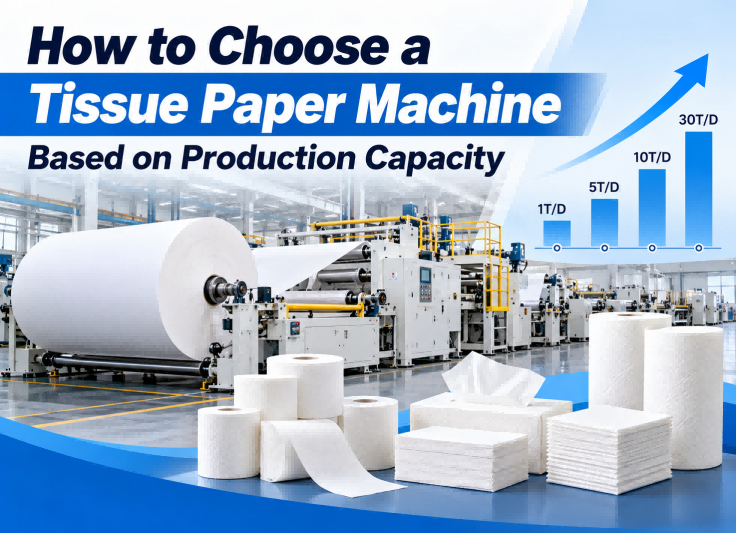
How to Choose a Tissue Paper Machine Based on Production Capacity
Choosing a tissue paper machine by production capacity sounds simple until the real factory data appears. A brochure may show design speed in meters per minute, a salesman may mention rolls per minute, a folder may be rated by sheets per minute, and an investor may ask for tonnes per day. None of those numbers is wrong, but none of them is enough by itself. The machine only creates value when it makes saleable toilet rolls, kitchen towel rolls, facial tissue packs, hand towel stacks, napkins or JRT products at the quality your market expects.
How to Choose a Tissue Paper Machine Based on Production Capacity
That is why tissue paper machine production capacity should be treated as a planning method rather than a single catalog value. A buyer needs to connect market demand, product specification, parent roll width, machine speed, operating shifts, packaging flow, labor structure, maintenance allowance and future growth. When those numbers are clear, capacity becomes a practical engineering decision. When they are unclear, factories often buy a machine that is too small, too complex, or poorly matched to downstream packing.
DCY Dechangyu Paper Machinery serves B2B tissue converters that need this decision to be realistic. The company has operated since 1987, integrates R&D, manufacturing, sales and service, and supplies intelligent tissue converting equipment to customers in many global markets. Its portfolio covers roll solutions, fold solutions, slitting rewinders, embossing, lotion, core making, non-glue tail sealing, packaging and palletizing. That breadth matters because capacity depends on the complete line, not only the headline speed of one machine.
Quick Answer
To choose a tissue paper machine based on production capacity, first define the finished product and daily saleable output target. Then convert that target into rolls, packs, stacks, boxes or cartons per shift. Next, add a realistic capacity reserve for downtime, changeovers, maintenance and demand growth. Finally, compare machine options by stable running speed, parent roll width, lane count, automation level, packaging capacity and service support. A good target is usually not the highest design speed. It is the line that can reliably produce your required finished goods with acceptable quality and room for growth.
For roll products, calculate capacity through rewinding speed, log length, finished roll width, roll diameter, core handling, log saw output and roll wrapping. For folded products, calculate capacity through sheets per minute, lanes, fold type, stack count, packaging speed and carton flow. For slitting rewinders, calculate capacity through web width, running speed, minimum slit width, reel diameter and roll change time. In every case, compare saleable output per shift, not only theoretical speed.
The core rule for tissue paper machine production capacity is simple: capacity must be measured at the slowest reliable section of the complete line. If the rewinder is fast but the log saw or wrapper is slow, the factory output is limited by the slower step. If a folder can count sheets quickly but the packer cannot receive stacks consistently, the finished pack output drops. This is the reason capacity planning must include converting, cutting, packing, palletizing and operator workflow.
What Competitor Pages Usually Get Right
Current ranking pages usually succeed because they explain capacity in practical customer language. Several articles warn that buyers should not select a machine only by price or by the largest number in the quotation. They also mention that tissue converting machines may be rated by cuts per minute, rolls per minute, sheets per minute, meters per minute or daily output. That is useful because many first time buyers confuse machine speed with finished product output.
A strong article also separates product categories. Toilet paper and kitchen towel need roll converting. Facial tissue and hand towels need folding and stacking. Slitting rewinders prepare jumbo reels or finished reels by width and diameter. The better competitor pages explain these differences before recommending automation. The weakness is that many pages stay at a generic level. They may give simple examples, but they often do not connect capacity to parent roll width, packaging bottlenecks, SKU mix, factory layout or future expansion.
This guide goes deeper for DCY buyers. It keeps the useful search intent found in production scale and toilet paper capacity guides, then adds a more complete B2B engineering framework. It also uses industry context from tissue converting, tissue technology and interfolder specification sources to show why capacity planning must consider the whole tissue value chain.
Start With the Finished Product
The first decision is not the machine model. It is the product family. Toilet paper rolls, kitchen towel rolls and JRT products use a rewinding route. Facial tissue, hand towels and many napkin products use a folding route. Jumbo reel preparation and narrow roll preparation use slitting and rewinding. If the product route is wrong, even a high capacity machine will fail the business plan because it will not make the product your customer buys.
If your team is still mapping the full process, it is helpful to review how conversion machines connect jumbo rolls to finished products and how broader tissue machines fit into a factory plan. These related resources help buyers separate paper making, tissue converting, cutting, packing and end-of-line handling before they compare individual models.
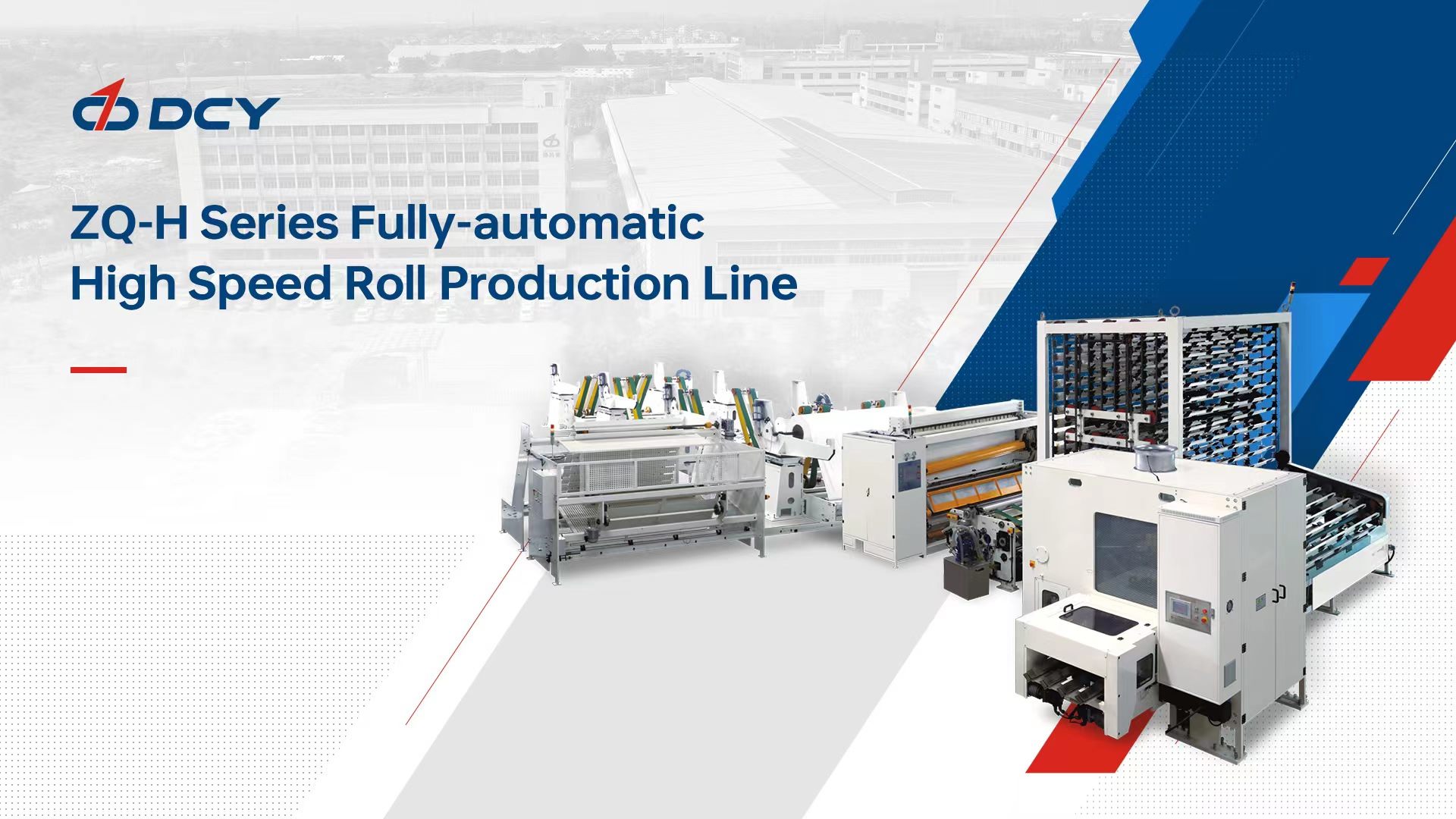
For roll products, a buyer can begin with the ZQ-H high-speed roll production line when the target is high-volume toilet roll, kitchen towel or JRT production. If the project requires an automatic roll line with a different production scale, the ZQ-III automatic roll production line may be considered. For paper core supply, the ZX high-speed toilet paper core machine becomes part of the capacity conversation because core availability affects roll line stability.
For jumbo roll preparation, coating, printing or slitting work, the capacity logic changes again. A buyer may need the FC series slitting rewinder, the FC series with coating, or the FC series toilet paper printing machine depending on product strategy. These options show why tissue paper machine production capacity must begin with an application map rather than a generic request for a tissue machine.
Define Capacity in Saleable Units
Production teams often talk in technical units, while sales teams talk in commercial units. A machine supplier may discuss meters per minute, sheets per minute or cuts per minute. A distributor may ask for cartons per day. A retail buyer may require a monthly supply plan. A factory owner may think in tonnes per month. The job is to translate all of those numbers into one common planning sheet.
For toilet paper, saleable output can be expressed as rolls per shift, packs per shift, cartons per shift and tonnes per month. For facial tissue, it can be packs per shift, boxes per shift, sheets per shift or cartons per shift. For hand towels, it may be stacks, packs or cases. For slitting rewinders, the output may be finished reels by width, diameter and weight. The correct unit depends on what leaves the factory gate and generates revenue.
A practical calculation begins with monthly demand. Divide it by working days, then by planned shifts, then add a reserve. For example, a factory that needs 900,000 toilet rolls per month over 25 working days needs 36,000 rolls per day before downtime. If it runs two shifts, the target is 18,000 rolls per shift. If management adds a 25 percent reserve for maintenance, changeover and order spikes, the line should be planned around about 22,500 rolls per shift of saleable output. This is the kind of worksheet that makes tissue paper machine production capacity useful for real purchasing.
This is the second rule of tissue paper machine production capacity: do not size the machine for today's orders only. Size it for the highest realistic demand during the next 12 to 24 months. Buying too small creates a capacity ceiling soon after commissioning. Buying far too large can create unnecessary complexity, operator pressure and underused assets. The balance depends on market growth, financing plan, SKU mix and the buyer's ability to run the line consistently.
Use a Capacity Formula
Step
Question
Capacity Meaning
Demand target
How many saleable units are needed each month
Defines the commercial output requirement
Working calendar
How many days and shifts will the factory run
Converts monthly demand into shift demand
Product specification
What are roll size sheet size ply count and pack format
Determines actual output from machine speed
Efficiency reserve
What allowance is needed for downtime changeover and maintenance
Prevents optimistic planning
Bottleneck check
Can cutting packing and palletizing keep pace
Finds the real line capacity
A simple planning formula is useful: required line capacity equals target saleable units divided by available production time, then adjusted by expected operating efficiency. If the factory expects 80 percent practical efficiency, the selected line must have more theoretical capacity than the daily target. This does not mean choosing the biggest line. It means choosing a line that can meet the target without running at its absolute limit every day. In other words, tissue paper machine production capacity is a balance between target output and sustainable operation.
For roll products, the practical formula should include rewind cycle, log length, number of lanes, log saw cuts, roll wrapper rate and carton rate. For folded products, include sheets per minute, lane count, sheets per pack, stack transfer rate and packaging rate. For slitting, include web speed, parent roll change time, slit width, finished reel diameter and trimming loss. These variables make capacity planning more reliable than simply asking for the highest speed.
Match Product Type to Capacity Metrics
Product Family
Common Capacity Metric
Main Bottleneck to Check
Toilet paper rolls
Rolls per minute rolls per shift cartons per day
Log saw cutting and roll wrapping
Kitchen towel rolls
Rolls per minute packs per shift tonnes per month
Embossing perforation and wrapper flow
JRT products
Large rolls per shift or cases per day
Log diameter handling and packing method
Facial tissue
Sheets per minute packs per minute boxes per shift
Stack count transfer and box or soft pack speed
Hand towels
Stacks per minute packs per shift cases per day
Fold accuracy dispenser format and carton flow
Slitting rewinder output
Meters per minute finished reels per shift tonnes per day
Roll change trimming and finished reel handling
This table is important because different tissue machines describe capacity in different units. A facial tissue interfolder rated by sheets per minute cannot be compared directly with a toilet roll rewinder rated by meters per minute. The buyer must convert both into finished commercial output. Only then can the factory compare machine investment, labor, space and downstream packing needs.
A helpful way to think about tissue paper machine production capacity is to ask what product feature consumes time. In toilet paper, roll diameter, sheet count, perforation and log cutting consume time. In facial tissue, sheet size, fold pattern, stack count and pack insertion consume time. In slitting, parent roll handling and finished reel changes consume time. The machine that looks fastest in one unit may not be the most productive in another.
Capacity Levels and Growth Path
A useful capacity plan should classify the factory stage before it compares models. Small factories usually need a machine that can run stable daily orders, accept some manual support and avoid complicated changeovers. Mid scale factories need more automatic transfer, better packaging integration and enough reserve to handle regional distributors. Large factories need high stable output, multiple shifts, strict quality control and a line layout that prevents warehouse congestion.
For tissue paper machine production capacity, the growth path is often more important than the first purchase. A company may start with toilet rolls for local retail, then add kitchen towels, then add facial tissue or hand towels for commercial channels. If the first line uses all available floor space or cannot connect to future packaging, the next expansion becomes expensive. A buyer should ask where the second line, packaging area, raw material storage and finished goods warehouse will go before placing the first order.
A small factory can often accept more manual handling if the product range is simple and order volume is predictable. The risk is that manual work hides the true capacity limit. Workers may keep up during short trial runs, but fatigue and variation appear during long shifts. This is why even a smaller line should be evaluated under realistic shift conditions, not only short demonstrations.
A mid scale factory usually needs to standardize SKUs and reduce operator touches. At this stage, the capacity question shifts from can the machine run to can the line repeat the same output every day. Stable settings, reliable PLC control, easy blade maintenance, consistent web tension and clear fault diagnosis become more important. These features help the factory protect the same saleable output across different crews and shifts.
A large factory should evaluate capacity through the whole business system. Parent roll supply, spare parts, packaging film, cartons, pallet flow, maintenance windows and quality inspection must all support the same target. A high-speed machine that waits for cartons or forklifts is no longer high capacity in practice. The best industrial projects use a line capacity model that covers upstream material, converting, packing, warehousing and shipment.
This staged view also helps buyers choose automation without overbuying. Full automation is usually easier to justify when the factory has high labor costs, multi-shift operation, strict hygiene expectations or large repetitive orders. Semi automatic equipment may still be suitable for a smaller factory that needs flexibility and controlled initial complexity. The goal is not to buy the most automatic line. The goal is to buy the line that can meet the required output with the lowest operational risk.
Understand Theoretical Speed and Stable Speed
Theoretical speed is the design capability of the machine under defined conditions. Stable speed is the speed a trained production team can run while maintaining quality, managing raw material variation and feeding downstream equipment. Saleable output is the number of good products packed and ready for shipment. Buyers need all three numbers. If a quotation only shows theoretical speed, it is incomplete for production planning.
DCY's ZQ-H roll line page lists a design speed of 0 to 500 m/min and raw paper width options from 2850 mm to 3650 mm. That tells the buyer the engineering range, but the actual roll output still depends on roll width, finished diameter, sheet length, core or coreless setup, embossing, perforation, tail sealing, cutting and packing. DCY's CJ-C facial tissue line lists 0 to 170 m/min or 1700 sheets/min, but pack output depends on sheet size, stack count and packaging connection.
This is why tissue paper machine production capacity should use stable running assumptions. A new line may not reach peak efficiency during the first weeks of operation. Operators need training. Raw paper needs to be adjusted. Packaging film, cartons and warehouse flow need to be synchronized. A mature plant with experienced staff may run closer to target than a new factory. Capacity planning should respect that learning curve.
Choose by Factory Stage
A start-up tissue converter usually needs enough capacity to serve local customers reliably without creating unnecessary complexity. Semi automatic equipment or a smaller automatic configuration may make sense if product variety is limited and labor is available. However, the buyer should still avoid under-sizing. If the business plan expects rapid growth, a small line can become the first bottleneck within one selling season. For new investors, tissue paper machine production capacity should include a realistic first year growth scenario.
A growing factory needs capacity that reduces unit handling and improves consistency. At this stage, automation around core feeding, log transfer, counting, stacking, wrapping or carton packing becomes more valuable. The buyer is no longer asking only whether the machine can make the product. The buyer is asking whether the line can keep pace with orders, protect quality and reduce operator dependency across multiple shifts.
A large industrial converter needs a different standard. The focus shifts to high stable output, integrated packaging, fast changeover, predictable maintenance, reliable controls and end-of-line handling. At this scale, a high-speed robotic palletizing system can become part of the capacity plan because cartons must leave the packaging area at the same pace that products are produced. Capacity that piles up at the end of the line is not usable capacity.
The best decision is therefore stage specific. A local supplier, private label producer, export factory and multinational tissue group may all use the same basic product name, but they do not need the same line configuration. DCY's solution proposal process helps match equipment to the buyer's stage, product plan and capacity target.
Automation and Labor Capacity
Automation is not only about replacing labor. It is about protecting capacity from human variation. In a roll line, manual core feeding, log transfer, tail handling, roll collection and packing can limit output. In a folding line, manual stack handling, counting and pack loading can disrupt rhythm. In a slitting line, roll changes and finished reel handling can reduce practical efficiency even when the main machine has high running speed. This is why tissue paper machine production capacity must include labor stability, not only motor speed.
In high labor cost regions, fully automatic lines often make more sense because the cost of manual handling accumulates over every shift. In labor available markets, semi automatic equipment may still be a rational starting point, especially if the factory has lower volume or a broad SKU mix. The buyer should compare not only operator count but also training difficulty, quality risk, hygiene, line stoppages and packaging consistency.
DCY supports both full automatic and semi automatic planning, which matters for tissue paper machine production capacity because capacity is not only mechanical. It is also organizational. A factory with skilled operators and simple products may achieve strong output from a moderate line. A factory with high labor turnover may need more automation to achieve the same saleable output every day.
Packaging Can Decide True Capacity
Many capacity problems appear after converting, not inside the main tissue machine. A rewinder can create logs, but the log saw must cut them cleanly. The rolls must be wrapped, bundled, cartoned and palletized. A folder can create stacks, but those stacks must enter soft packs or boxes without skewing, crushing or slowing the line. If the packaging area is undersized, finished output will be lower than the converting machine's potential.
For roll products, DCY's F-T6 automatic roll wrapper and F-T8 automatic roll wrapper support downstream packing decisions. For final warehouse movement, robotic palletizing can reduce manual bottlenecks. For folded products, packaging configuration must match stack count, pack dimensions, box design and carton flow. This is why the capacity calculation should include the line after the converting machine.
Packaging also affects SKU strategy. A factory that changes pack counts many times per day may lose more time than a factory that runs long batches. A buyer should estimate changeover frequency before selecting capacity. A machine that is technically fast may deliver modest daily output if the factory constantly stops for size changes, packaging material changes or label changes. Strong tissue paper machine production capacity therefore treats pack format as a production variable.
Product Quality and Capacity Are Connected
Capacity that damages quality is not real capacity. If higher speed causes loose rolls, inaccurate perforation, poor tail sealing, uneven stacks, wrong sheet counts or pack defects, the rejected output must be removed from the calculation. Good capacity planning includes quality tolerances, not just speed. A factory should ask how the machine maintains roll diameter, sheet count, stack accuracy, web tension, cutting quality and packaging stability at the target speed.
Embossing is a good example. The toilet paper embosser can improve appearance and bulk, but embossing pressure, pattern depth and lamination method influence stable speed. A premium embossed kitchen towel may not run like a simple economy roll. For facial tissue, a tissue lotion machine may support a premium product, but lotion and softness positioning can affect web handling and downstream packaging. Capacity planning must include product grade.
Tail sealing is another example. The non-glue tail sealer supports cleaner roll finishing and helps reduce dependence on glue in relevant configurations. But the tail sealing step still needs to match rewinding speed, roll diameter and downstream wrapper timing. Every module that improves product value must be included in the practical capacity calculation.
Raw Material and Parent Roll Width
Parent roll width is one of the strongest capacity levers. Wider raw paper can support more lanes, longer logs or higher volume, but it also requires suitable machine width, floor space, roll handling equipment and operator discipline. A line using 2850 mm parent rolls and a line using 3650 mm parent rolls are not the same factory decision. Wider width can improve output, but only if the rest of the system is prepared.
Raw paper diameter also matters. Larger parent rolls reduce change frequency, but they require proper unwinding, lifting and storage. Basis weight, ply, softness, crepe, dust and tensile strength influence running stability. A tissue web that breaks often will reduce practical capacity even on a high specification machine. Buyers should share raw paper data with the supplier before finalizing equipment selection.
For slitting and jumbo reel applications, the buyer should define minimum slit width, finished reel diameter, trimming width, shaft handling and downstream use. DCY's FC series includes high-speed slitting rewinder options with wide raw paper capability, but the best configuration depends on whether the output feeds another converting step or becomes a saleable reel.
Capacity Planning for Roll Products
For toilet paper and kitchen towel, begin with the finished roll. Define roll width, roll diameter, core diameter, sheet length, sheets per roll, ply, embossing, perforation and pack count. These details determine how much web is needed per roll and how quickly logs move through the line. A line cannot be judged only by meters per minute because different roll formats consume different web lengths.
Next, calculate the supporting modules. The rewinder must match core supply, perforation, embossing and tail sealing. The log saw must cut at the required speed without crushing the roll. The wrapper must accept roll flow. Cartoning and palletizing must keep pace. The tissue roll machines guide and toilet paper machine types guide are useful internal resources when buyers need to understand this complete roll route.
For premium rolls, capacity should be checked at the premium specification, not only at an easy test product. Deep embossing, glue-free embossing, printed tissue or larger diameter rolls can change stable output. A realistic supplier discussion should include your hardest SKU, because that SKU often decides whether the line can meet the commercial plan.
Capacity Planning for Folded Products
For facial tissue, hand towels and other folded products, begin with sheet size, fold type, ply, stack count, pack dimensions and dispenser requirements. Output should be calculated by sheets per minute and packs per minute. A machine with high sheet speed may still be limited by stack transfer, cutting, pack insertion or carton packing. Folded product capacity is therefore a combination of folding rhythm and packaging rhythm.
The buyer should also define acceptable stack height tolerance and first-pull performance. A pack that looks neat and dispenses correctly is more valuable than a higher speed setting that creates skewed stacks. This is especially true for branded facial tissue and institutional hand towel products, where customer complaints can damage long term accounts.
Capacity Planning for Cutting and Slitting
Cutting and slitting equipment can become the hidden bottleneck in a tissue plant. A roll line needs clean log cutting. A facial tissue line may need accurate log or stack cutting. A jumbo reel process needs stable slit width and finished reel handling. The tissue cutting machines guide is useful because cutting accuracy directly affects saleable output.
For slitting, the buyer should define input web width, output widths, finished reel diameter, winding tension, trimming waste, roll change method and downstream destination. High web speed is useful only if the line can maintain edge quality, tension control and finished reel consistency. If finished reels need frequent changes, handling time can reduce practical output.
For factories that plan multiple product families, slitting capacity should be planned as a shared resource. If one slitter feeds several converting lines, its schedule must protect all downstream machines. A shortage of prepared reels can idle expensive converting equipment even when the converting machines themselves are capable.
Common Mistakes
The first mistake is confusing design speed with daily production. The second is sizing a line only for current orders. The third is ignoring packaging. The fourth is buying a wide machine without planning raw material handling and workshop layout. The fifth is comparing different product categories with the same metric. These mistakes are common because tissue paper machine production capacity requires both market planning and process knowledge. A disciplined tissue paper machine production capacity review prevents these errors before a purchase order is signed.
Another mistake is underestimating changeover. A factory with many SKUs may lose significant time switching roll width, sheet size, pack count, embossing pattern, film size or carton format. Changeover time should be part of the capacity model. If the business depends on many small orders, flexibility may be more important than absolute top speed.
A final mistake is treating service as separate from capacity. Installation quality, operator training, spare parts, preventive maintenance and remote support all affect usable output. DCY's implementation support, after-sale warranty, Confirmação de pedido and fazer um pedido services should be considered part of the project, not only administrative steps.
Supplier Questions to Ask
Question
Why It Matters
What is the stable running speed for my exact product
Avoids confusing test speed with saleable output
What is the expected output per shift after packaging
Checks the full line rather than one machine
Which section is most likely to become the bottleneck
Shows supplier process experience
How much reserve capacity should I keep
Protects growth maintenance and demand spikes
What automation level fits my labor market
Matches capacity to real factory conditions
What training and service are included
Supports stable output after commissioning
A buyer should send product drawings, parent roll data, expected monthly output, working days, shifts, automation preference, workshop layout, packaging format and target market. With that information, DCY can recommend a configuration that fits the capacity target. Without it, even an experienced supplier can only give a rough machine suggestion.
DCY's company background can also support supplier evaluation. The company has a large manufacturing base, an experienced engineering team, more than 60 national patents in its materials, ISO 9001:2015 and CE certification, and export experience across more than 160 countries and regions. Buyers can review about Dechangyu or explore dealership opportunities for regional cooperation.
Perguntas Frequentes
What is the best capacity for a new tissue paper factory
There is no universal best capacity. A new factory should calculate monthly demand, working days, shifts, product type, packaging method and growth plan. The best capacity is usually the line that can meet 12 to 24 month demand with a practical reserve, not the largest machine available.
How much reserve capacity should I plan
Many factories plan a reserve for maintenance, changeovers, operator learning and demand growth. The exact reserve depends on market volatility and production complexity, but a buyer should avoid planning to run at theoretical maximum every day.
Should I choose automatic or semi automatic equipment
Choose based on labor cost, output target, product quality risk and operator availability. Full automation is stronger for high volume or high labor cost regions. Semi automatic equipment can be suitable for lower volume, early stage factories or markets with available labor.
Why is packaging included in capacity planning
Because the factory sells packed products, not unfinished logs or stacks. If packaging cannot keep pace, the true line capacity drops. Roll wrapping, box packing, carton packing and palletizing should all be included in the capacity model.
Can one tissue paper machine make all products
No single machine is ideal for all tissue products. Roll products need rewinding and cutting. Folded products need folding and stacking. Slitting and coating require different equipment. A multi-product factory usually needs a planned combination of machines.
How do I compare sheets per minute with rolls per minute
Convert both into finished saleable units per shift. For facial tissue, calculate packs or boxes from sheets per minute and sheets per pack. For toilet rolls, calculate rolls or cartons from web speed, roll size, log cutting and packing rate.
Does parent roll width affect capacity
Yes. Wider parent rolls can increase output by supporting more lanes or larger production volume, but they also require suitable machine width, handling equipment, floor space and raw material logistics.
What information should I send DCY for a capacity recommendation
Send finished product specifications, parent roll width and diameter, ply, basis weight, monthly output target, working days, shifts, packaging format, automation preference and workshop layout. The more precise the data, the better the recommendation.
Conclusão
The right tissue paper machine is not chosen by one big speed number. It is chosen by matching commercial demand with product specification, stable machine output, automation level, packaging flow, raw material handling and service support. That is the practical meaning of tissue paper machine production capacity. Buyers who calculate saleable output before choosing a model make better decisions and avoid hidden bottlenecks.
For roll production, compare rewinding, cutting, wrapping and palletizing as one line. For folded products, compare folding, counting, stacking and packing as one line. For slitting and reel preparation, compare web speed with roll change and finished reel handling. When the full process is visible, capacity planning becomes a reliable investment tool rather than a guess.
DCY can help tissue converters review product plans, output targets and factory conditions before selecting equipment. If your team is planning a new line or expanding an existing plant, prepare your product specifications and capacity target, then request a technical configuration discussion with DCY.





 English
 Español
 العربية
 Português do Brasil
 Русский