N Fold Hand Towel Machine: The Complete Buyer's Guide for Tissue Manufacturers
An N Fold Hand Towel Machine is specialized equipment designed for the efficient production of N Fold hand towels. These machines utilize advanced folding techniques to create interleaved designs that enhance dispensing and reduce waste. Key specifications include sheet size, folded dimensions, and paper GSM compatibility. Production efficiency is maximized with operational speeds ranging from 150 to 300 sheets per minute. Understanding these factors is essential for selecting the right machine for commercial needs and optimizing operational performance.
Key Takeaways
- N Fold Hand Towel Machines utilize zigzag folding techniques to create efficient, interleaved paper towels that minimize waste and enhance hygiene.
- These machines operate at speeds of 150 to 300 sheets per minute, ensuring high production efficiency for commercial environments.
- They support various paper GSM options, typically ranging from 30-60 GSM, for customizable towel thickness and absorbency.
- Automated production lines enhance productivity and reduce labor costs by streamlining the manufacturing process of N Fold towels.
- N Fold Hand Towel Machines are compatible with specific dispensers, making them ideal for use in restrooms, kitchens, and healthcare facilities.
What Is an N Fold Hand Towel?
An N Fold hand towel is a type of paper towel characterized by its unique folding method, allowing for efficient dispensing and minimal waste. This design contrasts with other folds, such as V Fold, Z Fold, and C Fold, each serving specific applications and compatible with various dispensers. The popularity of N Fold towels in commercial washrooms can be attributed to their practicality and ease of use, making them a preferred choice for high-traffic environments. Additionally, the CJN-C Series offers a fully automatic solution for the production of N Fold hand towels, enhancing efficiency and hygiene standards in manufacturing.
How N Fold Hand Towels Work
N Fold hand towels are a specific type of disposable towel designed for efficient use in high-traffic environments, such as restrooms and kitchens. The design allows for easy dispensing, reducinghand waste and enhancing hygiene. An automatic n fold hand towel machine employs advanced technology to produce these towels with precision, guaranteeing uniformity in size and fold.
- Precise interfolding for seamless dispensing
- Compact design for space efficiency
- High absorbency capabilities
- Compatibility with various n fold tissue converting machines
The interfold hand towel machine facilitates the quick production of towels, while the tissue interfolding machine guarantees each towel is perfectly aligned for maximum user experience, making them a preferred choice in commercial settings. Additionally, the use of high-output tissue lines enhances production agility and minimizes waste in busy environments.
N Fold vs V Fold vs Z Fold vs C Fold
While various folding designs exist for disposable hand towels, the N Fold configuration stands out for its unique dispensing mechanism and design efficiency. The N Fold hand towel production line utilizes an n fold tissue machine that creates towels folded in a zigzag pattern, allowing for easy and controlled access. In contrast, V Fold and Z Fold designs offer different dispensing methods, with V Fold providing a more compact stack and Z Fold allowing for a sequential pull. C Fold towels, while effective, often require more space and do not offer the same ease of use. The hand towel folding machine in a commercial hand towel machine setting optimizes production efficiency for each folding style within the broader tissue paper production line. Additionally, высокоскоростное производство is essential in meeting the increasing demand for efficient tissue products.
Common Applications and Compatible Dispensers
Commonly utilized in various commercial settings, N Fold hand towels are designed for efficient dispensing and hygiene. Their unique folding design allows for quick access, minimizing waste and promoting cleanliness. These towels are compatible with a range of dispensers, enhancing their utility in busy environments.
- Restrooms in restaurants: Guaranteeing patrons have quick access to drying solutions.
- Office buildings: Promoting workplace hygiene among employees.
- Healthcare facilities: Supporting infection control protocols with single-use options.
- Educational institutions: Facilitating cleanliness in high-traffic student areas.
The versatility of N Fold hand towels guarantees they meet the demands of diverse applications, while their compatibility with various dispensers streamlines operations and enhances user experience.
Why N Fold Towels Are Popular in Commercial Washrooms
The N Fold hand towel is increasingly favored in commercial washrooms due to its efficient design and practical advantages. This towel type features a unique folding method that allows for easy dispensing and minimizes waste, which is essential in high-traffic environments. The interleaved design enables users to access a single towel at a time, reducing the likelihood of cross-contamination and promoting hygiene. In addition, N Fold towels are typically produced from high-quality materials, ensuring durability and absorbency. Their compact size allows for efficient storage in dispensers, optimizing space utilization. Moreover, the compatibility of N Fold towels with a variety of dispensers enhances versatility, making them an ideal choice for businesses seeking to maintain cleanliness and control over their washroom facilities. Furthermore, the growing preference for disposable hygiene products contributes to the increased adoption of N Fold towels in commercial settings.
What Is an N Fold Hand Towel Machine?
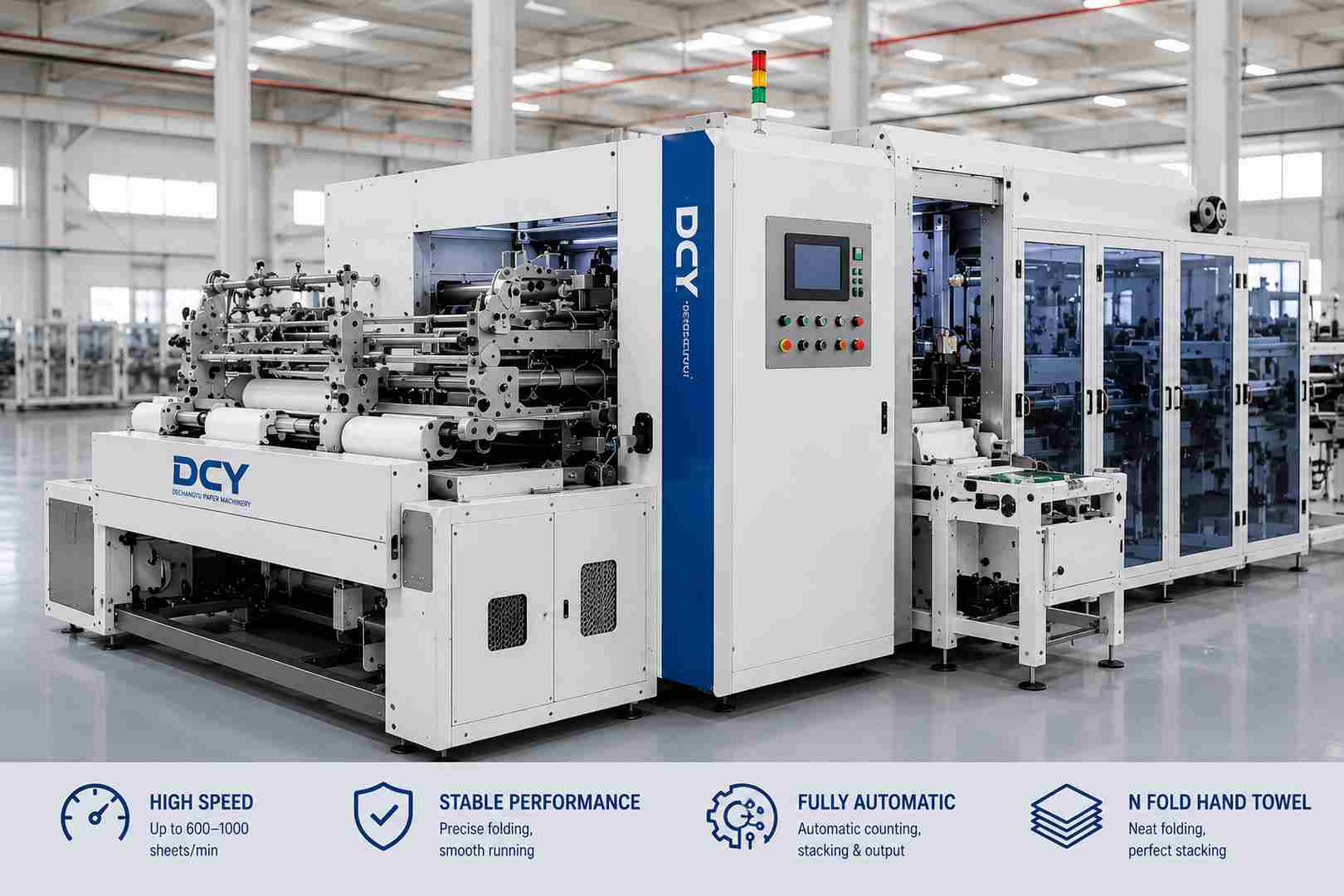
An N Fold hand towel machine is a specialized apparatus designed for the efficient production of folded paper towels. It operates through a precise folding process that involves multiple stages, which contribute to the final product’s compact design. Key components of the production line include rollers, cutting mechanisms, and folding units, enabling the machine to produce various types of tissue products tailored to consumer needs.
How the Folding Process Works
When considering the operation of an N Fold hand towel machine, it becomes evident that the folding process is a sophisticated mechanism designed for efficiency and uniformity. This process employs a series of precise movements that systematically fold the towel into uniform segments, guaranteeing ideal stacking and dispensing. Each fold is executed with exacting control, allowing for consistent dimensions and presentation.
- Sequential folding stages to create the N Fold pattern
- Automated adjustments for various towel sizes
- Sensors to guarantee accurate positioning and alignment
- High-speed operation to maximize production output
Additionally, the integration of customisation options allows businesses to enhance their brand presence through tailored designs and logos. The result is a neatly folded product, ready for packaging, which enhances both usability and aesthetics within commercial settings.
Main Components of an N Fold Hand Towel Production Line
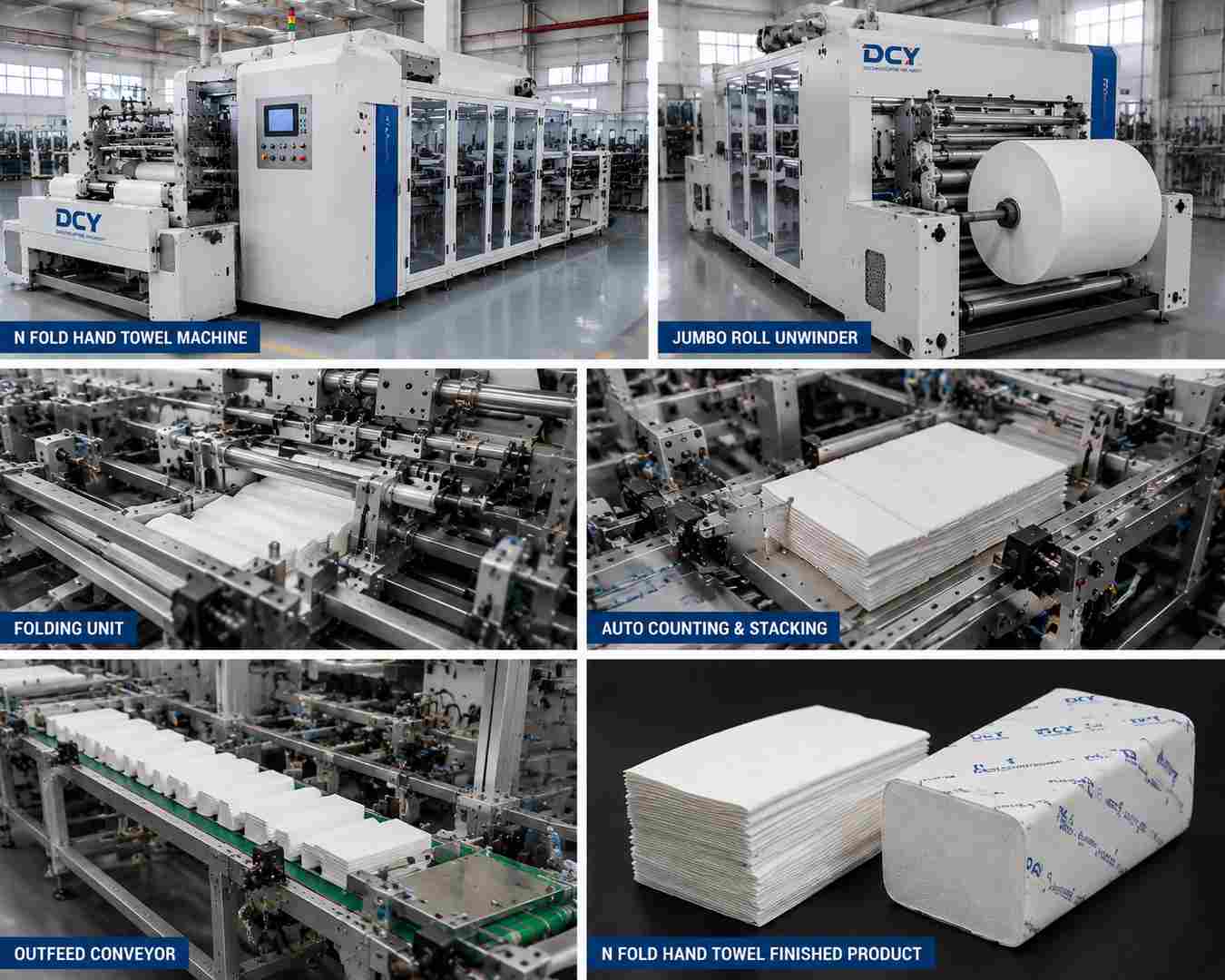
Key elements of an N Fold hand towel production line include a series of specialized machines and components that work synergistically to secure efficient manufacturing. The primary components consist of a jumbo roll unwinder, which feeds raw paper into the system, and a series of folding units that create the N Fold design. Additionally, a cutting unit guarantees precise sizing, while a counting and stacking system organizes the finished products for packaging. Quality control mechanisms are integrated throughout to monitor production consistency and paper quality. Automation features enhance operational efficiency, reducing labor costs and minimizing waste. Finally, the control panel provides operators with real-time data and operational oversight, enabling precise management of the entire production process. Furthermore, modern machines incorporate advanced technologies that improve performance and sustainability, ensuring a competitive edge in the tissue production market.
Types of Tissue Products the Machine Can Produce
The N Fold hand towel machine is primarily designed to produce a range of tissue products characterized by their unique folding style and functionality. This equipment can efficiently manufacture various tissue types, each tailored to specific applications and user needs.
- N Fold Hand Towels: Ideal for high-traffic areas, featuring a compact design for easy dispensing.
- Multi-Fold Paper Towels: Offering a more absorbent option with a larger surface area for drying hands.
- C-Fold Towels: Designed for versatility, suitable for both personal and commercial use.
- Interleaved Tissue Sheets: Perfect for dispensing single sheets, reducing waste and enhancing hygiene.
These products exemplify the machine’s versatility in meeting diverse market demands, providing operators with control over production quality and efficiency. Additionally, the waste reduction mechanisms implemented in these machines ensure optimal utilization of raw materials, contributing to sustainability efforts.
Key Machine Specifications to Consider
When evaluating an N Fold hand towel machine, key specifications play an essential role in determining its efficiency and suitability for specific applications. Critical factors include the finished sheet size and folded dimensions, parent roll width and diameter, and the supported paper GSM and ply options. In addition, the machine’s ability to adjust folding sizes and accommodate various product formats greatly influences operational flexibility and output quality.
Finished Sheet Size and Folded Dimensions
While evaluating the specifications of an N fold hand towel machine, understanding the finished sheet size and folded dimensions is essential for ensuring compatibility with user needs and operational efficiency. These measurements directly impact the usability of the towels in various settings, such as restrooms, kitchens, and commercial establishments.
Key considerations include:
- Width: Determines the towel’s usability in dispensers.
- Length: Affects the user experience and coverage per sheet.
- Thickness: Influences absorbency and overall quality.
- Folded Dimensions: Essential for fitting specific dispensing systems.
Parent Roll Width and Diameter
Understanding the parent roll width and diameter is vital for optimizing the performance of an N fold hand towel machine. The width of the parent roll directly influences the machine’s ability to produce consistent, high-quality folded towels. A wider roll can enhance production efficiency by reducing the frequency of roll changes, while a smaller diameter can limit the machine’s operational capacity. In addition, the diameter affects the tension and alignment during the folding process, important for ensuring uniformity in the finished product. Machines typically accommodate various roll sizes, consequently allowing operators to select specifications that align with production requirements. As a result, selecting the appropriate parent roll width and diameter is essential for maintaining control over the manufacturing process and achieving desired output standards.
Supported Paper GSM and Ply Options
The selection of supported paper GSM (grams per square meter) and ply options plays a critical role in the functionality and output quality of an N fold hand towel machine. Understanding these specifications allows operators to achieve desired product characteristics, ensuring peak performance and user satisfaction.
- GSM Range: Commonly supports 30-60 GSM, influencing thickness and absorbency.
- Ply Options: Typically available in single or double ply, affecting durability and strength.
- Material Type: Options include virgin pulp, recycled paper, or hybrid blends for sustainability.
- Production Speed: Higher GSM may require slower processing speeds to maintain quality.
Choosing the appropriate GSM and ply settings empowers users to tailor products that meet specific market demands and operational requirements.
Adjustable folding sizes and product formats are essential specifications for optimizing the performance of an N fold hand towel machine. These features allow operators to customize the dimensions of the towels to meet varying customer requirements and application needs. Precise control over folding dimensions, such as width and length, directly impacts product presentation and usability. Additionally, the ability to switch between formats—such as single-fold, multi-fold, or interleaved—enhances versatility, catering to diverse market demands. Machines equipped with intuitive adjustment mechanisms facilitate quick reconfiguration, minimizing downtime during production changes. Ultimately, the capacity to tailor folding sizes and formats empowers users to maintain high standards of efficiency and product quality while responding adeptly to consumer preferences.
Production Capacity and Efficiency
The production capacity and efficiency of N Fold hand towel machines are primarily determined by machine speed, measured in sheets per minute, and overall daily and monthly output. Various factors, such as material quality and operational settings, greatly influence production efficiency. Implementing automated systems can further enhance productivity, streamlining the manufacturing process and maximizing output.
Machine Speed (Sheets per Minute)
N Fold hand towel machines typically operate at speeds ranging from 150 to 300 sheets per minute, greatly impacting production capacity and overall efficiency. The speed at which these machines function determines the volume of product output and the ability to meet demand. High-speed operations facilitate:
- Rapid turnover of finished towels, ensuring timely supply.
- Reduced labor costs due to decreased handling time.
- Enhanced workflow, minimizing bottlenecks in production lines.
- Improved competitiveness in the market by allowing for bulk orders.
Understanding machine speed is vital for manufacturers aiming to optimize their operations. By selecting an appropriate speed, businesses can achieve a balance between quality and quantity, ensuring that production aligns with market needs while maintaining operational control.
Daily and Monthly Production Output
Daily and monthly production output for N Fold hand towel machines can vary greatly based on operational speed and machine efficiency. Typically, a well-calibrated machine operating at ideal speed can produce between 40,000 to 60,000 sheets per day. This output translates to approximately 1.2 to 1.8 million sheets monthly, depending on continuous operation and maintenance schedules. Factors influencing these figures include the quality of materials used, the complexity of the folding mechanism, and overall machine reliability. Efficient machines minimize downtime, thereby maximizing output potential. Operators can achieve higher production rates by implementing routine maintenance and monitoring performance metrics. Consequently, understanding production output is essential for manufacturers seeking to enhance operational efficiency and meet market demand effectively. Additionally, the choice of оборудование для переработки салфеток plays a crucial role in optimizing production capabilities and ensuring high-quality output.
Factors That Affect Production Efficiency
Production efficiency in N Fold hand towel machines is influenced by several vital factors that directly impact both production capacity and operational performance. Understanding these elements is essential for optimizing manufacturing processes and guaranteeing maximum output.
- Raw Material Quality: The consistency and grade of paper affect folding precision and machine speed.
- Machine Calibration: Proper setup and adjustments guarantee smooth operation and reduce downtime.
- Operator Training: Skilled personnel can identify issues promptly, minimizing production halts.
- Maintenance Schedule: Regular servicing prevents mechanical failures that can disrupt output.
Moreover, implementing advanced automation and smart technology can significantly enhance production speed and accuracy. Each factor plays a vital role in enhancing the overall productivity and efficiency of N Fold hand towel machines, ultimately leading to improved operational control and profitability.
Improving Productivity with Automated Systems
While traditional methods have served the industry for years, the integration of automated systems in N Fold hand towel machines considerably enhances productivity by optimizing both production capacity and efficiency. Automated systems utilize advanced algorithms and sensors to monitor and adjust processes in real-time, ensuring consistent output quality. This technology minimizes downtime and reduces human error, enabling a significant increase in production rates. Additionally, automation facilitates seamless integration with inventory management systems, allowing for precise forecasting and resource allocation. By streamlining operations, manufacturers can achieve higher throughput with less waste, ultimately leading to improved profitability. The shift towards automation represents a strategic investment for businesses aiming to maintain competitive advantages in an increasingly demanding market. Furthermore, adopting a fully automated production process significantly lowers labor costs and improves product hygiene.
Raw Materials Compatible with N Fold Hand Towel Machines
N Fold hand towel machines are engineered to process a variety of raw materials, ensuring versatility in production. Compatible materials include virgin pulp tissue, recycled tissue paper, and bamboo tissue paper, which cater to different environmental and quality standards. Additionally, airlaid and specialty paper options expand the functional applications of these machines, optimizing their usability across diverse market needs.
Virgin Pulp Tissue
Virgin pulp tissue serves as an essential raw material for N Fold hand towel machines, ensuring ideal performance and product quality. This high-quality tissue is derived from newly harvested wood fibers, providing superior absorbency and strength. The use of virgin pulp tissue allows manufacturers to produce hand towels that meet stringent hygiene standards and consumer expectations for softness and durability.
- Consistent fiber length for enhanced tensile strength
- Superior absorbency, enabling effective drying
- Soft texture, promoting user comfort
- Whiteness and brightness, contributing to visual appeal
These attributes make virgin pulp tissue a preferred choice for N Fold hand towel production, facilitating operational efficiency and product excellence within the industry. Moreover, the growing importance of eco-friendly products among consumers is pushing manufacturers to explore sustainable raw material options in the tissue paper market.
Recycled Tissue Paper
Recycled tissue paper represents a sustainable alternative to virgin pulp in the production of N Fold hand towels, offering an eco-friendly solution without compromising on quality. Utilizing post-consumer and post-industrial fibers, recycled tissue paper considerably reduces environmental impact by diverting waste from landfills and conserving natural resources. The production process involves de-inking and refining fibers, ensuring that the resulting product meets industry standards for strength, absorbency, and softness. Advanced N Fold hand towel machines are specifically designed to accommodate the unique characteristics of recycled paper, ensuring smooth operation and consistent output. By integrating recycled tissue paper into their manufacturing processes, companies not only enhance their sustainability credentials but also gain a competitive edge in a market increasingly driven by eco-conscious consumer demand. Additionally, the tissue paper converting process plays a crucial role in optimizing the use of recycled fibers, further improving the efficiency and quality of the final product.
Bamboo Tissue Paper
Bamboo tissue paper is emerging as a viable raw material for the production of N Fold hand towels, offering numerous benefits regarding sustainability and performance. This innovative material is derived from fast-growing bamboo, known for its eco-friendly properties and efficient resource utilization.
- High absorbency, ensuring effective moisture management
- Soft texture, providing a gentle touch for user comfort
- Biodegradable, reducing environmental impact after disposal
- Strong tensile strength, enhancing durability during use
When integrated into N Fold hand towel machines, bamboo tissue paper presents a compelling alternative to traditional materials, aligning with growing consumer demand for sustainable options without sacrificing quality. Manufacturers can leverage these attributes to optimize production efficiency and meet environmental standards. Additionally, the integration of sustainable practices in the manufacturing process further enhances the market appeal of bamboo tissue products.
Airlaid and Specialty Paper Options
As manufacturers seek to enhance the functionality and sustainability of N Fold hand towels, airlaid and specialty paper options have gained attention due to their unique properties and compatibility with automated production processes. Airlaid paper, known for its softness and absorbency, is created through a process that disperses fibers in air, resulting in a non-woven structure ideal for high-quality towel production. Specialty papers, including those treated for enhanced strength or biodegradability, further expand the range of options available. These materials guarantee peak performance in dispensing and drying, while also aligning with eco-friendly initiatives. By selecting appropriate airlaid and specialty papers, manufacturers can achieve desired product characteristics, ultimately meeting both consumer demands and regulatory standards within the market.
Optional Features That Improve Production
The incorporation of optional features in N Fold hand towel machines can greatly enhance production efficiency and product quality. Key advancements such as embossing units, color printing systems, and automatic counting and stacking mechanisms streamline operations and reduce manual intervention. Additionally, integration with automatic packaging lines further optimizes workflow, contributing to a more efficient production process.
Embossing Units
Embossing units play an essential role in enhancing the functionality and aesthetic appeal of n fold hand towel machines. These units apply pressure to create intricate patterns on the towels, improving both texture and design. The incorporation of embossing units can lead to several benefits:
- Increased absorbency: Patterns enhance the surface area for better moisture retention.
- Visual differentiation: Unique designs elevate brand identity and recognition.
- Enhanced tactile experience: Textured surfaces provide a premium feel to users.
- Product durability: Embossing can strengthen the towel’s structure, reducing wear and tear. Additionally, increased absorbency achieved through embossing techniques allows for more effective moisture wicking, catering to diverse consumer needs.
Color Printing Systems
Color printing systems represent a significant advancement in the production capabilities of n fold hand towel machines. These systems enable manufacturers to seamlessly incorporate intricate designs and branding directly onto the towels during the production process. Utilizing advanced inkjet or flexographic technology, these printers guarantee high-resolution graphics and vibrant colors, enhancing product appeal and market differentiation. Critical to operational efficiency, these systems can be calibrated for variable printing speeds and color densities, allowing for precise control over output quality. Additionally, integration with existing production lines enables real-time adjustments to meet varying customer specifications. By adopting color printing systems, manufacturers can increase consumer engagement while maintaining stringent quality standards, ultimately leading to improved competitiveness in the market.
Automatic Counting and Stacking
Automatic counting and stacking systems enhance operational efficiency in n fold hand towel machines by streamlining the post-production process. These systems provide precise control over the quantity and arrangement of towels, ensuring consistent output quality and reducing manual labor.
- Efficiently counts each folded towel, eliminating human error.
- Automatically stacks towels in predetermined quantities for easy packaging.
- Integrates seamlessly with existing machinery for enhanced workflow.
- Provides real-time data for inventory management and production tracking.
- Additionally, the implementation of advanced calender technology can further improve the quality of the towels produced.
Automatic Transfer and Conveying
The integration of automatic transfer and conveying systems greatly improves the efficiency of n fold hand towel production lines. These systems facilitate seamless movement of materials between various stages of production, considerably reducing manual handling and associated labor costs. By employing sensors and programmable logic controllers (PLCs), these systems can guarantee precise timing and coordination, minimizing downtime and maximizing throughput. Advanced conveying mechanisms, such as belt or roller systems, can be customized to accommodate different towel sizes and configurations, further optimizing production flow. Additionally, real-time monitoring allows for immediate adjustments, guaranteeing consistent quality and minimizing waste. Overall, the implementation of automatic transfer and conveying technology is essential for manufacturers aiming to improve operational control and maintain competitive advantage in the industry.
Integration with Automatic Packaging Lines
While integrating n fold hand towel machines with automatic packaging lines, manufacturers can greatly enhance production efficiency and reduce labor costs. This integration allows for seamless shift from towel folding to packaging, guaranteeing a streamlined workflow. Key optional features include:
- Automated alignment systems to guarantee precise product positioning.
- Real-time monitoring sensors that provide data on production speed and quality.
- Flexible packaging options to accommodate various towel sizes and configurations.
- User-friendly interfaces for easy operation and troubleshooting.
Additionally, implementing flow wrap machines can optimize the packaging process for high-volume production, ensuring a compact and visually appealing final product.
Folding technology plays an essential role in the performance of N Fold hand towel machines, with advancements such as servo-controlled folding systems enhancing precision and efficiency. The integration of vacuum folding technology further optimizes the interfolding process, allowing for high-speed production without compromising stability. Additionally, precision folding mechanisms guarantee consistent product quality, meeting industry standards while boosting overall output.
Servo-Controlled Folding Systems
As manufacturers seek to enhance efficiency and precision in towel production, servo-controlled folding systems have emerged as a pivotal technology. These systems utilize advanced servo motors to guarantee accurate and consistent folding, greatly improving output quality. By providing precise control over folding parameters, they reduce material waste and downtime.
- Dynamic adjustments for varying towel sizes and thicknesses
- Real-time monitoring to optimize folding speed and accuracy
- Enhanced reliability through reduced mechanical wear and tear
- Programmable settings for customized folding patterns and repeatability
The integration of servo technology not only enhances operational efficiency but also allows for meticulous control, catering to the specific needs of manufacturers aiming for excellence in production processes. Additionally, these systems can be seamlessly integrated with high-quality facial tissue interfolders, further enhancing production efficiency across different tissue converting lines.
Vacuum Folding Technology
An increasing number of manufacturers are incorporating vacuum folding technology into their towel production processes to achieve superior efficiency and consistency. This technology utilizes a vacuum system to precisely control the positioning and folding of towels, minimizing human error and enhancing output quality. The vacuum mechanism securely grips and aligns the towels, ensuring uniform folds and ideal presentation. This method considerably reduces the time required for manual folding, thereby increasing production rates. In addition, vacuum folding contributes to a more compact and organized final product, which is essential for storage and distribution. By integrating this advanced technology, manufacturers can maintain high standards of performance while reducing waste and operational costs, ultimately gaining a competitive edge in the market. Furthermore, the integration of fully automatic machines ensures streamlined production processes with advanced control systems that enhance overall efficiency.
High-Speed Stable Interfolding
High-speed stable interfolding represents a significant advancement in towel manufacturing, combining rapid production capabilities with consistent quality outputs. This technology enhances the efficiency of towel production lines, guaranteeing that each towel is folded uniformly and securely.
- Rapid throughput: Capable of processing thousands of towels per hour.
- Consistent alignment: Guarantees precise placement of each towel for ideal stacking.
- Minimal downtime: Designed for continuous operation with quick adjustments.
- Integration capabilities: Easily combines with existing production systems for streamlined workflows.
Such features are essential for manufacturers seeking to refine their operations while maintaining high standards in product presentation and usability. High-speed stable interfolding ultimately empowers manufacturers with the precision and control necessary to meet market demands effectively, leveraging innovations in converting techniques to optimize production efficiency.
Precision Folding for Consistent Product Quality
Precision folding technology plays an essential role in ensuring consistent product quality in towel manufacturing. This technology employs advanced algorithms and sensors to control folding mechanisms with high accuracy, allowing for uniform dimensions and weight distribution across each towel. By utilizing servo motors and programmable logic controllers, manufacturers can achieve reproducible folding patterns that minimize variances in final products. Furthermore, the integration of real-time monitoring systems enables operators to immediately detect and rectify deviations, thereby maintaining stringent quality standards. The precision of folding not only affects aesthetic appeal but also enhances packaging efficiency, ensuring that towels fit seamlessly into retail displays. Ultimately, precision folding technology is pivotal in optimizing production processes and meeting consumer expectations for quality and reliability.
How to Ensure High Finished Product Quality
To guarantee high finished product quality in the N Fold Hand Towel Machine, several key factors must be meticulously controlled. These include maintaining consistent fold accuracy, guaranteeing easy dispensing performance, achieving precise sheet counting, and implementing clean cutting with neat stacking. Each of these elements plays a critical role in delivering a reliable and high-quality output.
Consistent Fold Accuracy
Consistent fold accuracy is critical for guaranteeing high-quality finished products in the operation of N fold hand towel machines. Achieving this precision involves meticulous control over various operational parameters. Factors influencing fold accuracy include:
- Tension Settings: Properly calibrated tension prevents misalignment during the folding process.
- Material Properties: The thickness and texture of the towel material directly impact folding consistency.
- Mechanical Calibration: Regular maintenance and calibration of folding mechanisms guarantee precise alignment.
- Speed Adjustments: Ideal machine speed prevents jams and guarantees uniform folding under varying production loads.
Achieving high finished product quality in N fold hand towel machines is not only reliant on fold accuracy but also greatly influenced by easy dispensing performance. The design of the dispensing system plays a critical role in ensuring that towels are released smoothly and consistently. Key factors include the mechanism’s tension control, which should prevent jams and facilitate a seamless flow. Additionally, utilizing high-friction materials can enhance grip, promoting reliable dispensing without tearing. Regular calibration and maintenance of the dispensing components are essential to sustain performance standards. Furthermore, implementing user feedback mechanisms allows for real-time adjustments, ensuring optimum functionality. Collectively, these strategies contribute to maintaining product integrity and user satisfaction, ultimately reinforcing the efficiency of the N fold hand towel production process.
Accurate Sheet Counting
Accurate sheet counting is a fundamental aspect of guaranteeing high finished product quality in N fold hand towel machines. Precise counting mechanisms are essential for maintaining consistency and efficiency in production. Achieving accurate sheet counts involves several key components:
- High-resolution sensors that detect and count each sheet as it passes through the machine.
- Calibration protocols to make certain sensors remain aligned and responsive, minimizing errors.
- Real-time monitoring systems that alert operators to discrepancies in sheet counts.
- Integrated software solutions that track production metrics, enabling adjustments for peak performance. Additionally, the use of advanced technology in paper converting equipment can further enhance the accuracy and reliability of sheet counting processes.
Clean Cutting and Neat Stacking
While precise sheet counting is vital, clean cutting and neat stacking are equally essential for ensuring high finished product quality in N fold hand towel machines. The cutting process must utilize sharp blades and calibrated pressure to achieve consistent edge quality, minimizing frayed or uneven cuts. Implementing automated alignment systems further enhances precision, ensuring that each towel aligns perfectly for subsequent stacking. Neat stacking is facilitated by synchronized conveyors and controlled stacking mechanisms, which prevent misalignment and reduce handling time. Regular maintenance of cutting and stacking components is important to prevent wear and maintain operational efficiency. By adhering to these standards, manufacturers can produce hand towels that meet rigorous quality specifications, ultimately enhancing customer satisfaction and market competitiveness.
Automation Benefits for Tissue Manufacturers
Automation presents significant advantages for tissue manufacturers by streamlining operations and enhancing overall productivity. By reducing labor costs and improving production consistency, manufacturers can achieve higher factory efficiency and support continuous production. These benefits not only optimize resource allocation but also contribute to better product quality and market competitiveness. Additionally, implementing high-speed operation systems can further elevate production capabilities and reduce downtime.
Reducing Labor Costs
Implementing advanced automation technologies in tissue manufacturing considerably reduces labor costs, enhancing operational efficiency. By minimizing the workforce required for repetitive tasks, manufacturers can redirect resources towards strategic initiatives.
- Streamlined processes that require fewer manual interventions
- Enhanced machine precision leading to reduced error rates
- 24/7 operational capabilities maximizing output with minimal human oversight
- Data-driven analytics optimizing workforce allocation and task assignment
These factors culminate in a significant reduction of overhead expenses while maintaining production capabilities. Automation not only fosters a controlled environment for production but also allows manufacturers to achieve higher profitability margins. The shift towards automated systems is essential for companies seeking to maintain competitiveness in a demanding market. Additionally, the implementation of IoT and real-time data analytics enables remote monitoring and predictive maintenance, further enhancing efficiency and reducing costs.
Improving Production Consistency
A significant advantage of automation in tissue manufacturing is the improvement of production consistency. Automated systems guarantee uniformity in product dimensions, weight, and texture by minimizing human error and variations in processing conditions. Advanced technologies, such as sensors and real-time monitoring, facilitate precise control over the manufacturing parameters, allowing for immediate adjustments to maintain consistent quality. This level of precision is essential for meeting stringent industry standards and customer specifications. Additionally, automated systems can provide thorough data analytics, enabling manufacturers to identify trends and anomalies, further enhancing consistency in production runs. By implementing automation, tissue manufacturers can achieve a high degree of reliability in their output, ultimately fostering trust with clients and promoting sustained market competitiveness. Furthermore, the fully automated production process reduces manual intervention, leading to improved efficiency and consistency in output.
Increasing Factory Efficiency
The enhancement of production consistency naturally leads to increased factory efficiency for tissue manufacturers. Automation facilitates streamlined operations, allowing for precise control over production workflows. As a result, manufacturers can expect:
- Reduced Downtime: Automated systems minimize interruptions and guarantee continuous operation.
- Optimized Resource Utilization: Efficient allocation of raw materials and energy leads to lower operational costs.
- Enhanced Quality Control: Real-time monitoring detects deviations early, maintaining high product standards.
- Faster Production Cycles: Automated processes expedite manufacturing times, enabling quicker market responsiveness.
Additionally, investing in latest automation capabilities can significantly improve overall productivity and adaptability to market demands. Through these advancements, tissue manufacturers can achieve a higher output rate while maintaining stringent quality requirements, ultimately enhancing their competitive edge in the industry.
Supporting Continuous Production
While manufacturers endeavor to meet increasing consumer demand, automation plays a critical role in supporting continuous production within the tissue industry. Automated systems enhance throughput by minimizing downtime, thereby guaranteeing that production lines operate at peak capacity. Integration of advanced robotics and AI-driven analytics allows for real-time monitoring and adjustment of processes, further increasing efficiency. These technologies facilitate predictive maintenance, reducing the likelihood of unexpected failures and associated production halts. Additionally, automated quality control mechanisms guarantee that products consistently meet stringent industry standards, thereby reducing waste. By harnessing automation, tissue manufacturers can achieve a seamless workflow, maximize resource utilization, and respond swiftly to market fluctuations, ultimately securing their competitive advantage in an evolving landscape. Moreover, companies like DCY emphasize cutting-edge solutions that redefine machine functionality and productivity in the tissue paper production sector.
Maintenance and Long-Term Reliability
The maintenance of N Fold hand towel machines is critical for ensuring long-term reliability and operational efficiency. Regular routine maintenance, including blade replacement and monitoring wear parts, is essential to prevent unexpected failures. Additionally, effective management of PLC and servo control systems, coupled with a preventive maintenance strategy, can greatly minimize downtime and enhance overall machine performance.
Routine Maintenance Requirements
Regular maintenance of the N Fold hand towel machine is essential for guaranteeing peak performance and long-term reliability. A structured maintenance routine helps to prevent unexpected failures and prolongs the lifespan of the equipment. Key maintenance tasks include:
- Regular cleaning of the exterior and interior components to eliminate dust and debris accumulation.
- Inspection of electrical connections to guarantee secure and efficient operation.
- Lubrication of moving parts to minimize wear and friction, enhancing operational smoothness.
- Monitoring of operational settings to ensure they remain within specified parameters for maximum performance.
Blade Replacement and Wear Parts
Guaranteeing ideal performance of the N Fold hand towel machine necessitates timely blade replacement and attention to wear parts. The cutting blades, essential for precise towel dispensing, experience wear over time, leading to inefficient operation and increased downtime. Regular inspection of blade sharpness and condition is vital; dull or damaged blades can result in jagged cuts and compromised towel quality. Additionally, wear parts such as guide rollers and tension springs should be routinely examined for signs of fatigue or degradation. Replacing these components as needed not only enhances operational efficiency but also prolongs the machine’s lifespan. Implementing a proactive maintenance schedule will guarantee peak functionality and reliability, ultimately reducing operational costs and enhancing user satisfaction.
PLC and Servo Control Systems
Effective maintenance of the N Fold hand towel machine extends beyond mechanical components to encompass the reliability of PLC and servo control systems. These systems are integral to machine performance, requiring systematic checks and calibrations to guarantee peak operation.
- Precision Timing: Guaranteeing synchronization between servo motors and the PLC for accurate folding cycles.
- Signal Integrity: Regular inspection of wiring and connectors to prevent data loss and erratic machine behavior.
- Firmware Updates: Keeping PLC software current to leverage enhancements and security features.
- Thermal Management: Monitoring temperature levels in control cabinets to prevent overheating, which can lead to system failure.
Adhering to these maintenance practices enhances the longevity and reliability of the N Fold hand towel machine’s control systems, ultimately supporting operational efficiency.
Minimizing Downtime Through Preventive Maintenance
Implementing a robust preventive maintenance program is essential for minimizing downtime in N Fold hand towel machines. This approach focuses on systematic inspections, timely replacements, and routine adjustments to guarantee peak performance. Key components include regular lubrication of moving parts, calibration of sensors, and thorough cleaning to prevent debris accumulation. Utilizing predictive analytics can also enhance maintenance scheduling by identifying potential wear patterns before they lead to failures. Training personnel in operational best practices further mitigates risks associated with human error. Documenting maintenance activities creates an all-encompassing history that aids in evaluating machine longevity and reliability. Additionally, having access to 24-hour online technical support ensures that any issues can be addressed swiftly, further reducing potential downtime. Ultimately, a proactive stance on maintenance not only enhances operational efficiency but also extends the lifespan of the machines, ensuring consistent service delivery.
Machine Cost and Return on Investment
The cost of an N Fold hand towel machine is influenced by various factors including initial purchase price, operating costs, and energy consumption. Additionally, the potential for labor savings and productivity enhancements plays a critical role in evaluating the overall return on investment (ROI) for a production line. Understanding these elements is essential for determining the financial viability of integrating such machinery into a facility.
Factors That Influence Machine Price
Understanding the determinants of machine pricing is essential for businesses considering the acquisition of an N Fold Hand Towel Machine. Several factors greatly influence the overall cost and potential return on investment for these machines:
- Material Quality: The durability and composition of machine components directly affect pricing.
- Technological Integration: Advanced features such as automation and smart sensors enhance functionality but increase costs.
- Production Capacity: Machines designed for higher output often command a premium due to efficiency.
- Manufacturer Reputation: Established brands may price their machines higher based on trust and reliability.
These variables must be evaluated meticulously to guarantee financial prudence and ideal performance in the long term, allowing businesses to make informed decisions in their machinery investments.
Operating Costs and Energy Consumption
Efficiency remains an essential consideration when evaluating the operating costs and energy consumption of an N Fold Hand Towel Machine. The machine’s design and technology directly influence energy usage, with advanced models often incorporating features aimed at minimizing consumption while maximizing output. Key factors include the energy-efficient motors and heating elements that enable reduced operational costs. Additionally, the capacity and speed at which the machine operates can notably affect overall energy expenditure. Regular maintenance is vital for sustaining ideal performance and mitigating increased energy consumption over time. Understanding the relationship between initial investment and ongoing costs provides users with a clearer picture of return on investment, allowing for informed decisions regarding machine selection and long-term financial planning.
Labor Savings and Productivity Gains
While evaluating labor savings and productivity gains, the impact of N Fold Hand Towel Machines on operational efficiency becomes evident. These machines streamline towel production processes, markedly reducing the labor required for handling and packaging.
- Enhanced automation minimizes manual intervention.
- Consistent output quality reduces rework and waste.
- Faster production speeds increase overall throughput.
- Decreased labor costs lead to improved profitability.
Calculating ROI for an N Fold Hand Towel Production Line
When evaluating the financial viability of an N Fold Hand Towel production line, a thorough calculation of the machine’s cost and potential return on investment (ROI) is essential. The ROI can be determined by analyzing the initial capital outlay versus anticipated revenue generated from the sale of hand towels. A systematic approach includes considering variables such as machine efficiency, operational costs, and market demand.
Customization Options for Different Markets
Customization options for N Fold hand towel machines cater to diverse market needs by enabling the production of multiple fold formats and tailored finished product sizes. Additionally, features such as optional embossing and printing designs enhance branding opportunities. Configuring complete production lines further optimizes efficiency and adaptability in various manufacturing environments. Incorporating advanced models can significantly improve production efficiency by streamlining processes and enhancing output quality.
The ability to produce multiple fold formats is essential for manufacturers aiming to meet diverse market demands. By offering various folding options, manufacturers can cater to specific customer preferences and applications, enhancing their competitive edge.
- C-Fold: Ideal for high-capacity dispensers, providing easy access and quick service.
- Z-Fold: Promotes efficient usage, reducing waste while ensuring a tidy presentation.
- Multifold: Combines aesthetics and functionality, appealing to premium market segments.
- Interfold: Allows for single-sheet dispensing, enhancing hygiene and minimizing cross-contamination.
This versatility not only satisfies consumer needs but also aligns with operational efficiencies, ensuring that manufacturers can adapt swiftly to changing market trends and preferences without compromising quality or performance. Additionally, integrating features from napkin folding machines can further enhance product offerings by incorporating intricate designs that appeal to contemporary dining aesthetics.
Custom Finished Product Sizes
Tailoring finished product sizes to meet specific market requirements is a critical factor for manufacturers in the hand towel industry. The N Fold Hand Towel Machine offers the ability to produce towels in various dimensions, accommodating diverse customer preferences and regulatory standards. Customization options can include lengths ranging from standard to oversized, ensuring compatibility with different dispensers and usage scenarios. This flexibility allows manufacturers to address niche markets, such as healthcare facilities or hospitality sectors, where size specifications may vary considerably. By integrating precise measurement protocols and advanced cutting technology, manufacturers can achieve peak efficiency and minimize waste. Consequently, the capacity for custom finished product sizes enhances market competitiveness while meeting the specific demands of end users.
Optional Embossing and Printing Designs
Numerous manufacturers in the hand towel industry recognize the significance of optional embossing and printing designs as a means to enhance product appeal and brand recognition. These customization options cater to various market segments, allowing businesses to differentiate their offerings effectively.
- Intricate patterns that evoke elegance and sophistication
- Vibrant colors that capture attention and convey branding messages
- Logos and slogans that reinforce corporate identity
- Textured finishes that provide a tactile experience
Additionally, the incorporation of precision tissue embossing ensures that products maintain high quality while enhancing their visual appeal.
Configuring Complete Production Lines
Customization options in the hand towel production process extend beyond design aesthetics to include the configuration of complete production lines tailored to diverse market needs. Manufacturers can optimize machinery settings, adjust folding mechanisms, and integrate advanced automation to enhance throughput and efficiency. In addition, options such as varying towel dimensions and packaging styles cater to specific customer requirements. Market analysis plays an essential role in determining these configurations, ensuring alignment with consumer demand and regulatory compliance. Moreover, modular designs allow for easy upgrades and scalability, enabling production lines to adapt to fluctuations in market trends. Overall, precise configuration of production lines empowers manufacturers to maintain a competitive edge while meeting the distinct needs of various market segments.
Packaging and Downstream Integration
The integration of packaging solutions such as flow wrapping systems, automatic bundling, and cartoning is essential for optimizing the production line of N Fold hand towels. These technologies enable complete end-of-line automation, enhancing efficiency and reducing labor costs. As manufacturers seek to streamline operations, understanding the role of these systems becomes critical for achieving a competitive advantage in the market.
Flow Wrapping Systems
Flow wrapping systems play a critical role in the packaging of products, guaranteeing efficient and secure containment for various items, including hand towels. These systems utilize a continuous roll of film to wrap products tightly, enhancing protection and shelf life.
- High-speed production capabilities
- Automated film feeding and cutting mechanisms
- Consistent sealing quality for product integrity
- Customizable film options for branding
The integration of flow wrapping with downstream processes optimizes the workflow, minimizing manual intervention. This technology allows for precise control over packaging specifications, including dimensions and seal strength. By implementing flow wrapping systems, manufacturers can achieve enhanced operational efficiency, reduce material waste, and guarantee that their products are presented attractively to consumers while maintaining functionality.
Automatic Bundling
Automatic bundling enhances the efficiency of packaging processes by grouping products, such as hand towels, into cohesive units ready for distribution. This system employs advanced technology to streamline production lines, ensuring uniformity and consistency in bundle sizes. By utilizing sensors and automated arms, the bundling process minimizes human error and increases throughput. The integration of adjustable parameters allows operators to tailor bundle specifications according to varying product dimensions and packaging requirements. This adaptability not only optimizes resource utilization but also facilitates quicker response times to market demands. In addition, reliable bundling mechanisms contribute to enhanced product protection during transportation, thereby reducing damage and loss. Overall, automatic bundling systems represent a critical component in modern packaging and downstream integration strategies. Furthermore, comprehensive quality assurance throughout the manufacturing process ensures that each bundled product meets the required standards for safety and performance.
Cartoning Solutions
While ensuring the integrity of products during transit, cartoning solutions play a vital role in the packaging and downstream integration of hand towels. These systems are designed to optimize efficiency and protect the product from environmental factors, ensuring that hand towels arrive at their destination in pristine condition.
Key benefits of effective cartoning solutions include:
- Durable Materials: Utilizing robust cardboard to withstand handling and shipping stresses.
- Custom Design: Tailoring carton dimensions to minimize waste and maximize space.
- Automated Processes: Streamlining operations with high-speed machinery for consistent output.
- Traceability Features: Incorporating barcodes for effective inventory management and tracking.
Incorporating these elements enhances the reliability of the supply chain, reinforcing the importance of strategic cartoning solutions in hand towel production.
Complete End-of-Line Automation
Complete end-of-line automation in the packaging of hand towels greatly enhances operational efficiency and product handling. Implementing integrated systems, such as automated conveyors and robotic palletizers, minimizes manual intervention, reducing labor costs and potential errors. These systems streamline the shift from production to packaging, guaranteeing consistent product flow and maximizing throughput. Advanced control software facilitates real-time monitoring and data collection, enabling operators to adjust parameters for peak performance. Additionally, automation enhances quality assurance processes, with systems designed to detect and reject defective products automatically. This all-encompassing approach not only improves productivity but also guarantees compliance with hygiene standards, thereby maintaining a high level of product integrity throughout the packaging process.
How to Choose the Right N Fold Hand Towel Machine
Choosing the right N Fold hand towel machine requires a systematic evaluation of several critical factors. Production capacity must align with current demands while allowing for future product expansion. Additionally, considerations around automation levels and the manufacturer’s experience, along with their after-sales service, are essential for ensuring peak performance and support.
Evaluate Your Production Capacity Requirements
When evaluating production capacity requirements for an N Fold hand towel machine, it is crucial to assess both current and future demand levels. This analysis should encompass several critical factors to guarantee peak performance and efficiency.
- Anticipated order volumes to measure baseline capacity needs
- Speed and output rates of the selected machine model
- Available workforce and operational shifts to meet production goals
- Maintenance schedules to minimize downtime and maximize throughput
Consider Future Product Expansion
As businesses evolve and market demands shift, selecting the right N Fold hand towel machine becomes essential for accommodating future product expansions. Organizations must consider the machine’s scalability and adaptability to various towel sizes and materials. A versatile machine can accommodate different folding styles and production speeds, ensuring alignment with anticipated growth. Additionally, evaluating the ease of integrating new technologies, such as automated systems or digital controls, will enhance operational efficiency. Businesses should also assess manufacturer support and availability of replacement parts to maintain long-term functionality. By carefully analyzing these factors, decision-makers can invest in a machine that not only meets current needs but also positions them for future success in an increasingly competitive marketplace.
Compare Automation Levels
Selecting the appropriate automation level for an N Fold hand towel machine is essential, especially considering the varying production requirements of different businesses. Automation levels can greatly influence operational efficiency, labor costs, and overall output quality. Businesses must evaluate their specific needs to determine the most suitable option.
- Fully Automated Systems: Offer high-speed production with minimal human intervention.
- Semi-Automated Machines: Require some manual input, balancing efficiency and control.
- Manual Operation Models: Provide maximum flexibility for low-volume production.
- Advanced Technology Features: Include programmable settings for custom towel sizes and folding styles.
Assess Manufacturer Experience and After-Sales Service
Manufacturer experience and robust after-sales service are critical factors in choosing an N Fold hand towel machine. A knowledgeable manufacturer not only guarantees high-quality products but also offers essential support post-purchase. Evaluating the manufacturer’s track record, industry reputation, and customer feedback can greatly influence operational efficiency. Additionally, selecting a manufacturer like ДЦЙ, known for its commitment to high-end products, ensures that users benefit from advanced technology and innovative solutions.
Selecting a manufacturer with proven experience and dependable after-sales service empowers users to maintain ideal machine performance and reduces downtime risks.





 English
 Español
 العربية
 Português do Brasil
 Русский