Global Industrial Realities and Raw Material Volatility
The global tissue manufacturing sector heading into 2026 faces an era defined by fluctuating pulp prices, volatile global energy infrastructure markets, and shifting consumer demographics. For paper converters worldwide, the margin for operational error has effectively dropped to zero. In this landscape, primary paper mill operations are no longer the exclusive source of market advantage. Real commercial differentiation, waste elimination, and bottom-line protection occur downstream on the post-processing floor. At the heart of this operational line stands the industrial Toilet Paper Rewinding Machine. This critical system converts high-volume, low-density jumbo parent rolls into structured, precisely perforated logs ready for commercial distribution. Investing in modern conversion infrastructure allows factories to combat escalating labor rates and volatile input expenses while delivering the soft, highly tactile products demanded by today's retail brands.
Operating a modern paper mill requires strict control over fiber dynamics and mechanical tension. Because lightweight tissue paper possesses a very low tensile threshold, any slight variation in winding velocity or pneumatic brake regulation will trigger devastating web breaks, resulting in expensive machinery downtime and high material scrap rates. Therefore, selecting a high-performance Toilet Paper Rewinding Machine is a core requirement for transforming unstable, manual production routines into highly scalable and predictable manufacturing workflows. Partnering with an engineering pioneer that understands mechatronics and high-speed web control represents the baseline requirement for maintaining commercial solvency in a hyper-competitive global landscape.
Core Intent: Strategic Blueprint and 2026 Search Alignment
For industrial procurement committees, corporate stakeholders, and plant managers evaluating asset upgrades, this comprehensive guide provides a complete blueprint for system analysis. In the first 15% of your machinery evaluation, you must directly answer three vital strategic questions regarding the Toilet Paper Rewinding Machine:
What is the primary engineering role of a modern winding line? It serves as the core mechatronic module that unwinds large parent webs, applies precise surface embossing patterns, executes cross-directional perforations, and rewinds the paper plies around compressed cardboard cores. To explore the wider ecosystem of these systems, consult our detailed operational overview on the Complete Guide to Tissue Machines.
How does a factory select the proper machinery layout? The hardware layout must match your regional labor economics, product distribution channels, and targeted annual output volumes. High-overhead regions require zero-intervention fully automated lines, whereas growing markets can leverage modular semi-automatic configurations. For a deeper analysis of this machinery distinction, see our analysis on Toilet Paper Machine Types Explained.
What technical innovations drive success in 2026? The highest-performing operations utilize extreme mechanical widths, high winding speeds, proprietary glueless tail closures, and open-platform automation control systems. To understand how these components form a unified business asset, read our report on Why Conversion Machines Matter.
Comprehensive Anatomy and Component Flow of a Rewinding Line
An enterprise-level conversion installation is a sequence of highly specialized modules operating under synchronized electronic control. The core operational backbone of any roll production line is built upon advanced hardware like the Серия ZQ-H: Полностью автоматизированная высокоскоростная линия по производству рулонов, which automates log transformation at continuous high velocities. For manufacturing facilities that require multi-product versatility and rapid format changeovers, the Полностью автоматическая производственная линия роллов серии ZQ-III provides a reliable baseline that maintains consistent web tracking across varying basis weights. This class of heavy-duty machinery forms the primary winding core of an optimized paper plant. To thoroughly evaluate these underlying winding mechanics, engineers can reference our specialized documentation on The Complete Guide to Tissue Roll Machines.
To help procurement teams visualize how independent modules integrate into a high-performance production asset, the following structured matrix charts the functional path of an advanced Toilet Paper Rewinding Machine array:
Production Stage
Core Component Module
Engineering Functionality
Integrated Internal Solution Link
Core Preparation
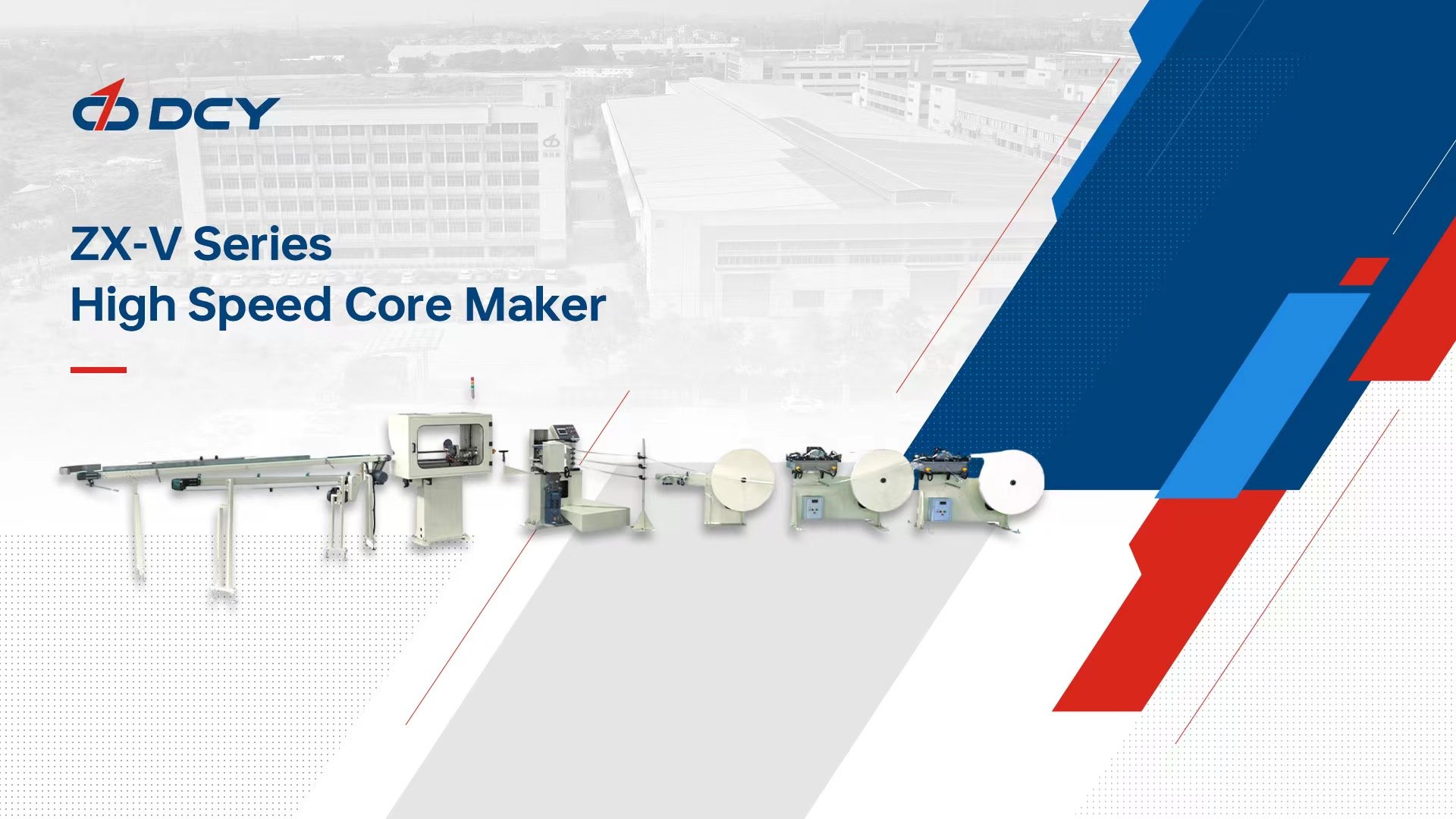
High-Speed Core Machine
Spins and cuts cardboard inserts to provide structural internal roll strength.
Engineering Efficiency Principle: A high-output line requires complete synchronization. If downstream slitting, wrapping, or log transfer components experience micro-stoppages, the upstream Toilet Paper Rewinding Machine must reduce its speed or halt, creating thermal and mechanical stress on the paper web. True optimization requires selecting balanced, high-efficiency system components.
Deep Technical Analysis & Proprietary Mechatronic Innovations
To establish long-term market leadership in 2026, a commercial Toilet Paper Rewinding Machine must move beyond standard mechanical gearboxes and implement advanced digital mechatronics. High-performance engineering solves complex production floor bottlenecks, controls material costs, and delivers verifiable equipment runtime reliability.
4.1 Proprietary Glueless Tail Sealing Systems
Conventional rewinding machinery relies on liquid chemical glues to seal the final sheet of a completed tissue log. This old-fashioned method creates ongoing consumable costs and leads to adhesive accumulation on cutting blades and downstream wrapping conveyors, requiring frequent maintenance shut-downs for manual cleaning. Dechangyu (DCY) eliminated this challenge by integrating the advanced mechanical Герметик для хвоста без клея. This system uses a combination of water atomization and precise pneumatic ply-bonding pressure via microscopic hardened steel teeth to secure the final tail sheet. This process entirely eliminates glue consumption, extends log saw blade life by reducing friction, and delivers an eco-friendly product that unrolls cleanly down to the core without yellow adhesive stains. This advancement provides a major market differentiator for modern private-label brands.
4.2 Open-Architecture Electronic Automation: Siemens and Inovance Control
The electronic control framework represents the brain of a premium Toilet Paper Rewinding Machine. In an industrial landscape focused on predictive maintenance and real-time data tracking, proprietary closed-source software creates severe barriers to expansion. Dechangyu guarantees complete system transparency, open fieldbus communication, and high hardware reliability by partnering with global industrial automation leader Siemens to integrate high-end S7-1500 PLC platforms, Sinamics multi-axis servo drives, and industrial Profinet communication networks. This system ensures electronic cam synchronization across all winding and slitting stations, keeping web tracking deviation under 0.1 mm even during high-velocity acceleration phases. For regional installations or clients seeking optimal price-to-performance metrics, our machinery integrates perfectly with high-performance motion control systems from Inovance. This flexible automation strategy ensures that maintenance technicians can easily access local spare parts inventories and adjust parameters without restrictive vendor-lock constraints.
4.3 Mechanical Capacity: Extended Web Widths and High-Velocity Operation
Maximizing a factory's profit margin requires machinery that can process wider parent rolls at high speeds without inducing web breaks. Dechangyu engineering platforms support extreme mechanical web widths up to 3600 mm, allowing converters to process massive jumbo rolls directly from large primary paper machines. Managing these dimensions requires complex web tracking and multi-drive tension control. Our unwind stands feature independent AC servo drives paired with continuous ultrasonic diameter sensors. This setup allows the central PLC to calculate parent roll mass millisecond-by-millisecond and adjust braking torque as the roll diameter shrinks, permitting continuous operational velocities up to 800 meters per minute for roll products while maintaining low acoustic signatures and minimal structural vibration.
Strategic Benchmarking: Traditional Western Tier-1 Brands vs. Dechangyu (DCY)
When executing long-term asset procurement analyses, corporate purchasing boards evaluate dechangyu.com machinery against legacy Western European or North American manufacturing companies. While traditional Western brands build reliable machinery, they introduce rigid product configurations, high capital requirements, and slow engineering responses. Dechangyu redefines this landscape by matching top-tier Western technical execution while maintaining superior engineering flexibility and a fast capital return cycle. This competitive balance is detailed in the benchmarking matrix below:
Technical Operational Parameter
Traditional European & American Brands
Dechangyu (DCY) Custom Engineering
Customization & Footprint Adaptability
Low flexibility. Offers rigid, standardized machinery layouts. Modifying roll widths or adding specialized embossing profiles requires expensive engineering re-designs.
Extremely High. Every production line is custom-engineered around specific factory floor layouts, regional utility standards, and specific client product geometries.
Capital Expenditure (CapEx) Entry Barrier
Extremely High. Large initial capital investments place heavy strain on corporate cash reserves and significantly extend factory payback schedules.
Highly Optimized. Combines top-tier mechanical build standards and international components with highly competitive capital requirements to accelerate factory payback.
Core Engineering Integration
Standard functions require expensive add-on software licenses or proprietary adhesive systems that bind the factory to ongoing chemical contracts.
Standard integration of advanced technologies like the mechanical glueless tail sealer and open-platform automation to eliminate recurring consumable expenses.
Technical Support & Components Sourcing
Delayed support response times due to multi-layered corporate bureaucracies. Specialized replacement parts require long international shipping times.
24/7 remote diagnostics. Utilizes universally accessible component standards from premium global suppliers to ensure easy local parts availability.
To evaluate this industrial landscape further and review an objective analysis of the leading international machinery suppliers, procurement officers can check our specialized industry dossier on Paper Converting Machinery Companies to Watch which charts the shifting market dynamics heading into 2026.
Operational Deployment Blueprints: Matching Capital to Local Labor Realities
Industrial manufacturing success requires balancing high-speed mechatronics with regional economic factors. A high-efficiency Toilet Paper Rewinding Machine line must be carefully configured to match local labor rates, utility expenses, and targeted distribution models. Dechangyu deploys distinct operational blueprints optimized for specific commercial environments.
In highly developed industrial markets like North America, Western Europe, and Australia, direct labor overhead is the primary threat to factory profitability. For companies operating in these regions, human intervention across the production line must be minimized. The optimal engineering solution is a fully automated, closed-loop conversion line. From the moment the primary parent roll is loaded via overhead gantry onto the unwind stands, the web is processed, embossed, rewound, sealed, split, packed, and palletized without any manual contact. This complete workflow can be reviewed in our comprehensive technical guide to Top Tissue Converting Line Equipment.
This hands-free configuration requires advanced integration with high-speed primary packaging arrays. Finished tissue packs travel from the cutting modules directly into automated packaging systems governed by our detailed Toilet Paper Wrapping Machine Guide, which execute secure polymer wrapping at high rates. This level of automation allows a massive 50,000-ton-per-year manufacturing plant to operate smoothly with only a few highly trained technical technicians in a central control room. This strategy minimizes safety liabilities, reduces human error, and delivers exceptional consistency. It is precisely why international paper giants like P&G (Procter & Gamble), Kimberly-Clark, and Australia's ABC Paper rely on our advanced machinery lines to secure their high-volume consumer supply chains.
Emerging Markets and Startup Enterprises: Modular Semi-Automatic Pathways
Conversely, for emerging manufacturing hubs across Southeast Asia, the Middle East, and Latin America, initial capital preservation is the primary goal, while local labor costs remain manageable. For these business environments, deploying an ultra-complex, fully automated, capital-heavy production line can overload the technical resources of a growing business. Dechangyu addresses this phase of industrial growth by designing highly robust, modular semi-automatic machinery lines. These configurations use automated core rewinding and precision embossing but utilize manual product transfers between the rewinding, cutting, and packaging phases. This balance drastically lowers initial capital requirements while keeping product quality at top international standards. For a detailed roadmap on starting production within this framework, entrepreneurs should review our entry-level guide on Comparing Different Types of Tissue Converting Equipment.
As a startup company expands its market share and generates steady capital reserves, Dechangyu machinery can be upgraded on-site. Thanks to our modular engineering design, factories can easily insert automatic log transfer arms, inline orbital saws, and high-speed multi-pack wrapping stations into their existing semi-automatic configurations. This flexibility allows businesses to scale their automation level in step with their growing production volumes. This step-by-step scaling strategy protects initial capital investments and avoids the costly mistake of decommissioning older machinery to expand capacity. To fully understand these operational scaling paths, consult our strategic guide on the Paper Converting Process with DCY.
Corporate Validation
Q1: What are the fundamental differences between Toilet Roll Winding Lines and Jumbo Commercial Roll Lines?
A: The core distinction centers on tension control, slitting profiles, and core loading mechanics. Consumer roll winding lines focus on rapid log formation, frequent high-speed perforation cycles, and automated tail sealing for small-diameter consumer products. Conversely, Jumbo Commercial Roll Lines handle heavy-basis-weight papers and roll diameters exceeding 300 mm for commercial and away-from-home markets, requiring high-rigidity frames and robust slitting knives to prevent sheet delamination. For a complete engineering comparison, read our complete guide: Toilet Roll vs. Jumbo Roll Converting Lines.
Q2: How does a Dechangyu winding system maintain precise ply alignment for complex embossed tissues?
A: Perfect alignment at 800 meters per minute requires high-speed mechatronic synchronization. Our machinery features independent, servo-driven unwind stands that communicate over a high-speed real-time industrial fieldbus. Downstream from unwinding, our embossing stations utilize independent servo motors to regulate the exact rotational angle of the pattern rollers. This configuration allows the central PLC to execute real-time micro-adjustments based on constant laser sensor tracking, ensuring that multi-ply webs match perfectly without sheet wrinkling or web breaks. For a deeper look into selecting winding platforms for texturized papers, see our technical summary: Which Tissue Rewinder Is Best for Soft, Embossed, or Patterned Paper?.
Q3: What specific financial and operational benefits are achieved by removing glue from the tail-sealing phase?
A: Transitioning to glueless tail sealing reduces chemical purchasing costs, saving large-scale factories tens of thousands of dollars annually. It removes sticky adhesive residue from downstream log saws and packaging conveyors, reducing scheduled maintenance cleaning downtime by up to 75% and expanding cutting blade lifespans. Finally, it eliminates glue staining on the paper web, allowing brands to deliver a premium, fully usable consumer product. To analyze how this module integrates within a high-speed line, see our overview on Tissue Lotion Machines and specialized surface enhancers.
Q4: How does a high-speed orbital log saw maintain flat, square cuts on low-density tissue rolls?
A: Fraying and edge distortion are caused by blade vibration or log movement during the cutting stroke. Dechangyu resolves this by mounting our orbital log saws on heavy, solid cast-iron frames that absorb mechanical harmonics. The log is held securely inside a continuous pneumatic clamp guide during the cutting sequence. The system also features an automatic, PLC-controlled diamond grinding assembly that continuously sharpens the circular blade at a precise geometric angle during production, ensuring clean, perfectly square cuts through every single roll. For more details on precision cutting, see our documentation on Tissue Cutting Machines for Toilet Paper.
Q5: What are the key maintenance metrics required to maximize the lifetime of an integrated conversion line?
A: Achieving a 20-year machinery lifespan requires automated lubrication tracking, continuous bearing temperature monitoring, and scheduled blade inspections. Our open-architecture PLC control systems track running hours and display preventative maintenance alerts on the operator interface. By utilizing standardized components from premium global brands, maintenance teams can quickly source wear-and-tear parts locally, avoiding long shipping delays. For a complete checklist of procurement and operational safety factors, read our core guide on Top 10 Questions to Ask Before Buying a Tissue Production Line.
Strategic Conclusion & Actionable Call to Action
In the highly competitive global paper market of 2026, operating legacy, inefficient machinery is a major barrier to profitability. Maximizing production throughput, minimizing waste, and meeting premium brand standards requires upgrading to advanced industrial solutions. Dechangyu delivers world-class Toilet Paper Rewinding Machine systems that perfectly bridge top-tier international performance with exceptional operational flexibility and rapid capital amortization. From high-speed roll processing lines to custom embossing integration, our systems help you establish an efficient, future-proof production facility.
Ready to optimize your factory floors, eliminate recurring adhesive costs, and significantly boost your production capacity? Explore our full machinery line by visiting DCY Tissue Machines: Your Top Choice, or contact our engineering team today to receive a personalized, data-driven factory layout design and machinery quote. Let us help you transform your tissue processing operations into a highly profitable, market-leading enterprise.





 English
 Español
 العربية
 Português do Brasil
 Русский