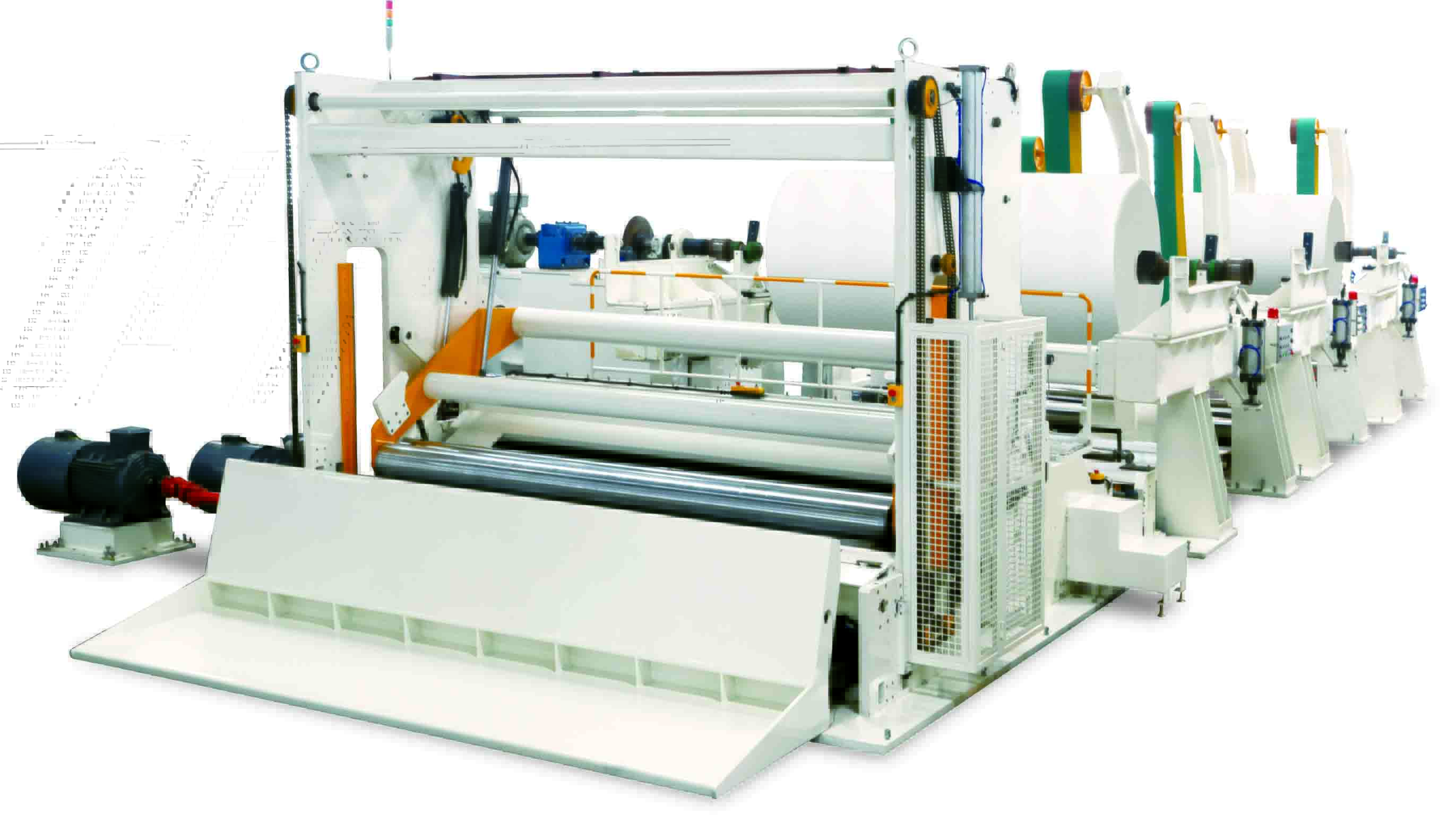
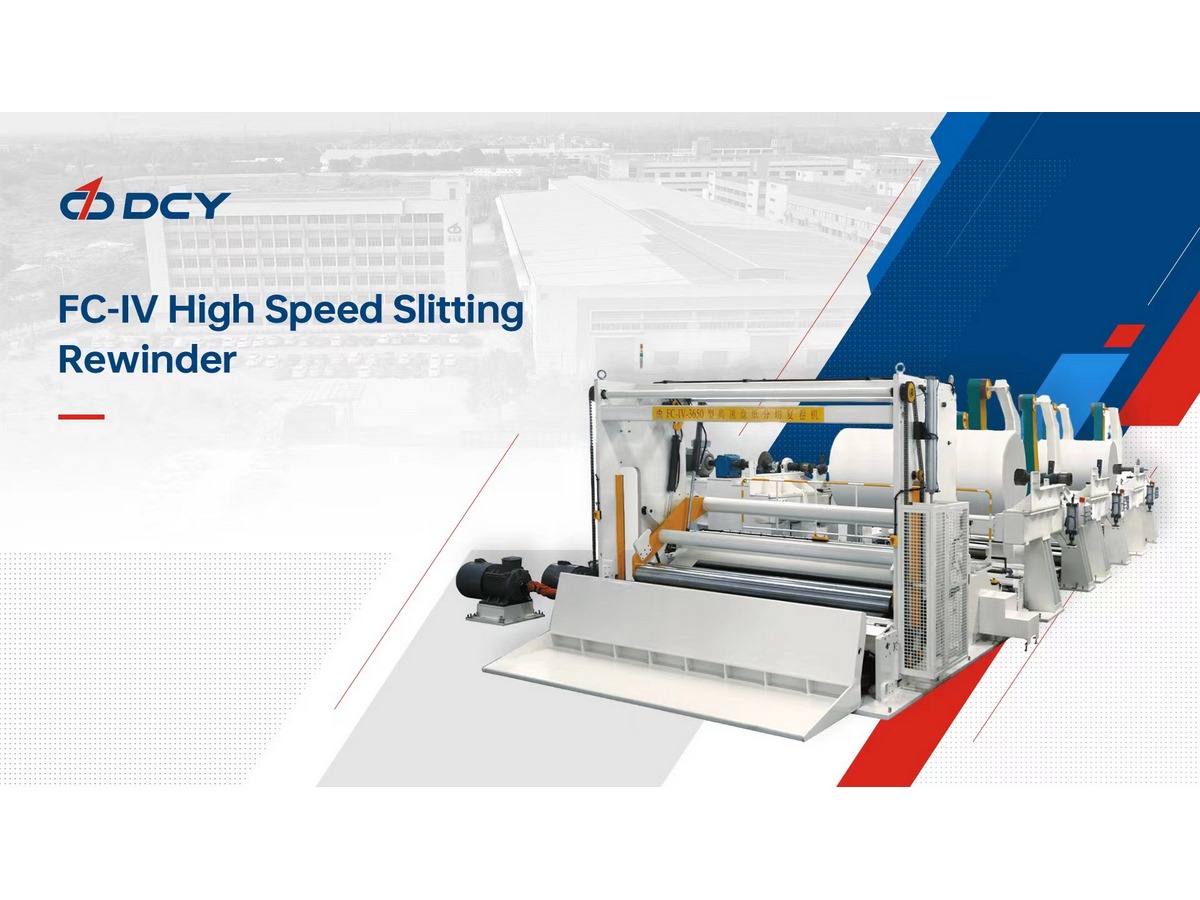
Automatic Toilet Paper Manufacturing Machine: The Ultimate Guide to Boosting Factory Efficiency
In the fiercely competitive global hygiene market, the difference between a struggling workshop and a market-leading brand often comes down to one factor: Production Efficiency.
As we move towards 2026, the tissue paper industry is undergoing a massive transformation. Rising labor costs, fluctuating raw material prices (pulp), and increasing consumer demand for high-quality, soft tissue products are forcing manufacturers to rethink their production lines. The era of manual packaging and semi-automatic rewinding is fading. The future belongs to the fully automatic toilet paper manufacturing machine.
For factory owners, investors, and procurement managers, choosing the right machinery is not just a purchase—it is a strategic decision that will define your profitability for the next decade.
As a leading expert in tissue converting technology, Foshan DeChangYu Paper Machinery (DCY), with over 30 years of experience and presence in 160+ countries and regions, has created this ultimate guide. We will dive deep into the mechanics, economics, and technological innovations of the automatic toilet paper manufacturing machine, helping you make an informed choice that secures your factory's future.
Decades ago, tissue production was a labor-intensive process. Workers had to manually transfer large paper logs to cutting saws, and packaging was done by hand. This method had three major flaws: Inconsistency, High Waste, and Safety Risks.
Today, an automatic toilet paper manufacturing machine solves these problems by integrating the entire converting process into a seamless flow. But why is the shift to full automation so critical right now?
The Labor Cost Crisis
In manufacturing hubs across Asia, Europe, and the Americas, labor costs are rising. A semi-automatic line might require 4 to 6 operators to handle rewinding, log transfer, cutting, and packing. In contrast, a modern DeChangYu automatic toilet paper manufacturing machine typically requires only 1 to 2 skilled technicians to monitor the HMI (Human-Machine Interface). This reduction in headcount directly boosts your bottom line.
Speed and Volume
Market demand is insatiable. A standard semi-auto machine might produce 120-150 meters per minute. However, advanced systems like the DCY-57 Series or our high-speed rewinding lines can operate at stable speeds of 200m/min to 250m/min (and even higher for specific models). This speed difference translates to tons of extra output per month, allowing you to fulfill large orders from supermarkets and distributors without overtime shifts.
Quality Consistency
Consumers are picky. They want tightly wound rolls, clean cuts, and perfectly sealed tails. Human operators cannot maintain this consistency over an 8-hour shift. An automatic toilet paper manufacturing machine uses precise servo motors and PLC control systems (such as Siemens or Mitsubishi) to ensure that the 1,000th roll produced is identical to the first one.
2. From Jumbo Roll to Finished Product: How an Automatic Toilet Paper Manufacturing Machine Works
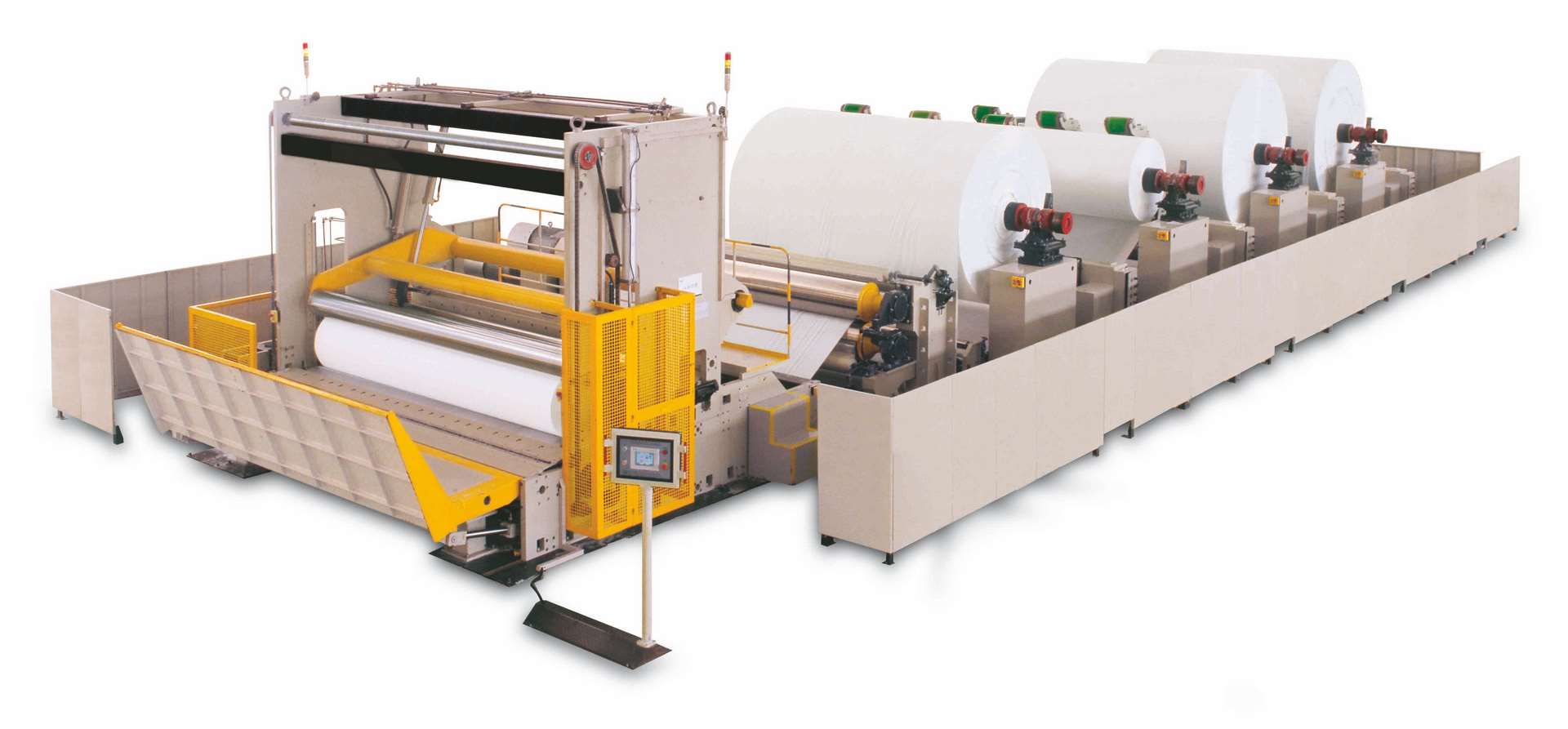
To truly understand the value of an automatic toilet paper manufacturing machine, we must look under the hood. It is not a single device but a synchronized system of units working in harmony.
A. The Unwinding Stand (Jumbo Roll Stand)
This is where the process begins. The machine lifts massive jumbo rolls (parent rolls) of raw tissue paper.
DeChangYu Insight: Our machines support various jumbo roll widths (e.g., 2850mm, 3700mm) and feature independent motor drives for precise tension control. This prevents web breaks, which are the main cause of machine downtime.
B. Embossing and Lamination Unit
This section defines the "feel" of the product. The paper passes through steel-to-rubber or steel-to-steel rollers to create patterns.
Function: Embossing increases the bulk (volume) of the roll and improves absorbency.
Technology: We offer both "Point-to-Point" and "Nested" embossing technologies. For premium 3-ply or 4-ply toilet paper, lamination applies a thin layer of glue to bond the sheets, creating a luxurious, soft texture.
C. Rewinding and Perforation
This is the core of the automatic toilet paper manufacturing machine. The paper is rewound onto a cardboard core (or coreless) to the desired diameter. Simultaneously, perforation blades create the tear lines between sheets.
Precision: Electronic counters ensure exact sheet counts. If you sell a roll with 300 sheets, our machine delivers exactly 300 sheets, avoiding consumer complaints or material giveaway.
D. Tail Sealing (The Critical Step)
Once the log is rewound, the tail (end of the paper) must be sealed to prevent unraveling.
Note: This is where many competitors fail, using excessive glue that ruins the last few sheets. (See Section 3 for our solution).
E.The Accumulator
The accumulator acts as a buffer zone between the rewinder (continuous process) and the log saw (intermittent process). It stores paper logs temporarily, allowing the rewinder to keep running even if the cutter pauses for a moment.
F. The Log Saw (Cutting)
The long paper logs are fed into a high-speed orbital log saw.
DeChangYu Tech: Our log saws utilize automatic blade sharpening systems and advanced clamping mechanisms to ensure a square, clean cut without crushing the roll.
Why do clients from 160 countries and regions choose DeChangYu? Because we don't just assemble parts; we innovate solutions. Our flagship contribution to the industry is our patented Glue-Free Tail Sealing Technology.
The Problem with Traditional Glue Sealing
Most standard automatic toilet paper manufacturing machines spray glue on the tail of the finished roll to seal it. This leads to:
Waste: The glue penetrates several layers, making the first 3-5 sheets unusable.
Machine Dirt: Glue overspray accumulates on the machine, requiring frequent cleaning shutdowns.
Consumer Frustration: We’ve all struggled to peel open a toilet roll that is glued too tightly.(improtamt)
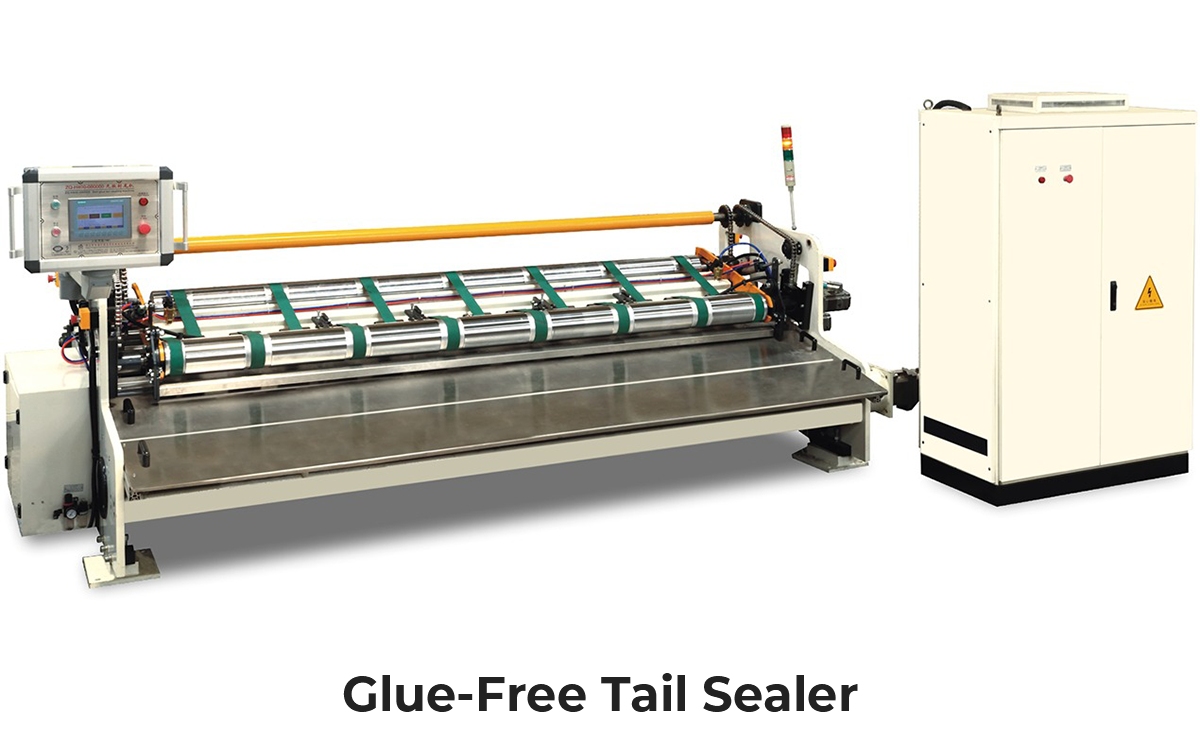
The Game-Changer: DeChangYu’s Patented Glue-Free Tail Sealing Technology
For decades, the industry standard for sealing toilet rolls relied on adhesive glue. While functional, it created a host of problems—messy residues, wasted paper, and frequent machine stoppages for cleaning.
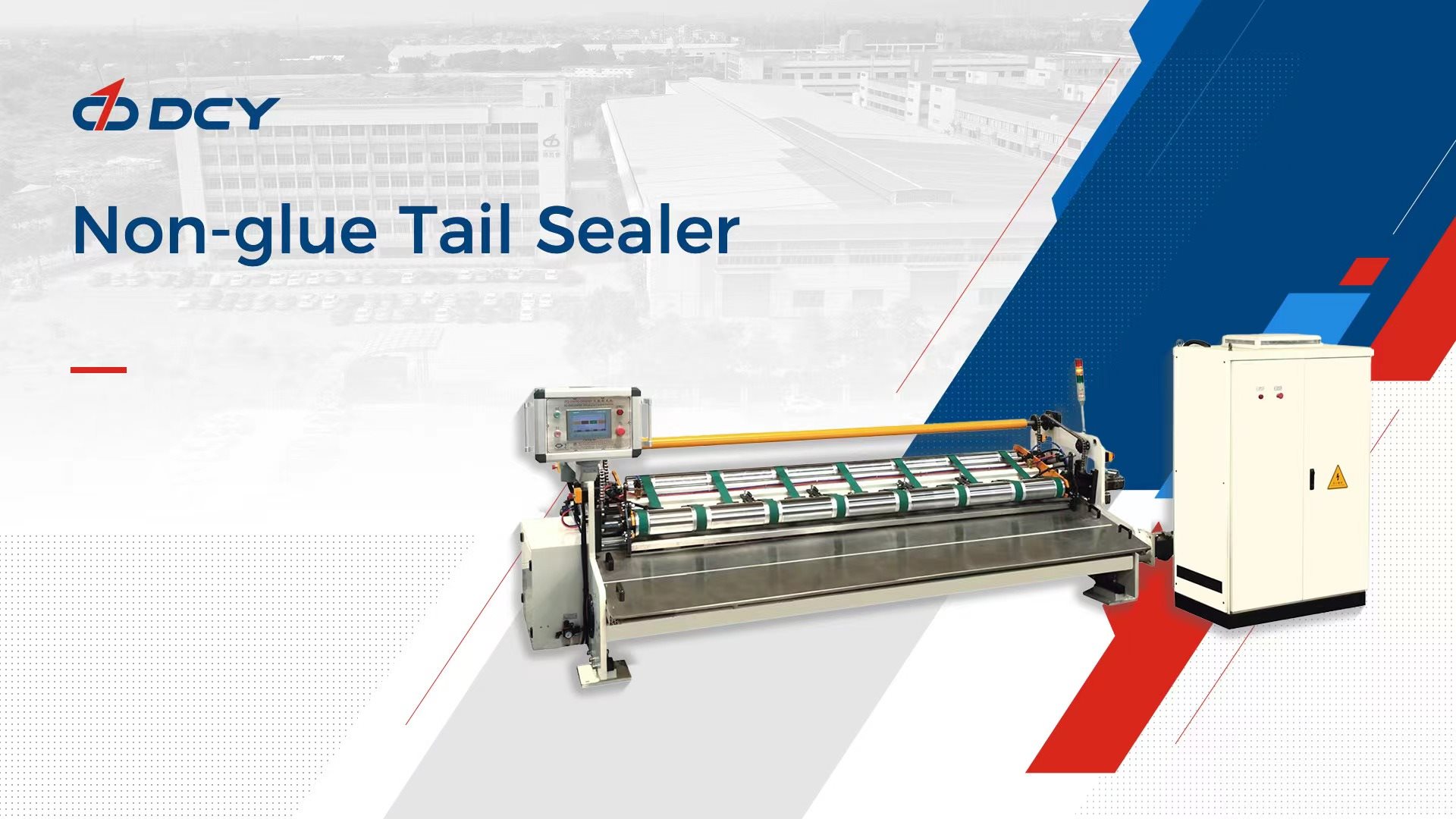
DeChangYu has rewritten the rules. Backed by our proprietary national patents, we have developed a revolutionary Glue-Free / Water Sealing System. Instead of spraying chemical adhesives, our machine utilizes precise water application and mechanical fiber bonding technology to seal the tail of every roll perfectly.
Here is why this technology is a must-have for modern factories:
1. Zero Chemical Residue (Eco-Friendly & Safe) In an era where consumers demand sustainability, glue-free rolls are a premium selling point. Our technology uses 100% pure water or physical bonding, ensuring no chemical traces are left on the paper. This makes your product safer for sensitive skin and more environmentally friendly, helping your brand stand out on the shelf.
2. The "Perfect Start" User Experience We have all experienced the frustration of trying to start a new toilet roll, only to tear the first three layers because they were glued together. DeChangYu’s technology ensures the tail is sealed firmly enough for packaging but releases effortlessly when pulled. No wasted sheets, no frustration. This small detail significantly boosts consumer satisfaction and brand loyalty.
3. Maximize Uptime: 20% Less Maintenance Glue is the enemy of high-speed machinery. Over time, glue overspray accumulates on blades, rollers, and sensors, turning into hard residue that forces operators to stop the line for cleaning. By eliminating glue, our machine stays clean. This reduces maintenance downtime by up to 20%, allowing you to produce more tons per month with the same labor hours.
4. Significant Cost Savings (Lower OPEX) Glue is a recurring consumable cost that adds up over millions of rolls. By switching to a water-sealing system, you completely eliminate the budget for sealing adhesive. Additionally, you save on the cost of cleaning solvents and replacement parts damaged by glue build-up. It is a direct boost to your bottom line.
This technology, backed by our 60+ national patents, positions our automatic toilet paper manufacturing machine as a leader in eco-friendly and efficient production.
3. Is Toilet Paper Manufacturing Profitable in 2026? ROI Analysis for Automatic Machine Investment
Investing in an automatic toilet paper manufacturing machine is a significant capital expenditure. However, the Return on Investment (ROI) is often faster than expected due to efficiency gains.
Let’s look at a hypothetical scenario comparing a Semi-Auto Line vs. a DeChangYu Fully Automatic Line.
Scenario: Producing 5 Tons Per Day (TPD)
Cost Factor
Semi-Automatic Line
DeChangYu Automatic Line
Impact
Operators Needed
5 Staff (Rewinding, Cutting, Packing)
2 Staff (Monitor & QC)
60% Savings on Wages
Paper Waste
3% - 5% (Due to manual handling)
< 1.5% (Precision Control)
Huge Material Savings
Production Speed
Limited by manual transfer
Continuous High Speed
Higher Output / Revenue
Glue Consumption
High (Tail sealing & packaging)
Low / Zero (Glue-free tech)
Lower Consumable Cost
Downtime
Frequent (Human fatigue/error)
Minimal (Predictable maintenance)
More Selling Days
The Verdict: While the upfront cost of an automatic toilet paper manufacturing machine is higher, the savings in labor and raw materials (paper accounts for ~70% of total cost) typically recover the machine investment difference within 12 to 18 months. After that point, the efficiency gains become pure additional profit.
4. Buying Guide: How to Choose the Best Automatic Toilet Paper Manufacturing Machine for Your Factory Capacity
Not all factories are the same. A startup in Africa might need a different configuration than an established supplier in Europe. Here is how to select the right automatic toilet paper manufacturing machine for your specific needs.
Are you producing "Budget" rolls or "Premium" rolls?
Budget: Focus on speed and coreless winding capabilities to save costs.
Premium: You need high-end embossing units (lamination) and perfect cut quality. Ensure the machine supports 3-ply or 4-ply processing.
Step 2: Determine Production Capacity
Don't buy based on what you need today; buy for what you need next year.
If you need 3-5 tons/day: A smaller width model (e.g., handling 1.8m parent rolls) might suffice.
If you need 10+ tons/day: You must opt for a wide-format automatic toilet paper manufacturing machine (2.8m or 3.6m width) that can process wider jumbo rolls.
Step 3: Assess Factory Space
Automation requires a linear layout. Do you have a long production hall?
DeChangYu Service: We provide custom factory layout designs. If your space is limited, we can configure U-shaped lines to fit your building.
Step 4: Verify Supplier Credentials
The machine is only as good as the support behind it.
Checkpoints: Does the supplier have ISO 9001 certification? Do they have a track record of exports? (DeChangYu exports to 160+ countries and regions). Can they provide video calls to show the machine running in their factory?
5.Reducing Downtime: Maintenance & Safety Checklist for Your Automatic Toilet Paper Manufacturing Machine
Purchasing the automatic toilet paper manufacturing machine is step one. Operational excellence is step two.
Installation and Training
Modern machines are complex. DeChangYu provides "Turnkey Projects." We send expert engineers to your site to install the machine and, more importantly, train your staff.
Training covers: HMI operation, parameter setting, blade changing, and basic troubleshooting.
Routine Maintenance Checklist
To ensure your automatic toilet paper manufacturing machine runs for 15+ years:
Daily: Clean paper dust (fluff) from sensors and motors. Dust is the enemy of electronics.
Weekly: Check the sharpness of the log saw blade and lubricate moving parts.
Monthly: Inspect timing belts and check the tension of the unwinding stand.
Safety Features
DeChangYu prioritizes safety. Our machines come equipped with:
Emergency Stop Buttons at every station.
Safety Guards/Doors: The machine automatically stops if a door is opened during operation.
Sensor Protection: Detects if a worker's hand is too close to the cutting area.
Expert FAQ: Troubleshooting & Operating Your Automatic Toilet Paper Manufacturing Machine
Q1: What is the price of a fully automatic toilet paper manufacturing machine?
A: Prices vary significantly based on width (1575mm to 3600mm), speed, and configuration (embossing, lamination). While we cannot list a specific price here due to customization, DeChangYu offers competitive pricing for premium quality. Contact us for a tailored quote based on your budget.
Q2: Can the machine produce both toilet paper and kitchen towels?
A: Yes! Most of our automatic toilet paper manufacturing machine models are versatile. By changing the embossing rollers and adjusting the perforation pitch via the PLC screen, you can switch between toilet rolls and kitchen towels on the same line.
Q3: What raw materials do I need?
A: You will need Jumbo Rolls (Tissue Paper), Cardboard Cores (tubes), and Tail Sealing Glue (unless you use our Glue-Free model). DeChangYu can also assist in connecting you with reliable raw material suppliers.
Q4: How much space do I need for a full line?
A: A typical fully automatic line (Rewinder + Accumulator + Saw + Packing) generally requires a length of 15 to 25 meters and a width of 5 to 8 meters. However, we customize layouts to fit your specific factory dimensions.
Q5: Why choose DeChangYu over European or other Chinese competitors?
A: We offer the perfect balance of European Quality at Chinese Prices. With our 100,000㎡ manufacturing base and strict QC (ISO certified), we deliver machines that rival German engineering in stability but are more accessible for growing businesses. Our patent portfolio proves our commitment to innovation, not just copying.
Why Choose DeChangYu for Automatic Toilet Paper Manufacturing Machine
Investing in an automatic toilet paper manufacturing machine is a major decision that impacts your factory's profitability for the next 10 to 20 years. In a market flooded with options, Foshan DeChangYu Paper Machinery (DCY)stands out not just as a manufacturer, but as a strategic partner for your success.
Here is why industry leaders from over 160 countries and region trust DeChangYu:
Innovation Leadership (60+ Patents): We don't just follow trends; we set them. Our patented Glue-Free Tail Sealing Technology and advanced embossing systems ensure your products are superior in the market while reducing your material waste.
Proven Global Experience: With over 30 years of experience, we understand the unique challenges of different markets. Whether you are in Southeast Asia, Africa, Europe, or the Americas, we have successfully installed lines near you.
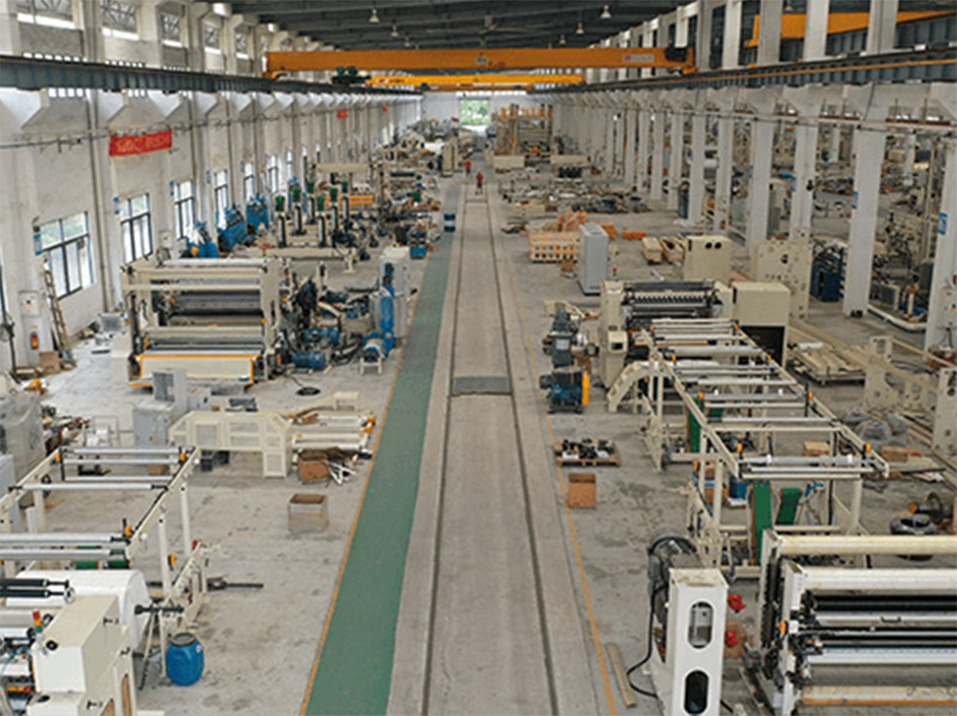
Manufacturing Excellence: Our machinery is built in a 100,000㎡ modern manufacturing base, strictly adhering to ISO 9001:2015 and CE standards. We use top-tier components (like Siemens/Mitsubishi PLC) to guarantee stability and longevity.
Turnkey Solutions: We provide more than just an automatic toilet paper manufacturing machine. We offer complete "Turnkey Projects"—from factory layout design and raw material sourcing to installation, commissioning, and staff training.
Cost-Effective Performance: DeChangYu delivers "European Quality at Chinese Prices." Our machines offer the high speed (200-250m/min) and precision you expect from top German brands but with a faster ROI period.






 English
 Español
 العربية
 Português do Brasil
 Русский