Why a Tissue Palletizing Machine Can Improve End-of-Line Efficiency?
Investing in a tissue palletizing machine automates the stacking process, eliminating the inefficiencies of manual labor. It guarantees consistent pallet quality, reduces the risk of damage during transport, and boosts production capacity by synchronizing with packaging lines. This automation minimizes bottlenecks, enhances workplace safety, and allows for real-time monitoring of production flow. By streamlining end-of-line operations, you can achieve greater efficiency and reliability. Discover further insights on optimizing your production processes.
Key Takeaways
- Automated tissue palletizing machines streamline end-of-line processes by reducing manual handling and eliminating bottlenecks in production flow.
- Consistent pallet quality is achieved through precise stacking patterns, enhancing stability during transport and reducing damage to tissue packs.
- Integration of advanced automation technologies enables real-time monitoring and synchronization of converting and packaging sections, maximizing output efficiency.
- Reduced reliance on manual labor lowers operational costs while improving workplace safety by minimizing repetitive lifting tasks.
- Flexible programming allows for quick adjustments to pallet patterns, accommodating various product specifications and ensuring effective handling.
Introduction
As tissue converting and packaging lines operate at increasingly high speeds, the need for efficient end-of-line solutions has never been greater. Manual palletizing often becomes the final production bottleneck, hindering overall output and efficiency. An automatic tissue palletizer addresses this issue by automatically stacking packaged tissue products onto pallets, ensuring a seamless flow of operations. By implementing an automatic palletizing system, you can achieve continuous production, considerably reduce labor requirements, and maintain consistent pallet quality. In addition, it enhances safety for your workforce and simplifies warehouse handling. Suppliers like DeChangYu offer integrated solutions that encompass high-speed folding and packaging, providing you with reliable technology to optimize your production process and meet increasing demand.
What Is a Tissue Palletizing Machine?
A tissue palletizing machine is an automated system that efficiently organizes and stacks finished tissue products onto pallets, typically positioned after packaging equipment. This setup accommodates various tissue products, ensuring smooth integration into new or existing production lines. Understanding where palletizing fits into the overall tissue production process is essential for optimizing efficiency. Additionally, this equipment is vital for enhancing eficiencia de producción by streamlining the end-of-line processes in tissue manufacturing.
Where Palletizing Fits into a Tissue Production Line
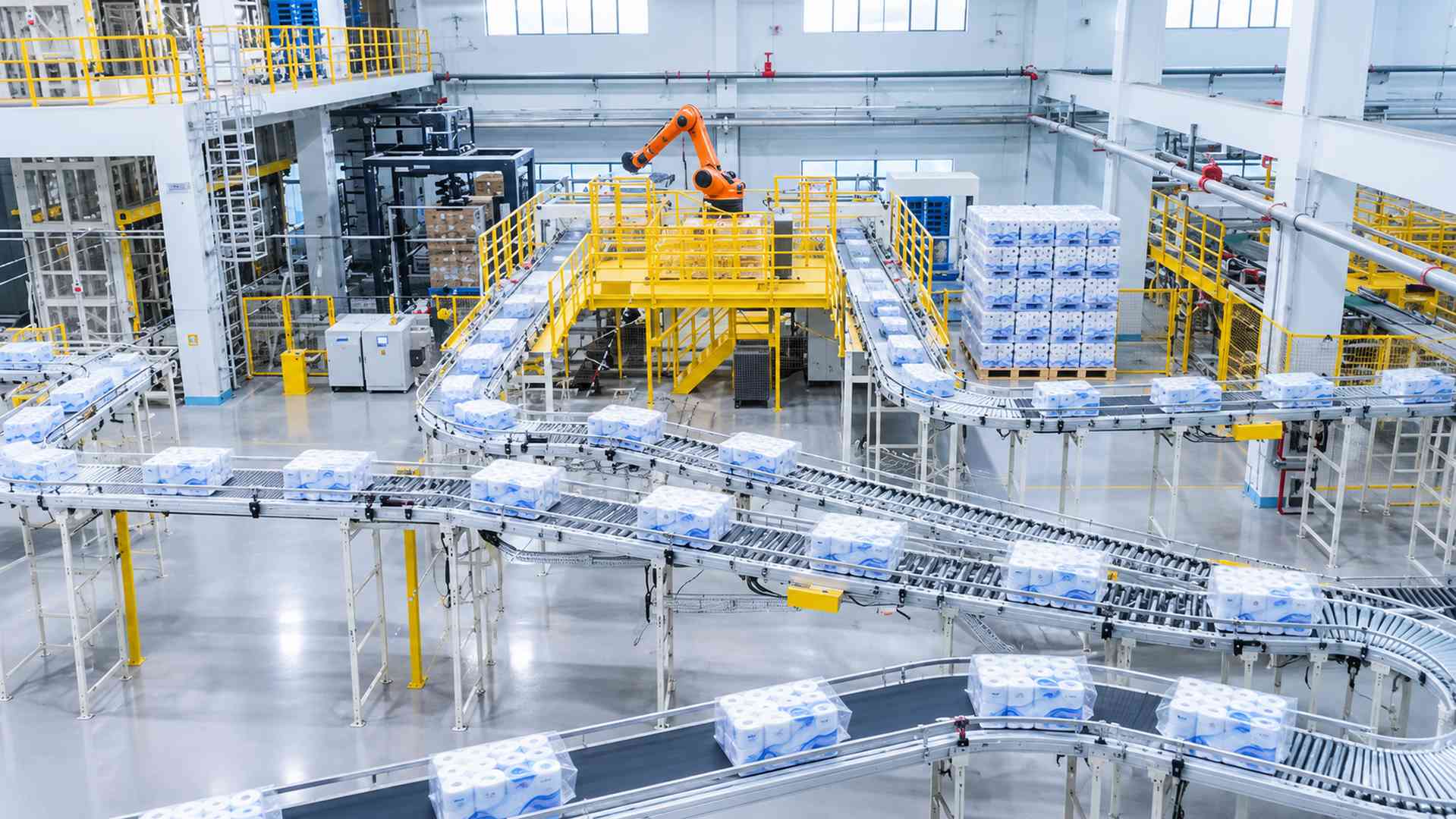
Palletizing plays an essential role in the tissue production line, streamlining the final stages of manufacturing. After jumbo roll unwinding, rewinding, and cutting, the tissue moves through individual packaging and bundling or case packing. Here, an efficient robotic palletizing system comes into play, organizing and stacking packaged products onto pallets for storage or shipment. This automation reduces labor costs and enhances consistency in pallet formation, which ultimately optimizes the tissue packaging line. Additionally, the integration of advanced automation technologies allows for real-time monitoring of production efficiency, ensuring that the palletizing process aligns seamlessly with overall manufacturing goals. Following palletization, stretch wrapping secures the load for transport, minimizing damage during handling and storage. By integrating a robotic palletizing system, you can greatly improve end-of-line efficiency, ensuring a swift and reliable shift from production to distribution.
Tissue Products That Can Be Palletized
When considering the efficiency of a tissue palletizing machine, it’s important to recognize the variety of tissue products that can be effectively organized and stacked. These machines streamline the end-of-line process, ensuring that different products are handled with precision. The following tissue products can be efficiently palletized:
- Toilet paper multipacks
- Kitchen towel packs
- Boxed facial tissue
Additionally, soft-pack facial tissue, napkin cartons, folded hand towel packs, industrial tissue products, and shipping cases containing finished tissue products are all suitable for palletizing. By implementing a tissue palletizing machine, you can increase productivity, reduce labor costs, and enhance overall workflow efficiency in your production line. Furthermore, integrating a fully automated production line can further optimize the handling and packaging of these products.
Why Manual Palletizing Becomes an End-of-Line Bottleneck
In your production line, efficiency hinges on the slowest stage, often manual palletizing. High-speed converting and packaging machines can generate finished packs at a rate that outpaces manual handling, causing delays when downstream conveyors fill up. If you improve the rewinder or packaging machine without addressing manual palletizing, you won’t see an increase in overall factory output. Additionally, tissue market growth emphasizes the need for streamlined processes to meet rising consumer demand and prevent bottlenecks in production.
Manual Handling Cannot Always Match Packaging Speed
While manual palletizing may seem efficient at first glance, it often becomes a considerable bottleneck in the packaging process. Workers must repeatedly collect, carry, align, and stack products, which can slow down operations. Several factors contribute to this decline in efficiency:
- Operator speed often decreases during long shifts, impacting productivity.
- Production flow varies based on worker availability, experience, and fatigue.
- Inconsistent handling can lead to mistakes and rework.
These challenges highlight the limitations of manual handling. An automatic palletizer can provide more consistent handling throughout the shift, ensuring that your packaging process maintains a steady pace. By minimizing human error and fatigue, you can greatly enhance end-of-line efficiency. Additionally, investing in latest automation capabilities can further optimize your production line and increase overall output.
Labor Availability Can Limit Production Capacity
Manual palletizing not only struggles with speed but also faces significant challenges in labor availability, which can severely limit production capacity. Recruiting workers for repetitive end-of-line tasks is increasingly difficult, often requiring multiple operators across various shifts. High employee turnover leads to increased training, overtime, and supervision costs, further straining resources.
| Factor | Challenge | Impact on Production |
|---|
| Recruitment | Difficulty hiring qualified workers | Limited workforce availability |
| Training | Time-consuming onboarding process | Reduced productivity during ramp-up |
| Turnover / Overtime | Higher labor costs and employee fatigue | Reduced profit margins and operational efficiency |
Automation allows existing workers to focus on inspection, machine operation, maintenance, and logistics, ultimately enhancing overall efficiency and addressing these labor-related challenges. Moreover, integrating advanced technology and automation enhancements can significantly improve operational efficiency and reduce reliance on manual labor.
Inconsistent Pallets Create Additional Problems
When palletizing tissue products, inconsistent stack quality can quickly become a significant bottleneck at the end of the production line. Manual palletizing often results in issues that hinder efficiency, including:
- Uneven stacking and misaligned packs - This leads to unstable loads during transport.
- Leaning pallet loads - They increase the risk of crushed or damaged tissue packs, affecting product quality.
- Poor use of pallet space - This results in more time required for pallet wrapping and warehouse handling.
These problems create delays and inefficiencies, ultimately impacting your operation’s productivity. By automating the palletizing process, you can achieve consistent stack quality and enhance overall end-of-line efficiency. Additionally, modern tissue conversion machines ensure uniformity and reducing material waste throughout the production process, further contributing to improved efficiency.
How a Tissue Palletizing Machine Improves Efficiency
A tissue palletizing machine streamlines your production line by maintaining continuous product flow, which allows for higher throughput. By automating the palletizing process, it also reduces your reliance on manual labor, freeing up workers for more critical tasks. This technology not only increases your usable production capacity but also guarantees consistent pallet patterns and minimizes product damage. Additionally, implementing a tissue palletizing machine aligns with the commitment to enhancing efficiency in tissue production that companies like Dechangyu prioritize.
Maintains Continuous Product Flow
To maintain a continuous product flow, the tissue palletizing machine efficiently receives finished packs directly from the conveyor, ensuring seamless integration into the packaging process. This automated system enhances efficiency through:
- Automatic product counting and alignment: Packs are precisely counted and aligned for ideal grouping.
- Layer formation: The machine organizes products into layers, ready for palletizing without manual intervention.
- Continuous handling: This reduces conveyor congestion, allowing for a smooth workflow.
Additionally, features like automatic pallet dispensing and completed-pallet removal minimize interruptions, promoting uninterrupted palletizing. This streamlined operation directly correlates with higher overall equipment utilization, ensuring you maximize productivity throughout your packaging line. By implementing a tissue palletizing machine, you enhance efficiency and improve your operational capabilities. The pillow pack machine offers flexibility for various product shapes, complementing the benefits of palletizing.
Increases Usable Production Capacity
While higher machine speed often seems advantageous, it doesn’t guarantee an increase in finished output. Theoretical equipment speed may look promising, but actual factory throughput can fall short. By implementing an automatic tissue palletizing machine, you can synchronize the converting and packaging sections more effectively, allowing them to operate closer to their intended capacity. This means your existing lines can produce more finished products without the need for an additional complete converting line. Consequently, you maximize your usable production capacity, ensuring that your factory runs at peak efficiency. In this way, you not only enhance output but also optimize resource utilization, making your operations more profitable and sustainable in the long run. Additionally, comprehensive quality assurance throughout the manufacturing process can further enhance operational reliability.
Reduces Dependence on Manual Labor
Implementing a tissue palletizing machine considerably lessens your reliance on manual labor by automating repetitive handling tasks that once required multiple workers. This shift can streamline operations and enhance productivity.
Here are some key benefits:
- Reduced Labor Costs: Over time, you can save on labor expenses, easing financial pressures.
- Minimized Recruitment Needs: With fewer workers required for manual tasks, hiring and training demands decrease.
- Operator Oversight: While automation enhances efficiency, an operator may still be necessary for supervision, pallet supply, fault handling, and quality checks.
Ultimately, while specific labor reductions depend on various factors like pallet size and product type, the potential efficiency gains from automation are significant. Additionally, the implementation of a tissue palletizing machine can lead to improved machine performance optimization through continuous monitoring and analysis for enhanced productivity.
Produces Consistent Pallet Patterns
A tissue palletizing machine leverages detailed pallet recipes to precisely determine the position and orientation of each pack, ensuring that every layer of the pallet is uniform. This controlled placement creates consistent layers, which translates to square and stable pallet loads. These uniform pallets not only enhance stability during transport but also simplify stretch wrapping, ensuring secure loads that are less prone to shifting. When you handle these consistent pallets with forklifts, you reduce the risk of tipping or dropping products. Additionally, their regular shape facilitates efficient storage and container loading, allowing for optimized space usage. Overall, the ability to produce consistent pallet patterns greatly enhances operational efficiency at the end of your production line. Moreover, implementing advanced automation control systems can further improve the efficiency of palletizing and overall production processes.
Reduces Product Damage
Tissue products are inherently lightweight and compressible, making them vulnerable to deformation during handling. To mitigate this risk, a tissue palletizing machine employs specialized grippers designed specifically for tissue bundles and cartons, guaranteeing ideal handling. Here’s how it reduces product damage:
- Controlled Gripping Pressure: Prevents crushing of rolls, boxes, or soft packs.
- Gentle Handling: Maintains product integrity through careful acceleration and deceleration.
- Accurate Product Placement: Guarantees that items are positioned correctly, minimizing the risk of shifting and damage. Additionally, the integration of automation capabilities enhances the overall efficiency of the palletizing process, ensuring consistent performance and reduced manual intervention.
Improves Workplace Safety
While minimizing product damage is essential, enhancing workplace safety is equally important in tissue handling operations. Repeated lifting, bending, reaching, and twisting can lead to fatigue and musculoskeletal strain, increasing the risk of injuries. Manually built pallets may also become unstable, posing hazards from dropped products. By automating the palletizing process, you keep operators away from these repetitive lifting tasks, greatly reducing injury risks. Additionally, modern tissue palletizing machines incorporate safety features like fencing, sensors, interlocks, and emergency stops, ensuring a safer working environment. Controlled access further protects your team from potential accidents, allowing them to focus on other important tasks without the constant worry of injury associated with manual handling. Furthermore, having a local team with fast reaction capabilities ensures that any operational issues can be addressed promptly, enhancing overall safety and efficiency.
Improves Warehouse and Transport Efficiency
Efficient warehouse and transport operations hinge on consistent pallet dimensions, which tissue palletizing machines deliver with precision. This consistency enhances various aspects of operations, including:
- Space Utilization: Optimized dimensions allow for better stacking and storage, maximizing warehouse space.
- Forklift Efficiency: Easier pickup and movement of pallets reduce handling time and minimize the risk of accidents.
- Load Security: Reliable stretch wrapping guarantees that loads remain stable during transport, reducing damage.
Stable pallets minimize movement during truck or container transport, leading to fewer product losses. Additionally, consistent dimensions simplify pallet counting, labeling, inventory management, and shipment preparation, streamlining processes and improving overall efficiency in your operations. With high-end conversion machines like those offered by Roll Solutions - DCY, businesses can further enhance their production capabilities and meet evolving demands in the tissue industry.
How an Automatic Tissue Palletizing System Works
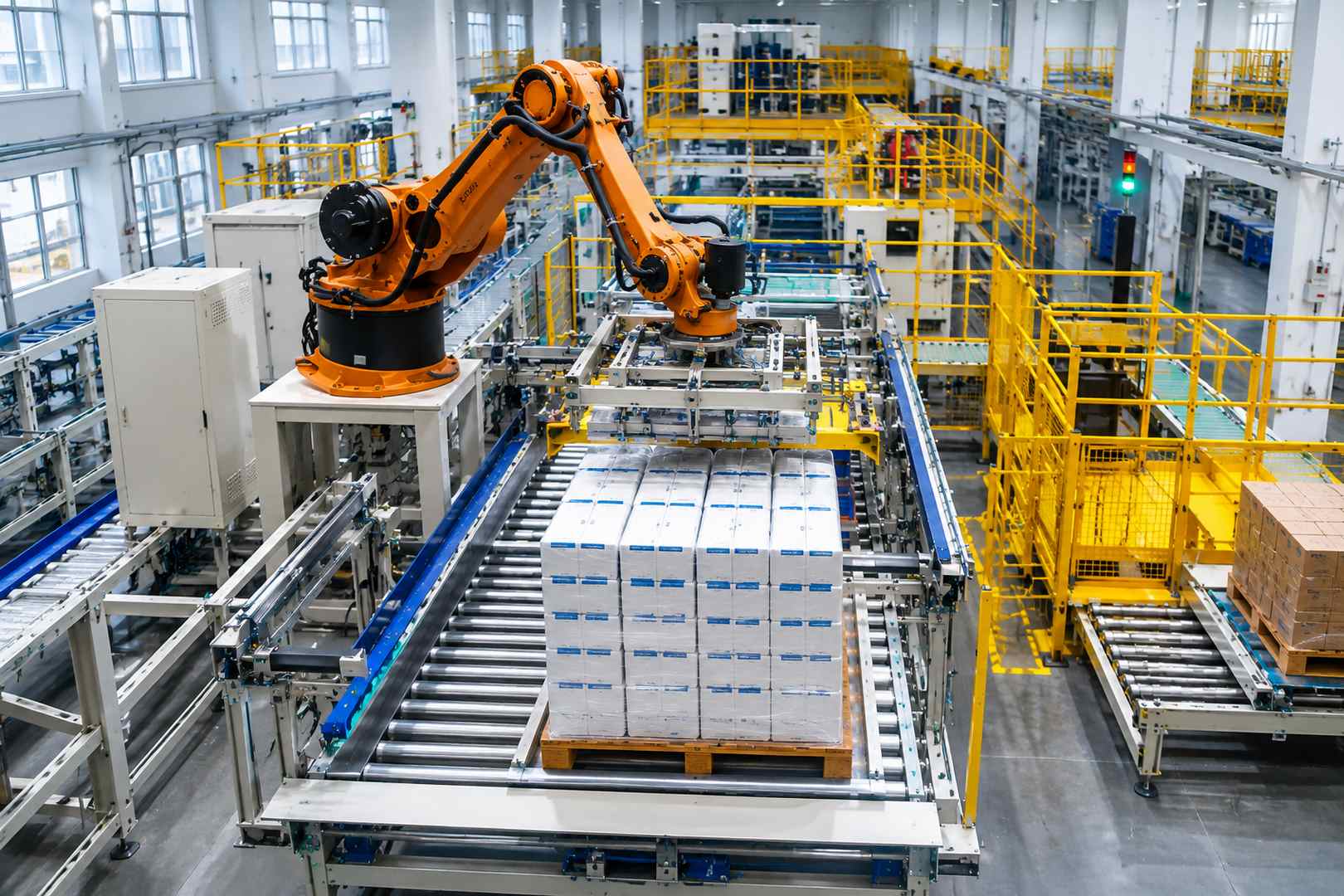
In an automatic tissue palletizing system, the process begins with product infeed and orientation, ensuring the tissues are correctly positioned for efficient handling. Next, the system groups and forms layers of products before placing them onto pallets with precision. Finally, completed pallets discharge seamlessly, ready for storage or shipment, maximizing throughput and minimizing downtime.
Product Infeed and Orientation
Automatic tissue palletizing systems rely on a seamless product infeed and orientation process to guarantee efficiency and accuracy. This process involves several key components:
- Conveyors: They control product spacing and direction, ensuring a smooth flow from the packaging or case-packing machine.
- Sensors: These detect the size, position, and arrival of each product, providing real-time data for ideal handling.
- Alignment Mechanisms: They prepare the products for grouping, aligning them perfectly for the next steps in the palletizing process. Additionally, the integration of advanced PLC-based control systems enhances the overall reliability of the palletizing process.
As products move through the palletizing system, they’re grouped and layered based on specific criteria like package dimensions, pallet size, and load stability requirements. The system counts products according to the selected pallet recipe, guaranteeing that each layer meets the designated specifications. Depending on the dimensions of the packages, packs may be turned, rotated, or arranged into rows to optimize space and stability. This precise arrangement not only enhances load integrity but also facilitates efficient robotic pickup. By forming complete layers or preparing groups, the automatic tissue palletizing system guarantees that each pallet is balanced and maximizes storage efficiency, ultimately improving overall end-of-line productivity and reducing the risk of damage during transport. Additionally, integrating IoT and real-time data analytics can further streamline the palletizing process by enabling remote monitoring and predictive maintenance.
Product Placement
Understanding how an automatic tissue palletizing system works is essential for maximizing efficiency in your production line. This system utilizes advanced technology to streamline product placement on pallets, ensuring optimal stacking and stability. Here’s how it operates:
- Product Transfer: A robot, gantry, or conventional layer palletizer moves your products onto the pallet.
- Stacking Patterns: Each layer is arranged according to a pre-programmed stacking pattern, enhancing load stability.
- Interlayer Addition: Slip sheets or interlayer sheets can be added when necessary, preventing product damage.
The process continues until the target pallet height or desired product quantity is achieved, ensuring a consistent and efficient workflow. By implementing this system, you can considerably improve end-of-line operations. Additionally, integrating a conveying & automatic transfer system can further enhance the efficiency of your production line by minimizing manual handling.
Completed Pallet Discharge
Once the palletizing process is complete, the finished pallet seamlessly exits the palletizing station via a conveyor system. It may then pass through an automatic stretch wrapper, which securely wraps the pallet in plastic film to guarantee stability during transport. This step is essential for protecting your products from damage and contamination. After wrapping, labels can be applied for product identification and warehouse tracking, guaranteeing accurate inventory management. Finally, the pallet is collected by a forklift for manual handling or transferred to an automated warehouse system for further processing. This streamlined discharge process not only enhances efficiency but also minimizes human error, making your end-of-line operations more productive and reliable.
Robotic vs Conventional Tissue Palletizing Machines
When choosing between robotic and conventional tissue palletizing machines, consider your specific needs for automation. The right option hinges on factors like speed requirements, product variety, factory space, budget constraints, and future production plans. Each technology offers distinct advantages that can optimize your pallet handling process.
When to Choose a Robotic Tissue Palletizer
Choosing between a robotic tissue palletizer and a conventional one hinges on several factors that can greatly impact your production efficiency. Here are three scenarios where a robotic tissue palletizer excels:
- Frequent Changeovers: If your factory produces various tissue pack sizes and requires quick adjustments, robotic systems offer flexibility and speed.
- Limited Floor Space: When space is tight, robotic palletizers can be more compact and configured to fit your layout, optimizing your factory’s footprint.
- Future Product Expansion: If you’re expecting an increase in product lines or variations, robotic palletizers adapt easily, allowing you to scale operations without extensive reconfiguration. Additionally, their precision blade selection ensures clean and accurate handling of various materials, improving overall efficiency.
When to Choose a Conventional Palletizer
If your production focuses on a limited range of standardized tissue products, opting for a conventional palletizer might be the best choice. These machines excel in high-volume, repetitive palletizing tasks, making them ideal for environments with steady demand. When product dimensions and pallet patterns change infrequently, a conventional palletizer can efficiently handle this stability without requiring frequent adjustments. Furthermore, if your factory has sufficient dedicated floor space, integrating a conventional system becomes feasible, allowing for optimized layouts and workflows. Additionally, if your production line operates under a stable long-term plan, configuring equipment around consistent output patterns enhances productivity. In such scenarios, conventional palletizers offer a reliable, cost-effective solution to improve your end-of-line efficiency. Moreover, the adoption of advanced interfolder technology can significantly impact production speed and quality, further enhancing the efficiency of your operations.
| Comparison Factor | Robotic Palletizer | Conventional Palletizer |
|---|
| Product flexibility | High | Moderate |
| Pallet pattern flexibility | High | Moderate |
| Changeover | Recipe-based and relatively fast | May require more mechanical adjustment |
| Footprint | Often compact and flexible | Depends on layer-forming configuration |
| Maximum speed | Suitable for many applications | Often preferred for very high-volume standardized products |
| Multiple production lines | One robot may serve multiple infeeds | Usually configured for a dedicated flow |
| Initial investment | Can be higher | Varies by system design |
| Future expansion | Highly adaptable | More dependent on original configuration |
Important Features of a Tissue Palletizing Machine
When evaluating a tissue palletizing machine, consider key features that enhance efficiency and adaptability. A tissue-compatible gripping system, flexible pallet pattern programming, and an automatic pallet dispenser are essential for optimizing operations. Additionally, fast product changeover and advanced PLC and HMI control greatly improve usability and performance.
Tissue-Compatible Gripping System
A tissue-compatible gripping system is essential for guaranteeing efficient handling and palletizing of tissue products. The right gripping features can considerably enhance your operation. Here are three key aspects to take into account:
- Gripper Type: Options like clamp grippers, vacuum systems, and fork-style tools can match various packaging formats and product strengths.
- Gripping Force: Verify the gripping force is sufficient to securely handle tissue products without causing deformation.
- Testing: Always test representative tissue packs with your chosen gripper design to finalize the solution, confirming its effectiveness. Additionally, implementing a fully automated production process can significantly streamline operations and reduce labor costs.
Flexible Pallet Pattern Programming
Flexible pallet pattern programming is essential for optimizing the efficiency of tissue palletizing machines, as it allows you to adapt to various product specifications and shipping requirements seamlessly. The system stores multiple product and pallet recipes, enabling quick access to different patterns. Through the Human-Machine Interface (HMI), you can easily select the appropriate pattern for each job. These pallet patterns are designed to maximize stability, enhance pallet utilization, and guarantee proper product orientation during transport. Furthermore, the programming framework allows you to add new recipes effortlessly when product specifications change. This adaptability not only streamlines operations but also minimizes downtime, guaranteeing that your tissue palletizing process remains efficient and responsive to market demands. Additionally, the commitment to innovation and quality at Dechangyu ensures that the palletizing machines incorporate the latest advancements in technology for optimal performance.
Automatic Pallet Dispenser
Automatic pallet dispensers play an essential role in the efficiency of tissue palletizing machines, making certain that empty pallets are fed into the palletizing station without manual intervention. This system greatly reduces downtime between completed loads. For ideal performance, consider these important features:
- Pallet Quality: Verify the pallets are sturdy and free from defects to prevent operational disruptions.
- Dimensional Consistency: The dispenser must handle pallets of uniform size to assure reliable dispensing.
- Material Compatibility: Match the dispenser system to your factory’s specific pallet material and size for seamless integration. Additionally, professional solutions can be customized to enhance the overall efficiency of your production line.
Fast Product Changeover
Efficient product changeover is essential for maintaining high throughput in tissue palletizing operations, especially when dealing with multiple SKUs. A tissue palletizing machine designed for fast changeover minimizes mechanical adjustments, allowing you to switch products quickly and seamlessly. By storing recipes, the machine can automatically update robot movements, product counts, and pallet patterns, reducing downtime. Adjustable conveyors and guides guarantee compatibility with various package sizes, accommodating your diverse product range without the need for extensive modifications. This level of flexibility not only boosts productivity but also enhances your ability to respond to market demands swiftly. Investing in a machine with these features will greatly improve your operational efficiency and overall output. Moreover, the integration of fully integrated production lines can further streamline processes, ensuring a smoother workflow throughout the entire operation.
PLC and HMI Control
When it comes to enhancing the efficiency of tissue palletizing operations, a robust PLC (Programmable Logic Controller) and HMI (Human-Machine Interface) control system is essential. This technology streamlines your processes, ensuring ideal performance through:
- Centralized Operation: Easily manage and select production recipes, enhancing workflow efficiency.
- Production Monitoring: Keep track of production status, allowing for real-time adjustments and improved output.
- Integration Capabilities: Seamlessly connect with upstream and downstream machines for synchronized operations.
These features not only help in maintaining speed synchronization but also provide critical alarm and fault information, product and pallet counters, and maintenance reminders. By leveraging a sophisticated PLC and HMI, you can greatly boost the overall efficiency of your tissue palletizing machine. Additionally, effective dealer training on these systems can further enhance operational competency and performance.
Safety Protection
To guarantee the safety of operators and the integrity of the tissue palletizing process, a range of critical protective features must be integrated into the machine’s design. These features not only safeguard personnel but also enhance operational efficiency.
| Safety Feature | Description |
|---|
| Safety Fences | Prevent unauthorized access to hazardous operating areas. |
| Interlocked Access Doors | Prevent doors from opening while the machine is in operation. |
| Light Curtains | Detect personnel entering the machine's operating zone and stop operation automatically. |
| Area Scanners | Continuously monitor the surrounding area for potential safety hazards. |
| Emergency Stops | Enable immediate machine shutdown in the event of an emergency. |
Integration With Pallet Wrapping and Labeling
Operators must recognize that palletizing is just one component of a thorough end-of-line automation system. To achieve peak efficiency, you need to integrate palletizing with wrapping and labeling processes. Here are three critical integrations to take into account:
- Automatic Stretch Wrapping: This protects your products during transit and storage.
- Labeling: Accurate labeling guarantees traceability and compliance, facilitating smoother operations.
- Data Exchange: Seamless communication between the palletizer, wrapper, printer, and warehouse system minimizes errors and enhances workflow.
Can a tissue palletizer efficiently manage various product formats? Yes, many systems are designed to handle multiple tissue products or package sizes. However, compatibility hinges on several factors, including the gripping tool, conveyor design, payload, product dimensions, and required speed. Different handling methods may be necessary for boxed tissues, soft packs, bundles, and cartons. To guarantee peak performance, factories should supply suppliers with samples, drawings, pack weights, and pallet patterns. Additionally, consider whether an automatic or manual gripper change is needed. It’s also wise to plan for future product variations during the initial design stage, allowing for greater flexibility and efficiency in your palletizing operations. This foresight can streamline processes and reduce downtime. Moreover, the integration of sustainable practices in palletizing can further enhance operational efficiency while addressing environmental concerns.
Can a Palletizer Be Added to an Existing Tissue Production Line?
How feasible is it to integrate a palletizer into an existing tissue production line? Retrofitting is definitely possible if your current packaging output and factory layout are suitable. Here are three key factors to take into account:
- Evaluation Requirements: Your supplier must assess conveyor height, product direction, pack spacing, and production speed.
- Space Limitations: Check available floor space, ceiling height, columns, doors, and forklift routes for accessibility.
- Control Communication: Guarantee seamless integration with existing packaging equipment for efficient operations.
Additionally, buffer conveyors may be necessary to manage short production interruptions. A thorough factory layout review is essential before confirming the final design to guarantee a smooth installation process. Furthermore, considering the operational efficiency gained from high-volume production can significantly enhance your overall system performance.
How to Plan the Palletizing Area
To effectively plan your palletizing area, start by measuring the available space to guarantee ideal layout. Separate product and forklift traffic to enhance safety and efficiency, while also allowing enough space for maintenance activities. Finally, coordinate the palletizing process with warehouse operations to streamline workflow and minimize delays.
Measure the Available Space
When planning the palletizing area, measuring the available space accurately is essential for optimizing efficiency and safety. Start by documenting key dimensions and features to guarantee a smooth workflow. Follow these steps:
- Record the length, width, and clear height of the area to determine the layout.
- Identify any columns, walls, doors, drains, and restricted areas that may affect movement and equipment placement.
- Reserve space for safety fencing and operator access, along with designated zones for empty and completed pallets.
Separate Product and Forklift Traffic
Establishing separate pathways for product and forklift traffic is essential for maintaining a safe and efficient palletizing area. By preventing forklifts from entering the robot operating area, you’ll minimize risks and enhance operational flow. Create clear routes for supplying empty pallets and removing completed loads to avoid crossing the flow of finished tissue packs. Implement barriers, markings, sensors, or automated conveyors to delineate these pathways effectively. Additionally, integrating digital data continuity can further streamline operations and ensure real-time tracking of product movement.
| Traffic Type | Recommendations |
|---|
| Forklift Traffic | Use safety barriers, marked lanes, and clear signage. |
| Product Flow | Designate dedicated pathways to ensure smooth material movement. |
| Empty Pallet Supply | Use automated conveyors or organized pallet delivery systems. |
| Load Removal | Schedule removal times to minimize congestion and production delays. |
Allow Space for Maintenance
As you plan the palletizing area, it’s essential to allow ample space for maintenance to guarantee smooth operations. This guarantees your tissue palletizing machine remains efficient and minimizes downtime. Here are three key considerations:
- Access Points: Provide easy access to the robot, gripper, conveyors, sensors, and control cabinet for quick troubleshooting and repairs.
- Wear Parts Replacement: Confirm wear parts can be replaced without removing unrelated equipment to streamline maintenance tasks.
- Clearance for Cleaning: Include sufficient clearance around the equipment for thorough cleaning and inspection, preventing contamination and wear.
Additionally, think about future line expansion before fixing the equipment position to avoid unnecessary relocations later. Proper planning today leads to increased efficiency tomorrow. Moreover, achieving high quality in your production processes can be significantly enhanced by ensuring optimal maintenance practices.
Coordinate Palletizing With Warehouse Operations
To guarantee seamless integration of your tissue palletizing operations with warehouse logistics, you need to carefully assess several critical factors. Start by confirming pallet sizes and maximum pallet heights to ascertain compatibility with your storage systems. Next, consider your warehouse rack dimensions and forklift capacity; these will dictate how efficiently you can move pallets. It’s also essential to check container or truck loading limitations, which can impact delivery schedules and logistics. Additionally, determine whether your pallets require wrapping, strapping, labeling, or weighing before storage, as these processes will affect both workflow and throughput. By addressing these factors, you create a streamlined palletizing area that enhances overall warehouse efficiency and productivity.
Information to Provide Before Requesting a Quotation
| Required Information | Why It Matters |
|---|
| Tissue product type | Determines the handling method |
| Package dimensions | Defines gripper and conveyor requirements |
| Package weight | Determines payload and gripping force |
| Packs per minute | Determines the required palletizing speed |
| Current packaging machine | Helps plan mechanical and control integration |
| Number of SKUs | Determines flexibility and changeover requirements |
| Pallet dimensions | Affects the stacking pattern and system layout |
| Required pallet height | Determines reach and layer quantity |
| Pallet pattern | Helps evaluate stability and cycle time |
| Factory layout | Determines equipment arrangement and footprint |
| Available ceiling height | Affects robot and pallet height selection |
| Pallet wrapping requirements | Determines downstream equipment integration |
| Destination market | Helps identify applicable standards |
| Future production plans | Prevents the system from becoming undersized |
Common Mistakes When Selecting a Tissue Palletizer
When selecting a tissue palletizer, it’s easy to focus solely on maximum speed, but this can lead to overlooking critical factors like product compressibility and future SKU variations. You also need to take into account integration requirements and the quality of pallets used in your operation. Ignoring these elements can result in inefficiencies and increased costs down the line.

Choosing the Machine Based Only on Maximum Speed
Choosing a tissue palletizing machine based solely on maximum speed can lead to significant inefficiencies in your production line. It’s important to take into account other factors that affect performance, including:
- Pallet Pattern: Different configurations can impact how quickly the machine operates.
- Gripper Movement: The speed and precision of the gripper can determine overall cycle time.
- Pallet Change Time: Quick changeovers are critical for maintaining high throughput.
Evaluating the complete cycle under realistic production conditions is crucial. High-speed machines may seem appealing, but if they can’t handle your specific pallet patterns or product stability, you’ll face bottlenecks. Focus on a balanced approach to guarantee maximum efficiency and performance. Additionally, consider the importance of advanced cutting technology as it can enhance the overall productivity of your line.
Ignoring Product Compressibility
Ignoring product compressibility can lead to costly errors when selecting a tissue palletizer. Tissue packs can easily deform under excessive gripping pressure, which may compromise product integrity and quality. If you’re handling soft packs or loosely bundled rolls, the challenges increase, making it crucial to evaluate how these products behave under pressure. The gripper design must accommodate the specific compressibility characteristics of your tissue products to avoid damage during handling. To guarantee peak performance, always test the gripper using actual product samples before finalizing your selection. This approach helps you avoid unnecessary product loss and maintain efficiency in your end-of-line operations, ultimately enhancing your overall palletizing process. Additionally, understanding the vacuum-assisted folding mechanism can contribute to better handling and protection of your tissue products during palletizing.
Failing to Plan for Future SKUs
Selecting a tissue palletizer without considering future SKUs can severely restrict your operational flexibility. A system designed for one package size may hinder your ability to adapt to market changes. To avoid this common mistake, keep these factors in mind:
- Additional Pack Dimensions: Confirm the palletizer can accommodate various sizes beyond your current offerings.
- Pallet Sizes: Consider future needs for different pallet configurations to enhance storage and distribution options.
- Production Lines: Choose a palletizer that integrates well with potential new production lines, allowing seamless shifts. Additionally, consider systems that align with sustainable practices to support your company’s long-term environmental goals.
Underestimating Integration Requirements
When you overlook integration requirements, you risk creating inefficiencies in your tissue palletizing operations. The palletizer needs to communicate effectively with your packaging line to guarantee smooth workflows. If conveyor speeds, product spacing, and alarms aren’t properly coordinated, you might find yourself moving the bottleneck to another section of your process. Additionally, implementing a tension and speed control system can help maintain optimal product handling during the palletizing phase.
| Integration Aspect | Impact on Efficiency |
|---|
| Conveyor Speeds | Mismatched speeds disrupt product flow. |
| Product Spacing | Inconsistent spacing increases downtime and jams. |
| Accumulation Control | Poor accumulation management creates production bottlenecks. |
| Alarm Coordination | Uncoordinated alarms delay emergency response and troubleshooting. |
Neglecting Pallet Quality
Overlooking pallet quality can lead to significant operational challenges in tissue palletizing. When you neglect this aspect, you risk automatic dispensing failures and inefficiencies. To guarantee peak performance, pay attention to the following factors:
- Pallet Specifications: Clearly define dimensions, entry direction, material, and load capacity to avoid compatibility issues.
- Consistent Quality: Confirm pallets are free of damage and uniform in quality to maintain smooth operations.
- Supplier Coordination: Make certain your pallet and machine suppliers work from the same requirements to prevent discrepancies. Additionally, manufacturers are increasingly investing in eco-friendly and biodegradable products to meet consumer preferences, which can influence pallet selection.
Overlooking After-Sales Support
While many focus primarily on the specifications and features of a tissue palletizer, neglecting after-sales support can lead to costly operational setbacks. It’s vital to ask about installation, commissioning, and operator training to guarantee smooth integration into your workflow. Confirm if the supplier offers ongoing support for future recipe changes or production upgrades, as this can considerably impact your operational flexibility. Additionally, evaluate the availability of electrical diagrams, manuals, and recommended spare-parts lists; these resources are essential for troubleshooting and maintenance. Remote support should also be considered; timely assistance can minimize downtime. By prioritizing after-sales support, you can enhance your tissue palletizing efficiency and avoid unexpected disruptions in your production line. Furthermore, ensure that the supplier provides clear terms of payment, as this can influence the overall financial planning of your operations.
When Does a Tissue Factory Need Automatic Palletizing?
When can you determine the right time for your tissue factory to shift to automatic palletizing? Consider the following factors that signal the need for automation:
- Production Bottlenecks: If your packaging line frequently slows due to delays in finished product removal, it’s time to act.
- Labor Challenges: Struggling to recruit or retain palletizing workers can hinder your efficiency; automation can alleviate this issue.
- Quality Concerns: If you face product damage during manual stacking or transport, an automatic system guarantees consistent and stable pallets. Additionally, implementing producción de alta velocidad ensures that your factory can meet increasing demands without compromising on quality.
When you’re planning to increase converting or packaging speed, or if export customers demand better pallet appearance, it’s clear that automatic palletizing is vital for enhancing your factory’s efficiency.
Why Integrate Palletizing With the Complete Tissue Packaging Line?
Integrating palletizing with the complete tissue packaging line is essential for maintaining production continuity and efficiency. Standalone machines shouldn’t be planned independently; instead, they must align with converting speed, packaging speed, conveyor accumulation, and palletizing capacity. A unified control strategy enhances fault coordination and production monitoring. Additionally, incorporating high-quality facial tissue interfolders can significantly enhance the folding precision and operational consistency of the entire production line.
| Component | Benefits | Impact on Efficiency |
|---|
| Converting Speed | Matches downstream production output | Reduces bottlenecks and idle time |
| Conveyor Accumulation | Optimizes product buffering and space utilization | Increases overall production throughput |
| Integrated Control | Synchronizes equipment and streamlines operations | Improves fault detection and resolution |
Improve End-of-Line Efficiency With DeChangYu
A tissue palletizing machine helps prevent manual handling from becoming the final bottleneck in an otherwise automated converting and packaging line. By receiving finished tissue packs directly from the packaging system and stacking them according to programmed pallet patterns, the palletizer allows products to move continuously from production to warehouse preparation without unnecessary delays.
For tissue manufacturers, this can improve overall line efficiency by reducing dependence on manual labor, maintaining more consistent production flow, and creating stable, repeatable pallet loads. Controlled handling also helps reduce pack deformation and transport damage, while automated lifting and stacking can improve workplace safety by limiting repetitive bending, carrying, and heavy manual work.
However, an effective palletizing solution should not be selected as an isolated machine. Its speed, conveyor arrangement, gripping system, pallet pattern, safety area, wrapping equipment, and control system must all be coordinated with the upstream converting and packaging processes. A balanced end-of-line design ensures that each stage can support the required output without creating a new bottleneck.
DeChangYu can configure customized tissue palletizing and end-of-line automation solutions according to your finished product format, packaging method, production capacity, pallet specifications, available factory space, and future expansion plans.
Submit your product specifications, target output, pallet dimensions, and factory layout to DeChangYu to receive a suitable tissue palletizing and end-of-line equipment configuration.




 English
 Español
 العربية
 Português do Brasil
 Русский