Complete Guide to Tissue Machines: Types, Functions, and Applications
Tissue products—whether toilet rolls, facial tissues, napkins, or hand towels—are everyday essentials in homes, businesses, and public facilities. Behind these simple products lies a complex network of advanced tissue machines that convert jumbo rolls into the finished goods we rely on.
From toilet roll rewinders to facial tissue folders, jumbo roll slitters, napkin lines, hand towel production machines, log saws, core makers, and automated packaging systems, each machine plays a critical role in ensuring hygiene, consistency, and efficiency. With additional support from embossing, printing, coating, and dust extraction technologies, modern tissue manufacturing has become smarter, faster, and more sustainable than ever before.
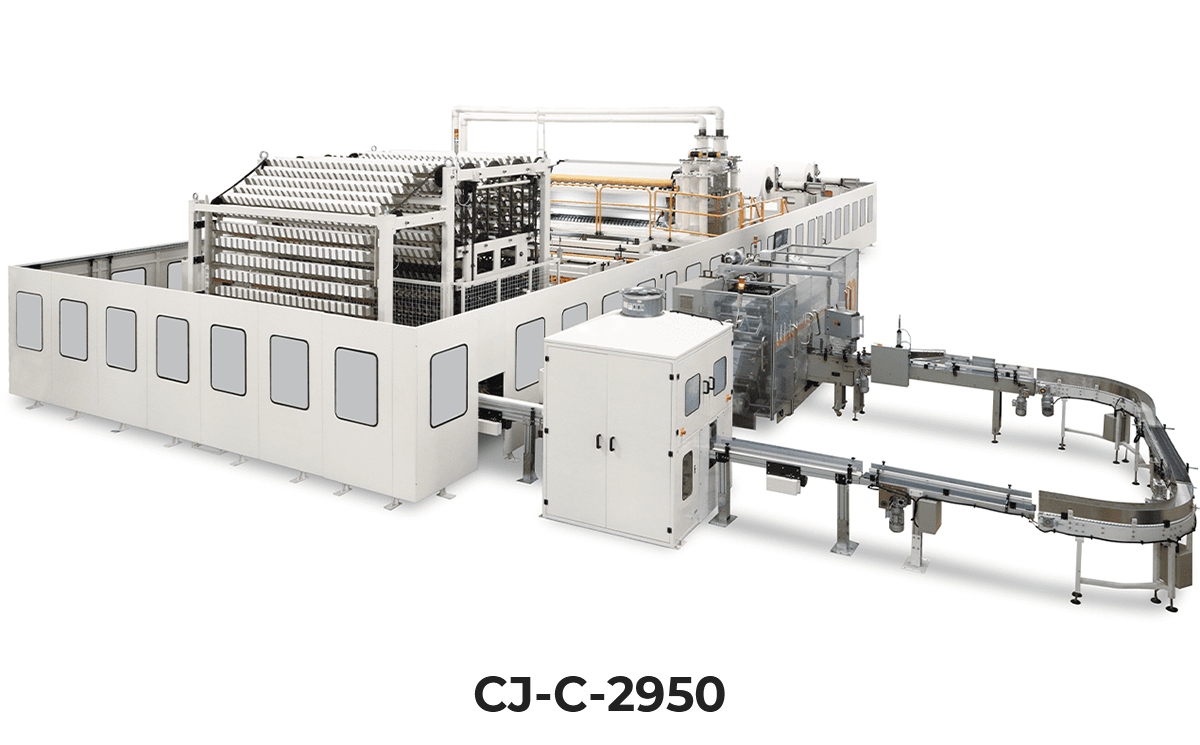
Automatic Start-Stop Toilet Roll Machine This type of machine is engineered for flexibility and efficiency. It automatically stops and restarts during the production cycle, allowing for smooth roll changes without manual intervention. This reduces operator workload and minimises downtime, making it ideal for medium- to high-volume producers who want to maintain continuous operation while keeping costs in check.
Coreless Rolls Rewinder Line A specialised rewinder designed for producing toilet rolls without paper cores. By eliminating the cardboard core, manufacturers reduce material costs, packaging waste, and environmental impact. Coreless rolls are increasingly popular in eco-conscious markets and for applications where storage efficiency is critical. These lines still deliver strong winding, neat perforations, and reliable roll quality.
Why They Matter: Toilet roll machines help manufacturers meet the massive demand for hygiene products worldwide. With automation features like embossing, perforation control, and automatic roll change, they ensure high-speed production, consistent product quality, and the ability to adapt to both traditional core rolls and innovative coreless products.
Facial tissue production lines are designed to convert jumbo tissue rolls into neatly folded, soft, and hygienic facial tissues. These machines handle unwinding, cutting, folding, stacking, and transferring processes with precision. Modern lines are fully automated, reducing manual contact and ensuring product consistency, which is especially important for hygiene-sensitive markets.
Examples:
Auto Transfer Facial Tissue Line This system automates the transfer of tissue stacks from one stage of production to the next without requiring human handling. It ensures smooth and continuous operation, minimises downtime, and reduces contamination risks. Auto transfer also improves production speed and accuracy, making it ideal for large-scale tissue manufacturers.
Fully Automatic Hanging Facial Tissue Production Line A specialised line designed to produce hanging-style facial tissues, which are popular in homes, offices, and vehicles. These machines perform precise folding and packing into hanging formats, with built-in packaging integration. They allow manufacturers to diversify their product offerings to meet different consumer needs.
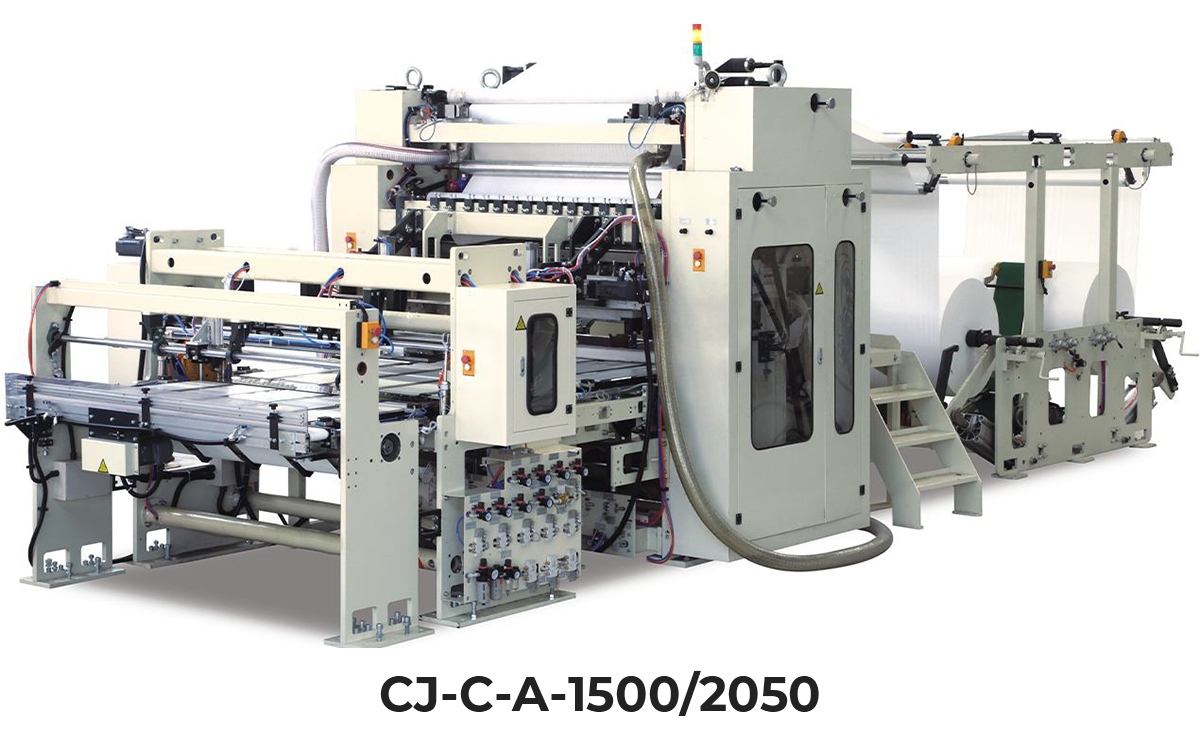
Facial Tissue Folder A core component of the line, the folder creates the classic interfolded or single-fold tissues. Advanced folders can handle multiple folding styles (such as V-fold, N-fold, or Z-fold) to accommodate customer preferences and packaging requirements. Precision folding ensures that tissues dispense one at a time, improving usability.
Why It Matters: Facial tissue production lines ensure that products are manufactured at high speed while maintaining strict hygiene standards. With features like auto transfer and fully automatic folding, they minimise manual handling, reduce labour costs, and guarantee a consistent product. These lines allow manufacturers to produce a wide variety of consumer-ready facial tissue formats, from traditional boxes to innovative hanging packs.
Jumbo roll slitters are essential machines in tissue production lines, responsible for cutting large parent jumbo rolls into smaller, manageable rolls for downstream converting processes. They ensure accurate width control, consistent roll quality, and optimal use of raw materials. By enabling high-speed slitting and optional value-added processes, these machines are a critical step between raw jumbo rolls and finished tissue products.
Examples:
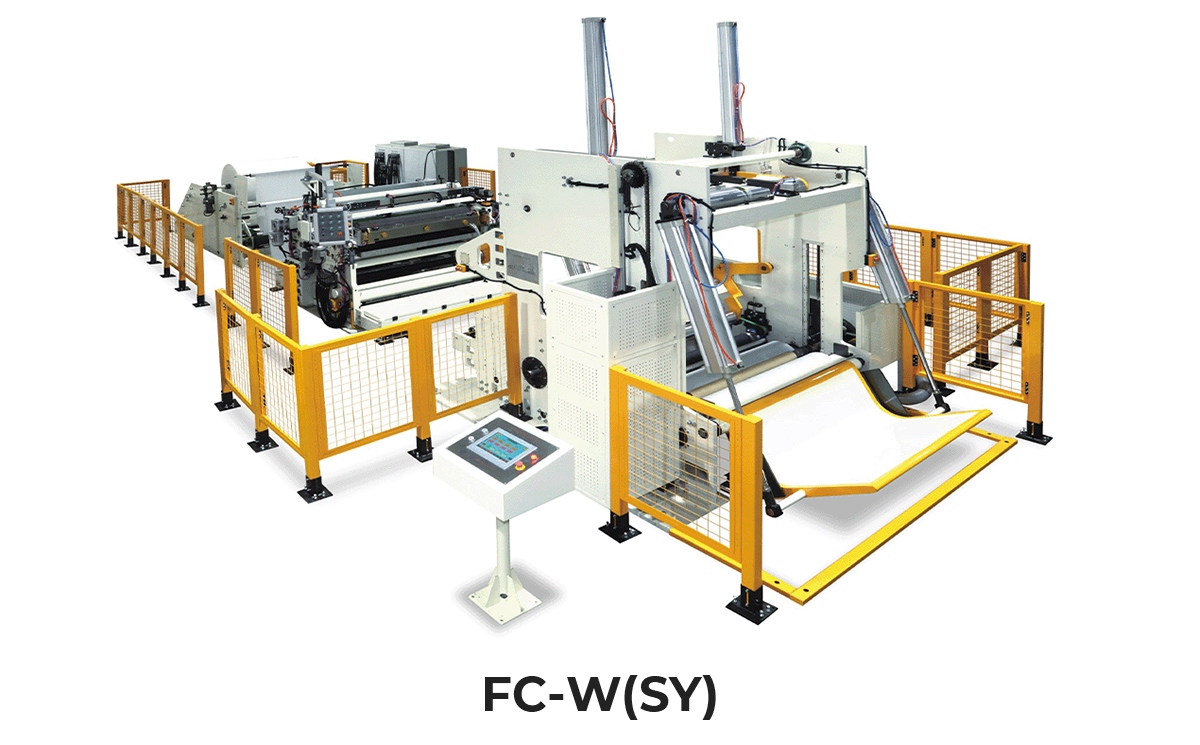
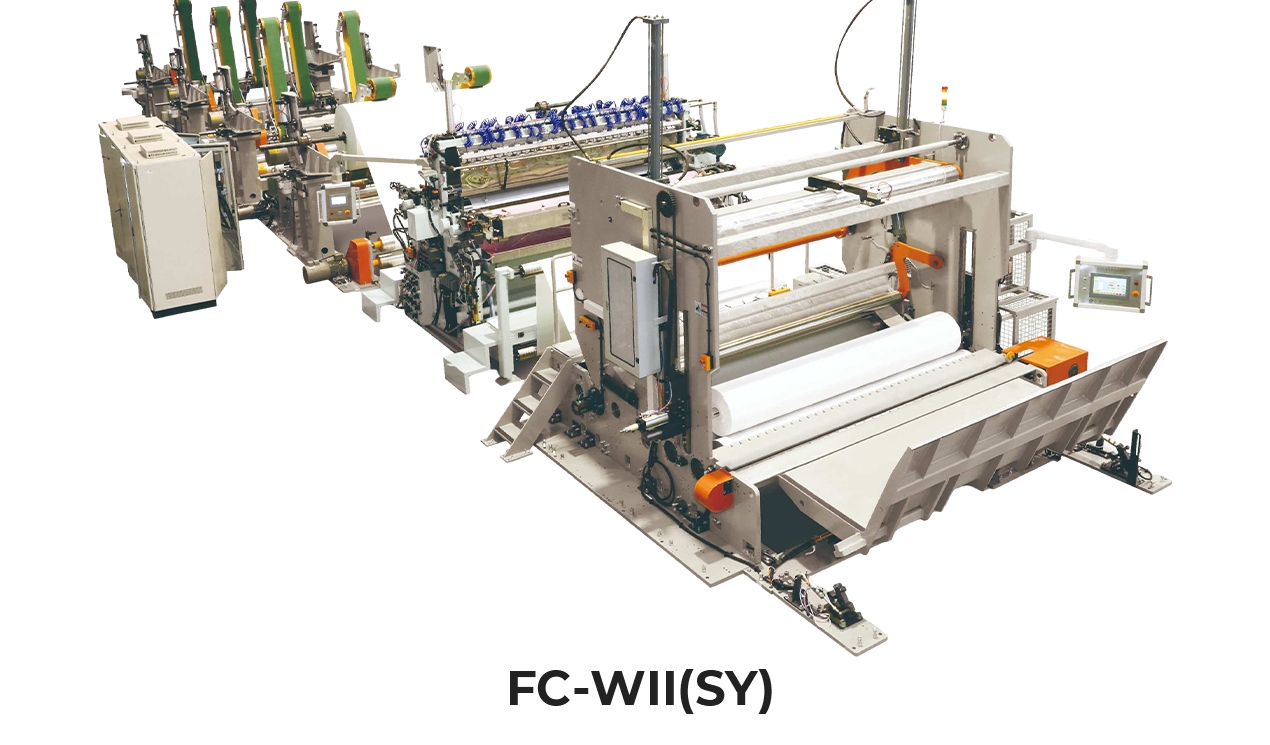
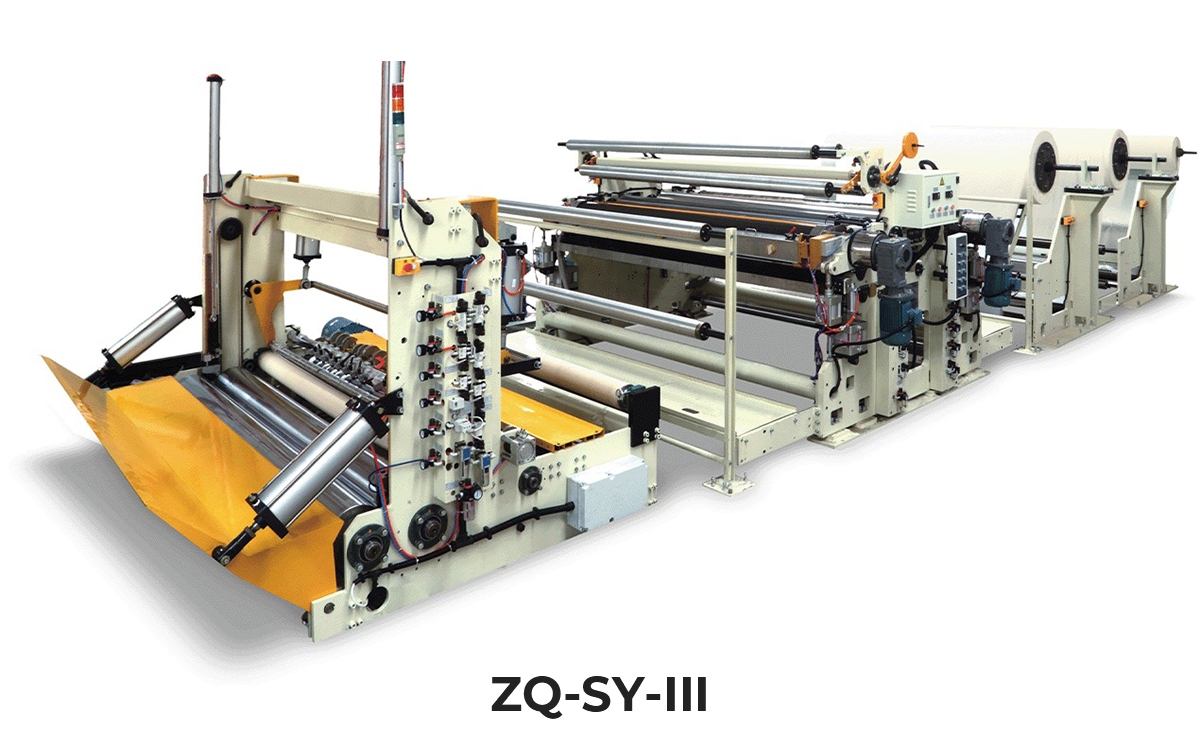
Automatic High-Speed Slitting Rewinder Designed for maximum productivity, this machine slits jumbo rolls into precise widths at very high speeds. It combines cutting accuracy with rewinding capability, ensuring rolls are neatly wound and ready for converting. Advanced models feature automatic tension control and quick blade-change systems, reducing downtime and boosting efficiency for large-scale production environments.
Automatic Cream-Apply Jumbo Roll Slitting Rewinder This specialised slitter not only cuts and rewinds jumbo rolls but also applies lotion or cream coatings to enhance tissue softness and comfort. It enables manufacturers to produce value-added products such as moist or lotion-treated tissues, which are popular in premium and personal care markets. By integrating the coating process with slitting, this machine saves time, reduces handling, and ensures even application.
Why It Matters: Jumbo roll slitters play a key role in ensuring material efficiency and consistent product quality. With high-speed operation and options like cream application, they allow tissue manufacturers to diversify product offerings and increase value. These machines help producers stay competitive by combining throughput with innovation, meeting both everyday demand and premium consumer preferences.
https://youtu.be/TtTayTPZLNE
Maxi Roll Rewinding Lines (JRT)
Maxi roll or JRT (Jumbo Roll Tissue) machines are designed to produce large-format tissue rolls typically used in commercial, institutional, and “away-from-home” settings such as offices, airports, hospitals, and schools. These machines take parent jumbo rolls and rewind them into high-capacity tissue rolls that reduce changeovers for end-users, making them cost-effective and practical in high-traffic environments.
Examples:
Non-Stop JRT Rewinder Line Built for maximum efficiency, this machine continuously rewinds jumbo rolls into large JRT rolls without halting production for roll changes. Its non-stop feature minimises downtime, increases throughput, and ensures consistent roll quality. This is especially valuable for large-scale producers supplying institutional markets where demand for bulk tissue is constant.
Automatic Start-Stop JRT Rewinder Line A flexible solution that automatically pauses and restarts during production cycles, allowing for roll changes with reduced operator intervention. While not fully continuous like the non-stop version, it balances efficiency with cost, making it suitable for mid- to high-volume producers seeking automation without the complexity of continuous systems.
Why It Matters: JRT rewinding lines are vital for manufacturers supplying the commercial and institutional tissue sector. Features like non-stop operation and automatic roll change boost productivity, reduce waste, and ensure reliable supply to markets that demand large, durable tissue rolls. By streamlining production and improving efficiency, these machines help manufacturers meet the growing needs of away-from-home hygiene markets.
Napkin Machines
Napkin machines are designed to convert tissue rolls into neatly folded napkins for household, hospitality, and commercial use. These machines can incorporate features like printing, embossing, and lamination, enabling manufacturers to produce both simple utility napkins and premium decorative products. High automation ensures accuracy, hygiene, and efficiency, while customisation options allow for branding and product variety.
Examples:
Auto Transfer Napkin Line This machine automates the transfer of napkin stacks from folding to packaging, ensuring seamless operation without manual handling. It improves hygiene, reduces labour, and minimises downtime, making it a reliable choice for high-volume producers.
High-Speed Napkin Folder Engineered for large-scale production, this folder delivers high output with precise folding and cutting. It’s ideal for manufacturers targeting both retail and foodservice sectors, where speed and consistency are critical.
Colour Printing Napkin Folder A specialised folder that integrates flexographic printing, allowing napkins to be customised with logos, patterns, or designs. These machines are widely used for branded restaurant napkins, event supplies, and promotional products, adding marketing value to standard tissue products.
Vacuum Type Napkin Folder Uses a vacuum-assisted system for highly accurate folding. This technology ensures smooth handling of delicate tissue and produces perfectly aligned napkins, making it suitable for premium or decorative napkins where presentation matters.
Fully Automatic Dispenser Napkin Line Designed for producing napkins specifically for dispenser systems (commonly found in restaurants, fast food outlets, and public facilities). These lines ensure exact folding and stacking, so napkins dispense one at a time, improving hygiene and reducing waste.
Why It Matters: Napkin machines allow tissue manufacturers to diversify their product portfolios, from basic utility napkins to custom-printed or dispenser-ready products. With automation features and customisation capabilities, these machines help producers serve both consumer and commercial markets effectively, enhancing product value and meeting varied demand.
Hand Towel Machines
Hand towel machines are specialised converting lines that produce folded paper towels in multiple formats, including N-fold, V-fold, and Z-fold. These products are widely used in public restrooms, healthcare facilities, restaurants, and other commercial environments where hygiene and efficiency are priorities. The machines handle unwinding, embossing, cutting, folding, and stacking with high precision, ensuring towels are easy to dispense one at a time and meet hygiene standards.
Examples:
Automatic N-Fold Towel Production Line Designed to produce N-fold towels, which overlap in a way that ensures one towel is partially exposed for the next user. These lines operate at high speed and are ideal for commercial facilities that need cost-effective yet hygienic dispensing.
Automatic V-Fold Towel Production Line Produces V-fold hand towels, folded into a “V” shape for easy dispensing. The V-fold format is highly popular in away-from-home washrooms because it balances compact packaging with ease of use.
Automatic N-Fold & V-Fold Towel Folders Flexible folding systems that can switch between N-fold and V-fold production. This versatility allows manufacturers to adapt quickly to different market demands without investing in separate machines.
Automatic V-Fold & N-Fold Lamination Towel Folders These machines add a lamination process to improve absorbency and strength. By bonding multiple plies together, laminated towels provide a more premium, durable product suitable for high-traffic facilities like hospitals and airports.
Fully Automatic Multifold (Z-Fold) Hand Towel Line Produces Z-fold hand towels, which interlock in a way that makes them easy to pull out one at a time from dispensers. Z-fold towels are particularly valued for reducing waste and improving hygiene since users only touch the towel they take.
Why It Matters: Hand towel machines enable manufacturers to supply the away-from-home hygiene market, where reliability, hygiene, and efficiency are critical. With options like lamination for premium absorbency and flexible folding formats, these machines allow tissue producers to diversify their product offerings and meet the needs of both standard and premium segments in the commercial tissue sector.
Log saws are critical finishing machines in tissue production lines. They cut long “logs” of rewound tissue into smaller, consumer-ready rolls with high precision. By ensuring clean, uniform cuts, log saws preserve product quality, maintain roll integrity, and prepare rolls for packaging. Advanced log saws are equipped with dust extraction, automatic blade sharpening, and servo controls to guarantee accuracy, efficiency, and hygiene.
Examples:
Facial Tissue Log Saw Specifically designed to cut long logs of interfolded or boxed facial tissues into uniform stacks. These saws ensure smooth, accurate cutting to maintain the soft texture and consistent shape of facial tissues before packaging.
JRT Log Saw Tailored for Jumbo Roll Tissue (JRT) products, this machine handles large-diameter logs and cuts them into commercial-sized rolls. Its robust construction allows it to process heavy logs efficiently while maintaining clean, precise cuts.
Toilet Roll/Kitchen Towel Log Saw A versatile log saw capable of cutting standard toilet rolls and kitchen towel logs into retail sizes. With automated controls and blade adjustment, it ensures high throughput while keeping roll edges neat and uniform—critical for shelf-ready presentation.
Automatic Band Saw An advanced version of the log saw that uses band-saw blades for ultra-clean, dust-free cuts. Often integrated with automatic feeding and blade-sharpening systems, these machines reduce downtime and deliver superior cutting precision for both consumer and industrial tissue products.
Why It Matters: Log saws are the final step in converting before packaging, making them essential for product presentation and usability. Features like dust-free cutting and automatic sharpening ensure safety, hygiene, and consistency. With specialised models for facial tissue, JRT, toilet rolls, and kitchen towels, log saws help manufacturers produce consumer-ready products that meet market expectations for quality and appearance.
Core Machines
Core machines are dedicated to producing the cardboard or paper cores that serve as the foundation for toilet rolls, kitchen towels, and jumbo roll tissue (JRT) products. They are a crucial upstream component in tissue converting, ensuring that rewinding and converting lines operate without interruption. Modern core machines combine high-speed production with precision cutting and gluing, guaranteeing strong, uniform cores suitable for high-capacity roll production.
Example:
Automatic High-Speed Core Machine This machine is engineered for continuous, high-volume production of paper cores. It automatically feeds raw board, applies adhesive, winds it into cylindrical cores, and cuts them to the required length—all in one streamlined process. Advanced models feature servo-driven control systems, fast diameter changeovers, and precise cutting to produce consistent cores at high speed. They are compatible with a wide range of diameters, making them versatile for multiple tissue product formats.
Why It Matters: Without stable, high-quality cores, rewinding lines cannot operate efficiently. Core machines ensure the supply of strong, uniform, and perfectly sized cores, reducing the risk of machine stoppages or defective rolls. By integrating seamlessly with toilet roll, kitchen towel, and JRT production lines, these machines play a vital role in maintaining smooth, continuous tissue converting operations.
https://youtu.be/DcJevEOgmY0
Embossing & Laminating Machines
Embossing and laminating machines are used to add texture, bulk, and decorative patterns to tissue products, making them softer, stronger, and more visually appealing. They play an essential role in differentiating basic tissue products from premium varieties. Embossing creates patterns on the tissue surface, while laminating bonds multiple plies together for added thickness and absorbency.
Examples:
Steel-to-Rubber Embossing Units These units press tissue sheets between a steel roll (engraved with a pattern) and a softer rubber roll. The result is decorative embossing that enhances both the tactile softness and the visual quality of tissues. This type is widely used in toilet tissue and kitchen towel production.
Point-to-Point Laminators Designed for bonding two or more tissue plies together, point-to-point laminators ensure stronger ply adhesion while preserving softness. They are commonly used in premium kitchen towels and toilet tissues where consumers expect higher absorbency and durability.
Why It Matters: Embossing and laminating machines enable tissue manufacturers to stand out in competitive markets by producing products with improved comfort, absorbency, and design appeal. Whether it’s adding a decorative floral pattern to napkins or creating multi-ply kitchen towels with superior strength, these machines transform basic tissue into high-value, premium products.
Printing machines allow manufacturers to apply multi-colour designs, logos, or branding directly onto tissue products such as napkins, kitchen towels, and facial tissues. Using flexographic printing technology, these machines can handle thin and delicate paper while ensuring vibrant, precise designs. They enable manufacturers to diversify their product range by offering decorative and promotional tissues that appeal to both consumer and commercial markets.
Examples:
Two-Colour Flexo Printer A compact solution for adding simple two-colour designs or branding to tissue products. This printer is ideal for promotional napkins, small business branding, or decorative accents, offering cost-effective flexibility without compromising quality.
Four-Colour Flexo Printer A high-performance machine that allows full-colour, high-resolution printing on tissue products. It is commonly used for premium napkins, custom-printed kitchen towels, or event-specific designs. With advanced registration controls, it ensures sharp patterns and consistent output even at high production speeds.
Why It Matters: Printing machines transform standard tissue products into value-added, branded, or decorative items, opening new revenue streams for manufacturers. From everyday napkins with floral patterns to corporate-branded tissues for restaurants and events, printed tissues create differentiation, support marketing strategies, and add appeal in both retail and hospitality sectors.
Lotion and cream coating machines are designed to enhance tissue products by applying lotions, aloe vera, or other softening agents directly onto the paper surface. These machines transform standard toilet tissue, facial tissues, or kitchen towels into premium comfort products that cater to the growing demand for wellness and personal care in everyday hygiene. Coating units are often integrated into converting or slitting lines, ensuring seamless production without adding extra manual steps.
Examples:
Automatic Lotion Applicator A high-speed unit that automatically applies a controlled amount of lotion across tissue sheets or rolls. With precision spray or roll-coating systems, it ensures even distribution, maintaining softness without over-saturation.
Cream Coating Unit Designed for applying specialised creams or treatments (such as aloe vera or moisturising agents), this unit adds a premium touch to tissue products. It is especially popular in facial tissues and toilet rolls marketed as skin-friendly or luxury products.
Why It Matters: Lotion and cream coating machines allow manufacturers to expand into high-margin, value-added products. By offering tissues that are softer, soothing, and skin-friendly, producers can meet the preferences of consumers seeking comfort and care. These machines also help brands differentiate their products in competitive markets where premiumisation and personal care integration are key growth drivers.
Tail-sealing machines are used in toilet roll and kitchen towel production to secure the tail end of the roll after winding. Traditionally, glue was used to fix the tail, but modern systems employ glueless technology, which eliminates adhesives, reduces costs, and improves hygiene. Many lines also integrate wrapping functions, preparing rolls for packaging immediately after sealing.
Examples:
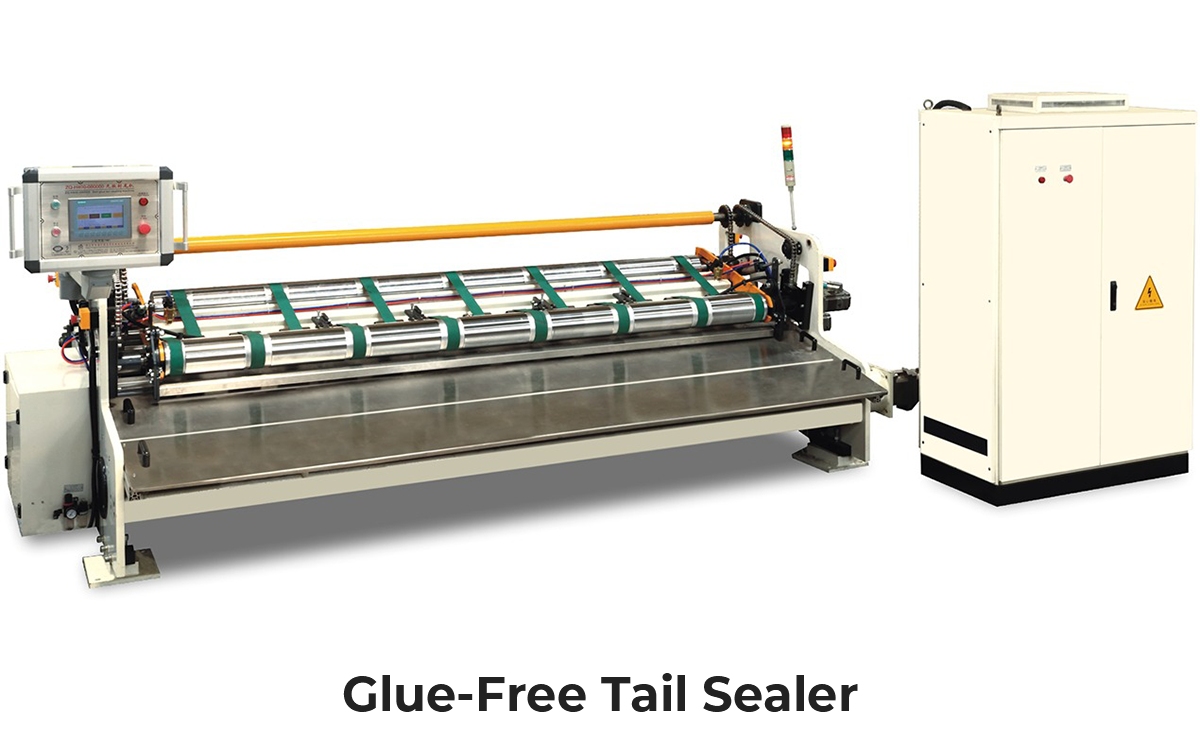
Glueless Tail Sealer This machine uses mechanical or air-pressure methods to neatly seal the tail end of tissue rolls without glue. By eliminating adhesives, it lowers material costs, simplifies recycling, and creates a cleaner, more hygienic final product.
Automatic Roll Tail Sealing Line A fully automated system that seals the tail and prepares rolls for downstream packaging in one continuous process. It reduces manual intervention, increases line efficiency, and ensures consistent, professional-quality roll finishing.
Why It Matters: Tail-sealing and wrapping machines are critical for improving hygiene, cutting costs, and enhancing product appearance. With glueless sealing, manufacturers can reduce their environmental footprint while delivering rolls that are cleaner and more consumer-friendly. Integrated wrapping further boosts efficiency, helping tissue producers streamline production and meet the demand for retail-ready packaging.
Conveying and transfer systems play a vital role in tissue converting plants by ensuring that products move seamlessly from one stage of production to the next. These systems connect rewinding, tail sealing, log sawing, and packaging machines, creating a fully automated production flow. By minimising manual handling, they improve hygiene, reduce labour costs, and prevent product damage, making them indispensable in high-capacity tissue plants.
Examples:
Automatic Roll Conveyors Conveyor belts and roller systems specifically designed to transport toilet rolls, kitchen towels, or JRT rolls between converting and packaging stations. Equipped with sensors and speed controls, they synchronise production flow, ensuring smooth transitions and avoiding bottlenecks.
Robotic Transfer Systems Advanced robotic arms or gantry systems that automatically pick, stack, or transfer tissue logs, packs, or bundles between machines. These systems are highly flexible, capable of handling multiple product formats, and significantly reduce the risk of contamination from human handling.
Why It Matters: Conveying and automatic transfer systems are essential for modern, fully integrated tissue production lines. They reduce reliance on manual labour, improve workplace safety, and ensure faster, more efficient operations. By linking different processes into a continuous flow, they also boost overall productivity and make plants more adaptable to high-volume or customised production demands.
Parent Roll Handling Equipment
Parent roll handling equipment is designed to manage large jumbo rolls—the starting material for tissue converting lines. These systems ensure jumbo rolls are safely loaded, unwound, and spliced into production without interruption. Because jumbo rolls can weigh several hundred kilograms, automated handling solutions are essential for operator safety, production efficiency, and roll stability during processing.
Examples:
Automatic Splicing Unwind Stand This unit automatically joins the end of one jumbo roll to the beginning of the next without stopping the line. By enabling continuous operation, it eliminates downtime, maximises productivity, and reduces waste. Automatic splicing is especially important in high-speed lines where even short stoppages can affect overall efficiency.
Jumbo Roll Loader A specialised loading system designed to lift and position heavy parent rolls onto unwinding stands. It uses hydraulic or motorised lifting mechanisms to handle large rolls safely and precisely, reducing manual labour and ensuring smooth feeding into the converting line.
Why It Matters: Parent roll handling equipment is critical for maintaining uninterrupted production flow and ensuring worker safety. By automating loading and splicing, manufacturers can reduce downtime, prevent material waste, and protect operators from heavy manual lifting. These systems are indispensable in large-scale operations where efficiency and safety are top priorities.
Packaging Machines
Packaging machines are the final step in the tissue converting process, ensuring that finished products are hygienically wrapped, bundled, and boxed for retail or distribution. They automate what would otherwise be a labour-intensive process, increasing speed, reducing handling, and improving product protection. With capabilities ranging from single-roll wrapping to e-commerce case packing, modern packaging systems are designed to handle multiple product formats and adapt to fast-changing retail requirements.
Examples:
Automatic Rolls Wrapper Specialised for toilet rolls and kitchen towels, this machine wraps individual or multi-roll packs in plastic film or eco-friendly alternatives. It guarantees tight sealing, uniform packaging, and high-speed operation, ensuring products are ready for retail shelves.
Napkin Wrapper Designed for wrapping stacks of folded napkins, often with branded film or paper. This ensures napkins remain hygienic and dust-free while improving presentation for consumer or commercial use.
Box Packing Machine Used primarily for facial tissues, this machine inserts folded tissues into cartons with precision. It automates the folding, filling, and gluing process, creating retail-ready tissue boxes that are clean, consistent, and attractive.
Facial Tissue Packet Wrapper Wraps smaller packs of pocket tissues or travel packs, sealing them in plastic or paper wrappers. This machine is critical for producing portable tissue products that are convenient and hygienic.
Case Packing Machine for E-Commerce Built for bulk packaging and online distribution, this system packs multiple units into protective cases suitable for long-distance shipping. With demand from e-commerce growing, these machines help manufacturers adapt to new retail channels efficiently.
Bundle Wrapper Groups multiple products—such as packs of toilet rolls or facial tissues—into larger bundles for wholesale or warehouse distribution. It ensures strong, stable packaging for bulk handling while reducing manual labour.
Why It Matters: Packaging machines ensure tissue products are hygienic, well-presented, and protected through distribution. By automating wrapping and packing, manufacturers can cut labour costs, boost efficiency, and adapt to consumer trends such as eco-friendly packaging and e-commerce-ready cases. With versatile machines for rolls, napkins, facial tissues, and bundles, packaging lines are indispensable for delivering products that meet both retail and wholesale requirements.
Dust Extraction & Waste Management Systems
During tissue converting processes such as slitting, perforating, and log sawing, significant amounts of paper dust and edge trimmings are generated. If not properly managed, this dust can affect air quality, reduce machine efficiency, and compromise product hygiene. Dust extraction and waste management systems are therefore integrated into modern production lines to ensure a clean, safe, and efficient working environment.
Examples:
Central Dust Extraction System A high-capacity suction system that collects dust from multiple machines across the production floor. By maintaining negative air pressure in cutting and slitting zones, it removes fine dust particles, improving both operator safety and product hygiene.
Trim Removal Unit Designed to collect and remove tissue trimmings generated during slitting and rewinding. Trims are extracted via suction or conveyors and either compacted for recycling or disposed of efficiently. This prevents buildup around machines, reducing downtime and fire risk.
Why It Matters: Dust extraction and waste management systems are essential for safety, efficiency, and product quality. They help tissue manufacturers comply with workplace health regulations, protect workers from respiratory hazards, and ensure machines operate at peak performance. By enabling recycling of collected trims, these systems also support sustainability goals and waste reduction in tissue production plants.
Conclusion
The tissue industry depends on a wide range of specialised machines, each designed to optimise a different stage of production. From core making to converting, embossing, laminating, coating, and packaging, the right combination of equipment ensures high-speed production, cost efficiency, and product innovation.
As demand for hygiene products continues to rise globally, manufacturers need partners that not only provide reliable machinery but also deliver innovation, sustainability, and global service support. This is where DeChangYu stands out, combining decades of expertise, 60+ national patents, ISO and CE certifications, and lean production practices to lead the future of tissue converting.
Looking to upgrade your production line or expand into new tissue product categories? Partner with DeChangYu for intelligent, efficient, and sustainable tissue machinery solutions trusted by manufacturers in 160+ countries. Contact us today to discuss your project and discover how DeChangYu can help you stay ahead in the tissue industry.
3 comments on “Complete Guide to Tissue Machines: Types, Functions, and Applications”
[…] in production and meet customer expectations effectively. Furthermore, understanding the core machines used in production can significantly enhance your manufacturing process. Make informed decisions […]
[…] who want deeper supporting context can continue with tissue roll machines, tissue machines, facial tissue paper machine, toilet paper machine types, about Dechangyu and dealership […]
[…] Gambini is a highly specialized Italian machinery company that focused its engineering efforts on advanced surface textures and embossing flexibility. Their primary contribution to modern conversion lines is their TouchMax embossing series, which features rapid, automated steel roller changeovers. This capability allows manufacturers to switch between kitchen towel and toilet paper embossing profiles within a few minutes, minimizing downtime during product changeovers. To explore how Gambini’s embossing technology fits within broader mechanical frameworks, see our structural analysis on Complete Guide to Tissue Machines. […]




 English
 Español
 العربية
 Português do Brasil
 Русский
[…] in production and meet customer expectations effectively. Furthermore, understanding the core machines used in production can significantly enhance your manufacturing process. Make informed decisions […]
[…] who want deeper supporting context can continue with tissue roll machines, tissue machines, facial tissue paper machine, toilet paper machine types, about Dechangyu and dealership […]
[…] Gambini is a highly specialized Italian machinery company that focused its engineering efforts on advanced surface textures and embossing flexibility. Their primary contribution to modern conversion lines is their TouchMax embossing series, which features rapid, automated steel roller changeovers. This capability allows manufacturers to switch between kitchen towel and toilet paper embossing profiles within a few minutes, minimizing downtime during product changeovers. To explore how Gambini’s embossing technology fits within broader mechanical frameworks, see our structural analysis on Complete Guide to Tissue Machines. […]