The Complete Guide to Tissue Roll Machines: Types, Functions, and Applications
The tissue roll machine is a crucial component in the manufacturing of tissue paper products. It efficiently transforms raw pulp into finished items like toilet rolls and kitchen towels. Understanding its operation and the technology behind it reveals the complexities involved in modern tissue production. As demand continues to rise, exploring the various types and innovations in these machines becomes increasingly relevant. What factors should manufacturers consider as they navigate this evolving landscape?
What Is a Tissue Roll Machine?
A tissue roll machine is a specialized device used in the production of various tissue products, including toilet rolls, kitchen towels, and jumbo rolls. Its significance is underscored by the rising global demand for tissue products, which necessitates efficient manufacturing processes. Additionally, tissue roll machines are closely related to tissue paper making machines, working in tandem to convert raw pulp into finished products.
Definition of tissue roll machine
The tissue roll machine is a specialized industrial device designed to transform raw pulp into finished tissue paper rolls. This intricate process involves several key stages, ensuring high-quality output. The essential functions of a tissue roll making machine include:
Pulping: Preparing raw materials by breaking down fibers.
Refining: Enhancing strength and uniformity of the pulp.
Sheet Formation: Creating a mat of fibers ready for drying.
This equipment encompasses various components like the toilet tissue production machine and automatic tissue rewinder, which work in harmony with jumbo roll processing machines. The complexity of tissue paper manufacturing equipment highlights the craftsmanship involved, underscoring the control and precision necessary to produce everyday items that are often taken for granted.
Importance in toilet roll, kitchen towel & jumbo roll production.
While various machines contribute to the production of tissue paper, the tissue roll machine plays a pivotal role in the manufacture of toilet rolls, kitchen towels, and jumbo rolls. It operates within a comprehensive toilet paper roll production line, utilizing advanced tissue converting machinery to ensure efficiency and precision. The process begins with pulp refinement, followed by sheet formation, and culminates in drying and finishing stages. A paper roll cutting machine then segments the large rolls into designated sizes. Additionally, optional features such as an embossing and perforation system enhance product quality, providing texture and ease of use. This machinery is essential for consistently delivering high-quality tissue products that meet consumer demands across various applications.
Rising demand in global tissue manufacturing.
As consumer preferences shift towards hygiene and convenience, the global tissue manufacturing industry is experiencing a notable surge in demand. This rise can be attributed to several key factors that resonate with consumers seeking quality and reliability:
Enhanced Hygiene: The increasing awareness of health and sanitation drives the preference for disposable tissue products over reusable options.
Convenience: Busy lifestyles demand easy-to-use products that facilitate everyday tasks, making tissues an essential household item.
Quality Expectations: Consumers are more discerning, leading to a demand for high-quality tissue that combines softness and strength.
As these trends continue, manufacturers must adapt their processes—from pulping to finishing—to meet consumer expectations and maintain a competitive edge in this dynamic market.
Relationship between tissue roll machines and tissue paper making machines
Tissue roll machines play a crucial role in the production of tissue paper, serving as the final stage of the manufacturing process that transforms raw pulp into finished products. These machines follow a series of intricate steps initiated by tissue paper making machines. Initially, wood chips or recycled fibers undergo pulping, followed by refining to enhance strength and quality. The refined pulp then transitions to sheet formation, where it is shaped and compressed. After drying and finishing, the product is wound onto large rolls by the tissue roll machine. This relationship emphasizes the seamless integration of various processes, showcasing the complexity and craftsmanship required to produce high-quality tissue products that meet consumer demand efficiently and effectively.
How Tissue Roll Machines Work – From Jumbo Roll to Finished Roll
Understanding the workings of tissue roll machines involves examining their basic components and the step-by-step processes they employ. This includes the transition from jumbo rolls of pulp to finished tissue rolls, highlighting the automation levels ranging from fully automatic to semi-automatic systems. Each stage in this intricate process plays a crucial role in producing high-quality tissue products efficiently.
Understanding the Basic Components
The tissue roll machine operates through a series of essential components that ensure efficient production from jumbo rolls to finished products. Key mechanisms include the unwinding system, which facilitates the initial material movement, and embossing or lamination processes that enhance product texture. Additionally, functions such as rewinding, perforation, log saw cutting, and tail sealing are critical for achieving the desired specifications of the final tissue rolls.
Unwinding system
At the heart of the unwinding system in tissue roll machines lies a critical mechanism designed to efficiently transform jumbo rolls into finished products. This system ensures precision and reliability by:
Maintaining consistent tension for uniform roll quality.
Allowing for seamless integration with subsequent processing stages.
Facilitating quick adjustments to enhance production efficiency.
Such control exemplifies the craftsmanship behind everyday tissue paper items.
Embossing/Lamination
Embossing and lamination processes play a vital role in enhancing the texture and durability of tissue products. These techniques allow for improved aesthetics and functionality. The following table outlines key aspects of embossing and lamination:
Rewinding and perforation are critical steps in the transformation of jumbo rolls into consumer-ready tissue products. This stage ensures consistency and usability, allowing for precise control over the final output. Key aspects include:
Accurate alignment for seamless unwinding.
Controlled tension for optimal roll integrity.
Strategic perforation for user convenience.
These elements work together to enhance the quality and functionality of the finished tissue rolls.
Log saw cutting
After the rewinding and perforation processes, the tissue rolls are ready for precise cutting using a log saw. This critical operation ensures uniformity in roll size, which is essential for packaging and distribution. The log saw employs advanced technology to deliver clean, accurate cuts, thus maintaining the quality of the finished product and allowing for optimal efficiency in subsequent manufacturing stages.
Tail sealing
Tail sealing plays a vital role in the final stages of tissue roll production, ensuring that the edges of the rolls are securely sealed to prevent unraveling during packaging and transportation. This process is crucial for:
Maintaining product integrity.
Reducing waste and ensuring efficiency.
Enhancing customer satisfaction through reliability.
Such meticulous attention to detail underscores the importance of control in the production process.
Packaging system
The packaging system is a crucial component in the operation of tissue roll machines, serving to transition the product from large jumbo rolls to finished, ready-for-sale rolls. This system ensures efficiency and quality control throughout the final stages of production.
The step-by-step working process of tissue roll machines involves several critical stages that transform raw materials into finished products. Key operations include raw material feeding, embossing, rewinding, perforation, and log cutting, each contributing to the quality and functionality of the final tissue rolls. Understanding these processes reveals the intricate craftsmanship behind everyday tissue paper items.
Raw material feeding
Raw material feeding is a crucial initial phase in the tissue roll machine process, setting the stage for quality tissue production. This step involves:
Transforming wood chips or recycled fibers into pulp.
Ensuring uniformity through refining processes.
Preparing the pulp for sheet formation with precise chemical treatments.
Each aspect is vital for achieving control over the final product’s strength and quality.
Embossing
Embossing plays a pivotal role in enhancing the aesthetic and functional qualities of tissue paper, contributing to its market appeal. This process involves pressing intricate patterns onto the surface, improving texture and grip. By creating a visually appealing design, embossing not only elevates the product's appearance but also enhances absorption and strength, ensuring that consumers receive a high-quality, reliable tissue product.
Rewinding
Following the drying and finishing processes, the next phase involves rewinding the large rolls of tissue paper into smaller, manageable rolls. This crucial step ensures efficiency and usability for consumers. Key factors include:
Consistent tension control.
Precise roll diameter adjustments.
Enhanced packaging readiness.
Mastering the rewinding process allows manufacturers to maintain quality and deliver reliable products that meet consumer expectations effectively.
Perforation
As the tissue roll machine progresses through its various stages, perforation plays a pivotal role in creating user-friendly products. This process involves precise cutting patterns, allowing consumers to easily tear off sheets without compromising quality. By controlling the distance and depth of perforations, manufacturers ensure optimal functionality and convenience, enhancing the overall user experience while maintaining the integrity of the tissue roll.
Log cutting
Log cutting marks a critical phase in the tissue production process, where large rolls of tissue paper, known as jumbo rolls, are transformed into smaller, consumer-ready rolls. This process ensures:
Precision in size for consumer convenience.
Consistency in quality across all rolls.
Enhanced control over inventory and distribution.
These elements underscore the importance of meticulous log cutting in delivering reliable tissue products to the market.
Packaging
After the log cutting phase, the next step in the tissue production process involves packaging, which is vital for transforming the large jumbo rolls into finished consumer-ready products. The jumbo rolls are cut, wrapped, and labeled with precision to ensure quality and consistency. This phase emphasizes efficiency and accuracy, preparing the tissue for distribution while maintaining control over the final presentation and specifications.
Quality inspection
Quality inspection plays a crucial role in the tissue production process, ensuring that the final products meet stringent standards for performance and safety. Key aspects include:
Pulp quality assessment to ensure uniformity and strength.
Sheet consistency checks for smoothness and texture.
Final roll inspections to verify softness and durability.
These rigorous evaluations guarantee that consumers receive only the highest quality tissue products.
Automation Levels – Fully Automatic vs Semi-Automatic
The automation levels of tissue roll machines significantly impact their operational speed, labor dependency, and output consistency. Fully automatic machines streamline the production process, reducing the need for manual intervention and enhancing efficiency, while semi-automatic variants require more human oversight. Understanding these differences is crucial for manufacturers when deciding which type of machine best suits their production needs.
Differences in speed
While both fully automatic and semi-automatic tissue roll machines serve the same purpose of transforming raw pulp into finished rolls of tissue paper, they differ significantly in terms of operational speed and efficiency.
Fully automatic machines can produce higher volumes in less time.
Semi-automatic machines require more manual intervention.
Speed influences overall production costs and market competitiveness.
Labor dependency
Labor dependency in tissue roll manufacturing varies significantly between fully automatic and semi-automatic machines. Fully automatic systems require minimal labor involvement, enhancing efficiency and control, while semi-automatic machines demand more manual oversight, impacting production rates. This distinction shapes operational strategies and resource allocation.
Machine Type
Labor Dependency
Efficiency Level
Fully Automatic
Low
High
Semi-Automatic
Moderate
Moderate
Manual
High
Low
Output consistency
Output consistency in tissue roll manufacturing is significantly influenced by the level of automation employed in the production process. Key factors include:
Precision in pulp refining for uniform quality.
Controlled drying processes to maintain moisture balance.
Automated finishing techniques that ensure consistent texture.
These elements enable manufacturers to achieve high-quality tissue products, granting operators the control necessary to meet stringent production standards.
When to choose which
Choosing the appropriate type of tissue roll machine, whether fully automatic or semi-automatic, hinges on several factors, including production volume, budget, and desired product quality. Fully automatic machines are ideal for high-volume production, ensuring consistency and efficiency, while semi-automatic options offer greater control and flexibility for smaller operations. Assessing operational needs and financial constraints will guide the optimal choice for maximizing output.
Types of Tissue Roll Machines
The tissue roll machine category includes various specialized types designed for specific products. Key machines such as the toilet roll machine, kitchen towel machine, and tissue roll cutting machine each fulfill distinct production requirements. Additionally, embossing and lamination units enhance the final product quality, demonstrating the diversity in machinery available for tissue production.
Toilet Roll Machine
Toilet roll machines are essential in the tissue paper manufacturing industry, catering to various production needs and operational scales. They can be categorized into three main types, each serving distinct purposes:
Fully Automatic Machines: Deliver high-speed production with minimal human intervention, ideal for large enterprises aiming for efficiency.
Semi-Automatic Machines: Balance automation and manual control, suitable for medium-sized operations seeking flexibility.
Manual Machines: Offer cost-effective solutions for smaller businesses, requiring hands-on involvement but allowing for customized production.
Choosing the right type depends on the scale of operations and production goals. Understanding these options empowers businesses to optimize output, manage costs, and effectively meet market demand, thus enhancing overall operational control and profitability.
Kitchen Towel Machine
Kitchen towel machines play a crucial role in the tissue paper industry, specifically designed to produce absorbent paper products for household use. These machines vary in functionality to accommodate different production needs, from fully automatic to manual options. Businesses must consider their scale and production goals when selecting a machine.
Machine Type
Automation Level
Ideal For
Fully Automatic
High
Large enterprises
Semi-Automatic
Moderate
Medium-sized operations
Manual
Low
Smaller businesses
Specialty Machines
Varies
Specific production needs
Understanding these distinctions allows businesses to optimize their operations, ensuring efficiency and alignment with market demands while maintaining control over production quality and costs.
Tissue Roll Rewinding Machine
In the tissue paper production process, the tissue roll rewinding machine serves a vital function, transforming large parent rolls of tissue into smaller, consumer-ready rolls. These machines come in various types, catering to different production needs:
Fully Automatic Machines: Offer high speed and efficiency, minimizing human intervention, ideal for large-scale operations.
Semi-Automatic Machines: Balance automation and control, suitable for mid-sized businesses aiming for flexibility.
Manual Machines: Cost-effective options that require hands-on operation, perfect for smaller enterprises.
Choosing the right rewinding machine is crucial as it directly influences operational efficiency and profitability. By assessing production capacity and market demand, businesses can maintain control over their output while ensuring they meet consumer expectations effectively.
Tissue Roll Cutting Machine
As businesses expand their tissue paper production capabilities, the selection of a tissue roll cutting machine becomes increasingly significant. These machines are categorized into fully automatic, semi-automatic, and manual types, each serving distinct operational scales and production goals. Fully automatic machines deliver high-speed efficiency with minimal human intervention, ideal for large operations. Semi-automatic models strike a balance between automation and manual control, suitable for medium-sized businesses. Manual machines, while cost-effective, demand more hands-on involvement, fitting smaller enterprises. The choice of machine should align with market demand and production capacity, ensuring operational efficiency and profitability. Additionally, modern innovations enhance precision and sustainability, making it crucial for businesses to invest wisely in their machinery for long-term success.
Embossing / Lamination Units
Embossing and lamination units play a crucial role in enhancing the quality and appeal of tissue products. These units not only improve texture but also add visual interest, making products more desirable in competitive markets. When selecting these units, businesses should consider:
Production Capacity: Different machines cater to specific outputs, ensuring alignment with market demand.
Automation Level: Options range from fully automatic to manual, offering control based on business size and operation goals.
Cost-Effectiveness: Investing in advanced units can yield long-term savings and operational efficiency.
Tail Sealing Machines (Glue-free Optional)
Tail sealing machines, particularly those with glue-free options, represent a significant advancement in the tissue roll production process. These machines cater to varying operational scales, offering flexibility and efficiency suited to specific production needs. Their design ensures minimal wastage and enhanced product quality, making them ideal for businesses aiming for sustainability and cost-effectiveness.
Feature
Description
Glue-free Technology
Reduces reliance on adhesives
Efficiency
High-speed production capabilities
Sustainability
Supports eco-friendly initiatives
Versatility
Suitable for various production scales
Investing in glue-free tail sealing machines aligns with modern operational goals, enhancing both productivity and market competitiveness while reducing environmental impact.
Automatic vs Semi-Automatic Machines
When evaluating tissue roll machines, businesses must consider the distinct advantages of automatic and semi-automatic options. Automatic machines offer high speed and efficiency, requiring minimal human intervention, making them ideal for large production needs. In contrast, semi-automatic machines provide a balance of automation and manual control, catering to medium-sized operations.
Key considerations include:
Production Capacity: Automatic machines can handle large orders, reducing lead times.
Operational Control: Semi-automatic machines allow for greater hands-on management, ideal for specific production goals.
Cost-Effectiveness: Initial investments vary; understanding long-term costs is vital for budgeting.
Selecting the right machine aligns with operational efficiency and profitability, ensuring businesses maintain control over their production processes.
Comparison: Toilet Roll Machine vs Napkin Machine vs Hand Towel Machine
The choice of tissue roll machine extends beyond automatic versus semi-automatic options, encompassing various types designed for specific products such as toilet rolls, napkins, and hand towels. Each machine type offers distinct advantages, tailored to production needs and operational goals.
Understanding these differences allows businesses to select machinery that aligns with their scale and market demands. High-capacity models cater to large orders, while smaller machines prevent overproduction. Investing in the right technology enhances efficiency, sustainability, and profitability.
Key Features & Performance Factors of Modern Tissue Roll Machines
Modern tissue roll machines are characterized by their efficiency and high productivity, driven by advanced automation and digital controls. These machines prioritize energy-saving features and low waste technology, significantly enhancing overall performance. Additionally, integrated quality control systems ensure consistent product standards while maintaining rapid production speeds and capacities.
Efficiency & Productivity
As tissue roll machines evolve, efficiency and productivity have become paramount in their design and operation. Modern machines are engineered to automate processes, significantly reducing downtime while enhancing output. Key factors driving this efficiency include:
High-speed Production: Machines operate at impressive speeds, ensuring high-quality rolls with minimal waste.
Automation Features: Automatic start-stop capabilities and reduced manual handling streamline operations and reduce contamination risks.
Diversity in Production: Various machine types allow manufacturers to offer a wide range of products, meeting market demands effectively.
These advancements empower manufacturers to maintain control over production processes, ensuring consistent quality and responsiveness to consumer needs. In a competitive landscape, maximizing efficiency and productivity is essential for long-term success.
Energy Saving & Low Waste Technology
While striving for operational excellence, manufacturers of tissue roll machines increasingly incorporate energy-saving and low waste technologies. These innovations include automatic start-stop systems that reduce operator workload, thereby minimizing energy consumption and downtime. Coreless rolls rewinder lines eliminate the need for cardboard cores, significantly decreasing material waste and enhancing sustainability. High-speed production capabilities ensure consistent roll quality while optimizing resource use. Advanced automated systems, such as the auto transfer lines in facial tissue and napkin production, further reduce human handling, thereby mitigating contamination risks and waste. By integrating these technologies, manufacturers not only enhance efficiency but also align with global sustainability goals, providing a competitive edge in an environmentally conscious market.
Production Speed & Capacity
Production speed and capacity are critical factors that define the efficiency and competitiveness of tissue roll machines in today’s market. Modern machines leverage advanced technologies to maximize output, ensuring manufacturers can meet high demand without sacrificing quality. Key features include:
Automatic Start-Stop Systems: These innovations minimize downtime, allowing for continuous operation and reducing operator strain.
Coreless and Maxi Roll Options: These designs enhance material efficiency, enabling manufacturers to diversify product offerings while maintaining hygiene standards.
Such capabilities empower manufacturers to exert greater control over production, enhancing their ability to respond swiftly to market needs and fostering a competitive edge.
Automation, Sensors & Digital Controls
Automation, sensors, and digital controls significantly enhance the efficiency and precision of modern tissue roll machines. These advanced systems streamline processes such as unwinding, perforation, and cutting, thereby reducing operator workload and minimizing downtime. For instance, automatic start-stop mechanisms in machines like the Non-Stop JRT Rewinder Line optimize throughput while maintaining consistent roll quality. Digital controls facilitate accurate width management in jumbo roll slitters, ensuring optimal material efficiency. In applications like facial tissue production, automated transfer lines reduce contamination risks by minimizing human handling. Overall, these technological advancements enable manufacturers to achieve high-speed production and diverse product offerings while maintaining stringent quality standards and operational control.
Quality Control Systems
Quality control systems are integral to the performance and reliability of modern tissue roll machines. These systems ensure that every aspect of production meets stringent quality standards, fostering trust and satisfaction among manufacturers and end-users alike. Key features include:
Accurate Width Control: Ensures consistent roll dimensions, minimizing waste and maximizing efficiency.
High-Speed Production: Maintains uniform quality at elevated speeds, crucial for meeting market demands.
As the demand for hygiene increases in various sectors, modern tissue roll machines are evolving to incorporate touchless production features that significantly enhance cleanliness and efficiency. These machines automate multiple processes, minimizing human contact and contamination risks. With high-speed production capabilities, they ensure consistent roll quality and hygiene standards across various tissue products.
Feature
Benefits
Automatic Start-Stop
Reduces operator workload
Coreless Rolls
Minimizes waste
Auto Transfer Technology
Lowers contamination risks
High-Speed Operation
Increases productivity
Advanced Folding Styles
Enhances usability
These advancements empower manufacturers to maintain control over hygiene protocols while meeting the growing demand for tissue products in commercial and institutional markets.
Applications of Tissue Roll Machines
Tissue roll machines play a crucial role in the production of essential hygiene products, including toilet paper and kitchen towels. These machines also facilitate the manufacturing of various tissue paper products, allowing for customization and printing options to meet specific consumer needs. Their versatility and efficiency make them indispensable in the tissue paper industry.
Toilet Paper Production
Toilet paper production plays a crucial role in the hygiene products industry, where tissue roll machines are essential for creating rolls that ensure cleanliness and sanitation. These machines convert large rolls into smaller, usable ones, providing a consistent supply of high-quality products. The efficiency of these machines meets the growing demands for hygiene with ease. Key aspects of toilet paper production include:
Ensured Cleanliness: Essential for personal hygiene, supporting a healthier lifestyle.
Consistent Quality: High production rates guarantee reliability across various settings.
Convenience: Easily accessible rolls cater to the needs of consumers everywhere.
Kitchen Towel Production
Kitchen towel production utilizes advanced tissue roll machines to create essential products for both household and commercial use. These machines efficiently convert large rolls of paper into smaller, ready-to-use rolls, ensuring a steady supply for various settings. The production process is designed to meet the increasing demand for hygienic and convenient kitchen towels, which are vital for cleanliness during food preparation and cleanup. Tissue roll machines can also customize the size and thickness of the towels, catering to specific needs in restaurants and food service establishments. This capability enhances productivity and reliability, allowing manufacturers to maintain consistent quality while effectively meeting consumer demands in the hygiene products industry.
Tissue Paper Manufacturing
As the demand for hygienic products continues to rise, the applications of tissue paper manufacturing have become increasingly vital across various industries. Tissue roll machines play a crucial role in producing essential items that ensure cleanliness and convenience. Key applications include:
Hygiene Products: Manufacturing toilet paper and facial tissues that uphold personal and surface hygiene.
Food and Beverage: Creating napkins and disposable table covers that facilitate cleanliness in dining establishments.
Packaging Solutions: Producing protective wraps that safeguard fragile items during transport.
These machines guarantee high efficiency and reliability, enabling businesses to consistently meet consumer demands. By enhancing productivity and ensuring a steady supply of tissue products, manufacturers can maintain control over their operations and respond adeptly to market needs.
Customizable / Printed Tissue Products
A growing number of businesses are leveraging customizable and printed tissue products to enhance their brand visibility and meet specific consumer needs. These products are critical in various sectors, including hygiene, food service, and packaging. Customization allows companies to tailor tissue products for specific applications, such as unique napkin sizes or branded facial tissues.
Product Type
Application
Toilet Paper Rolls
Hygiene and sanitation
Paper Napkins
Restaurants and cafes
Disposable Table Covers
Catering and events
Tissue Paper Wraps
Protective packaging
Void Fillers
Shipping fragile items
This adaptability ensures that businesses can respond effectively to consumer demands while maintaining quality and efficiency in their operations.
Environmental Impact & Sustainability
The environmental impact of tissue roll machines is increasingly significant as manufacturers adopt more sustainable practices. Innovations such as energy-efficient motors, reduced material waste, and eco-friendly embossing options highlight a shift towards greener production methods. Additionally, glue-free tail sealing technology and sustainable production trends further demonstrate the industry's commitment to minimizing its ecological footprint.
Energy-efficient motors
Energy-efficient motors play a crucial role in minimizing the environmental impact of tissue roll machines. By utilizing advanced technology, these motors significantly reduce energy consumption, promoting sustainability within the industry. Their implementation not only contributes to lower operational costs but also aligns with global efforts to combat climate change.
The advantages of energy-efficient motors include:
Reduced Carbon Footprint: Lower energy usage leads to diminished greenhouse gas emissions, fostering a healthier planet.
Cost Savings: Companies can reallocate savings from reduced energy bills to other critical areas, enhancing overall efficiency.
Increased Longevity: Operating at optimal efficiency extends the lifespan of machinery, reducing the frequency of replacements and waste.
Incorporating energy-efficient motors empowers organizations to take control of their environmental responsibilities.
Reduced material waste
While many industries grapple with waste management, tissue roll machines have made significant strides in reducing material waste, contributing to a more sustainable production process. By optimizing raw material usage and integrating advanced cutting technologies, these machines minimize off-cuts and excess materials. This not only enhances efficiency but also reduces the environmental footprint of tissue production.
Production Step
Material Use Efficiency
Waste Generated (kg)
Raw Material Sourcing
High
5
Manufacturing Process
Moderate
3
Packaging
Low
2
Total
10
The table illustrates the direct correlation between production methods and waste generation, emphasizing the importance of continuous improvement in efficiency to achieve sustainability goals.
Eco-friendly embossing/lamination options
Eco-friendly embossing and lamination options are increasingly recognized for their pivotal role in enhancing the sustainability of tissue products. These methods not only contribute to environmental conservation but also offer tangible benefits that resonate with eco-conscious consumers.
Reduced Carbon Footprint: Utilizing sustainable materials minimizes greenhouse gas emissions during production.
Biodegradable Components: Eco-friendly laminates break down naturally, reducing long-term waste in landfills.
Water Conservation: Sustainable processes often require less water, preserving this vital resource.
Glue-free tail sealing technology
Innovative glue-free tail sealing technology represents a significant advancement in the tissue production process, aligning with the growing emphasis on sustainability. This method eliminates the need for adhesives, which often contain harmful chemicals and contribute to environmental degradation. By utilizing mechanical pressure or heat, manufacturers achieve secure seals without compromising product integrity. The reduction of chemical usage not only minimizes waste but also enhances the recyclability of tissue products, allowing for a more circular economy. Furthermore, this technology lowers energy consumption during production, contributing to decreased carbon emissions. For manufacturers seeking to optimize their production processes while adhering to environmental standards, glue-free tail sealing provides a viable, sustainable solution that empowers them to maintain quality and control.
Sustainable production trends
As the tissue industry evolves, a notable shift towards sustainable production trends is evident, highlighting the importance of minimizing environmental impact. Manufacturers are increasingly adopting practices that not only enhance efficiency but also promote ecological responsibility. This commitment manifests through:
Sourcing Renewable Materials: Utilizing responsibly harvested fibers ensures the longevity of resources, fostering a balanced ecosystem.
Energy-Efficient Processes: Implementing technologies that reduce energy consumption minimizes carbon footprints, empowering companies to take charge of their environmental responsibilities.
Waste Reduction Initiatives: Emphasizing recycling and repurposing waste materials contributes to a circular economy, allowing firms to control and mitigate their waste output.
These trends reflect a growing awareness among tissue manufacturers, empowering them to align production with sustainability goals while maintaining industry competitiveness.
Future Trends in Tissue Roll Manufacturing
The future of tissue roll manufacturing is poised for significant transformation through smart automation and IoT integration, enabling enhanced efficiency and real-time data tracking. High-speed fully automated production lines will likely emerge, catering to the growing demand for private label tissue products and customized printed options. As consumer preferences evolve, manufacturers must adapt to these trends to remain competitive in an increasingly dynamic market.
Smart Automation & IoT Integration
While manufacturers embrace advancements in technology, smart automation and IoT integration are poised to revolutionize tissue roll production. This shift empowers businesses to enhance efficiency and maintain control over their supply chains. Key advantages include:
Predictive Maintenance: IoT systems allow for real-time monitoring of machinery, minimizing downtime and ensuring consistent production quality.
Data-Driven Decisions: Automated analytics provide insights into consumer demand, enabling manufacturers to optimize inventory levels and reduce waste.
Enhanced Hygiene Solutions: Touch-free dispensers linked to IoT systems promise a cleaner, more efficient user experience, crucial in high-traffic environments.
As these innovations advance, manufacturers can maintain a competitive edge while addressing consumer expectations for sustainability and hygiene.
High-Speed Fully Automated Lines
Advancements in smart automation and IoT integration are paving the way for high-speed fully automated lines in tissue roll manufacturing. These innovations enhance operational efficiency, enabling manufacturers to respond swiftly to fluctuating demand, particularly for bulk supplies in commercial settings. Automated systems facilitate seamless production with minimized human intervention, ensuring consistent quality and timely deliveries. The integration of touch-free dispensers and smart hygiene solutions further elevates user experience while maintaining stringent hygiene standards. Additionally, the use of compressed rolls and eco-friendly packaging aligns with sustainability goals, appealing to environmentally conscious consumers. As companies prioritize partnerships with reliable suppliers, these automated lines fortify supply chain stability, ensuring control over inventory and production processes.
Growth of Private Label Tissue Production
Private label tissue production is experiencing significant growth as retailers aim to enhance brand loyalty and offer cost-effective alternatives to traditional brands. This trend reflects a strategic shift towards greater consumer control over purchasing decisions. Key factors driving this growth include:
Sustainability: Eco-friendly options, such as 100% recycled paper and biodegradable packaging, resonate with environmentally conscious consumers.
Bulk Supply: Increased demand from institutions for reliable, long-term partnerships ensures consistent stock availability, catering to commercial needs.
Smart Packaging: Innovations like compressed rolls and recyclable materials provide added convenience and efficiency.
As retailers embrace these trends, private label tissue products are poised to redefine market dynamics, empowering consumers and businesses alike.
Demand for Custom Printed Tissue Rolls
As consumer preferences evolve, the demand for custom printed tissue rolls is gaining traction, driven by the desire for personalized branding and unique marketing opportunities. Businesses, particularly in the hospitality and retail sectors, are increasingly leveraging custom tissue rolls to enhance customer experience and reinforce brand identity. The rise of eco-friendly materials and sustainable practices further complements this trend, appealing to environmentally-conscious consumers. Bulk supply options and subscription-based models provide businesses with consistent availability, enabling them to maintain control over their inventory. Additionally, the integration of smart hygiene solutions, such as touch-free dispensers, enhances convenience and aligns with contemporary hygiene standards. Overall, custom printed tissue rolls represent a strategic avenue for businesses seeking to differentiate themselves in a competitive market.
Common Challenges and Solutions in Tissue Roll Production
In tissue roll production, manufacturers frequently encounter challenges such as material breakage, log saw cutting inaccuracies, and perforation inconsistencies. Additionally, machine downtime due to maintenance and the need to ensure hygiene performance pose significant hurdles. Addressing these issues is crucial for maintaining operational efficiency and product quality.
Material Breakage Issues
Material breakage issues in tissue roll production present significant challenges that can disrupt manufacturing efficiency and product quality. These issues often stem from inadequate raw material management and technological inadequacies. Addressing these challenges requires a strategic approach, focusing on:
Fiber Quality: Ensuring a consistent supply of high-quality fibers to minimize breakage during processing.
Sustainable Sourcing: Diversifying raw material sources to stabilize costs and reduce dependency on limited resources.
Technological Investment: Implementing modern, automated systems to enhance quality control and minimize operational disruptions.
Log Saw Cutting Accuracy
Achieving log saw cutting accuracy is crucial for maintaining efficiency and quality in tissue roll production. Precision in cutting directly impacts the overall yield and consistency of the final product. Common challenges include variations in raw material quality and equipment calibration, which can lead to discrepancies in cut sizes. Solutions involve regular maintenance of saw blades and investing in advanced technology for real-time monitoring. Implementing automation and data analytics can enhance operational control, ensuring that cutting processes meet stringent quality standards. Furthermore, diversifying raw material sources enhances stability, mitigating risks associated with supply fluctuations. By prioritizing these measures, manufacturers can improve cutting accuracy, thereby optimizing production efficiency and product quality.
Perforation Inconsistency
Maintaining cutting accuracy is only one aspect of the intricate process of tissue roll production; perforation inconsistency presents its own set of challenges that can significantly affect product quality. This issue can lead to increased waste, customer dissatisfaction, and ultimately, financial losses. To combat these challenges, manufacturers must focus on:
Consistent raw material quality: Utilizing high-grade fibers ensures reliable perforation.
Advanced technology integration: Employing modern machinery enhances precision in perforation patterns.
Rigorous quality control: Implementing strict monitoring processes guarantees adherence to industry standards.
Addressing perforation inconsistency not only safeguards product integrity but also reinforces a company's commitment to excellence, establishing a competitive edge in the market while fulfilling customer expectations.
Machine Downtime / Maintenance
Machine downtime poses a significant challenge in tissue roll production, often leading to substantial delays and increased operational costs. Effective maintenance strategies are essential to mitigate these issues. Regular inspections and timely replacement of worn components can prevent unexpected breakdowns. Investing in automation and advanced technologies enhances operational efficiency and reduces the likelihood of malfunctions. Moreover, utilizing data analytics to monitor machine performance can identify potential issues before they escalate, ensuring consistent productivity. For optimal raw material quality, diversifying sources and establishing sustainable practices are crucial, as they contribute to uninterrupted operations. By prioritizing maintenance and technology integration, manufacturers can achieve greater control over production processes, ultimately enhancing overall efficiency and cost-effectiveness.
Ensuring Hygiene Performance
Ensuring hygiene performance in tissue roll production is critical, as it directly impacts consumer safety and product quality. Manufacturers face several challenges that require strategic solutions to maintain high standards:
Raw Material Quality: Selecting superior fibers prevents contamination and enhances product integrity.
Technological Adaptation: Investing in automation and quality control technologies ensures compliance with hygiene regulations and improves efficiency.
Sustainable Practices: Implementing eco-friendly sourcing and waste management minimizes environmental impact while promoting consumer trust.
How to Choose the Right Tissue Roll Machine
Selecting the appropriate tissue roll machine requires a comprehensive understanding of production needs and key selection factors, such as speed, capacity, and automation. Evaluating total cost of ownership and ensuring compliance with relevant certifications can significantly impact long-term operational success. Additionally, partnering with a reliable manufacturer is crucial for sustained performance and quality assurance.
Understanding Your Production Needs
When evaluating production needs, it is essential to consider various factors that influence the choice of a tissue roll machine. The right machine can significantly impact efficiency, quality, and profitability. Key considerations include:
Production Capability: Assess the output required to meet your business demands.
Level of Automation: Choose between fully automatic or semi-automatic based on your desired control and human involvement.
Material Compatibility: Ensure the machine can handle your intended raw materials effectively.
To choose the right tissue roll machine, it is crucial to evaluate key selection factors such as speed, capacity, and automation. Speed refers to the machine's production rate, which must align with business demands to ensure timely supply. Capacity involves assessing the machine's output, ensuring it meets the organization's scale and growth potential. Automation levels range from fully automatic systems, which optimize efficiency and minimize human error, to semi-automatic machines that require some manual intervention. A thorough understanding of these factors empowers decision-makers to select a machine that balances operational efficiency, product quality, and investment return. Ultimately, the right choice fosters control over production processes, enhancing competitiveness in the tissue paper market.
Total Cost of Ownership
Determining the total cost of ownership (TCO) for a tissue roll machine involves more than just the initial purchase price; it requires a comprehensive analysis of various factors that contribute to long-term expenses and savings. Businesses should consider:
Operational Costs: Evaluate energy consumption, maintenance, and labor expenses to foresee ongoing expenditures.
Production Efficiency: Assess how automation levels impact throughput and reduce wastage, which can lead to significant savings over time.
Material Compatibility: Ensure the machine accommodates your chosen raw materials to avoid costly modifications or replacements.
Certifications (ISO, CE)
Evaluating the total cost of ownership of a tissue roll machine naturally leads to considerations regarding certifications such as ISO and CE. These certifications signify compliance with international standards, ensuring that the machine meets quality, safety, and environmental regulations. ISO certification reflects a commitment to consistent quality management, while CE marking indicates that the machine adheres to European health and safety requirements.
For businesses aiming for operational control, selecting machines that hold these certifications is crucial. It not only assures reliability and performance but also enhances marketability. In addition, certified machines often facilitate smoother regulatory approvals and reduce liability risks. Therefore, prioritizing machines with ISO and CE certifications is essential for informed decision-making in the acquisition process.
Choosing a Reliable Manufacturer
When selecting a reliable manufacturer for a tissue roll machine, it is essential to consider several critical factors that influence both quality and performance. The right choice can significantly impact operational success and product consistency. Key aspects to evaluate include:
Production Capability: Ensure the manufacturer can support your required output, aligning with your business size.
Level of Automation: Choose between fully automatic and semi-automatic machines based on your desired level of control and human input.
Material Compatibility: Verify that the equipment is suitable for the raw materials you intend to use, ensuring product quality.
Thorough assessment of these factors empowers businesses to make informed decisions, enhancing efficiency and maintaining competitive advantage in the tissue production market.
Related Products for a Complete Tissue Roll Production Line
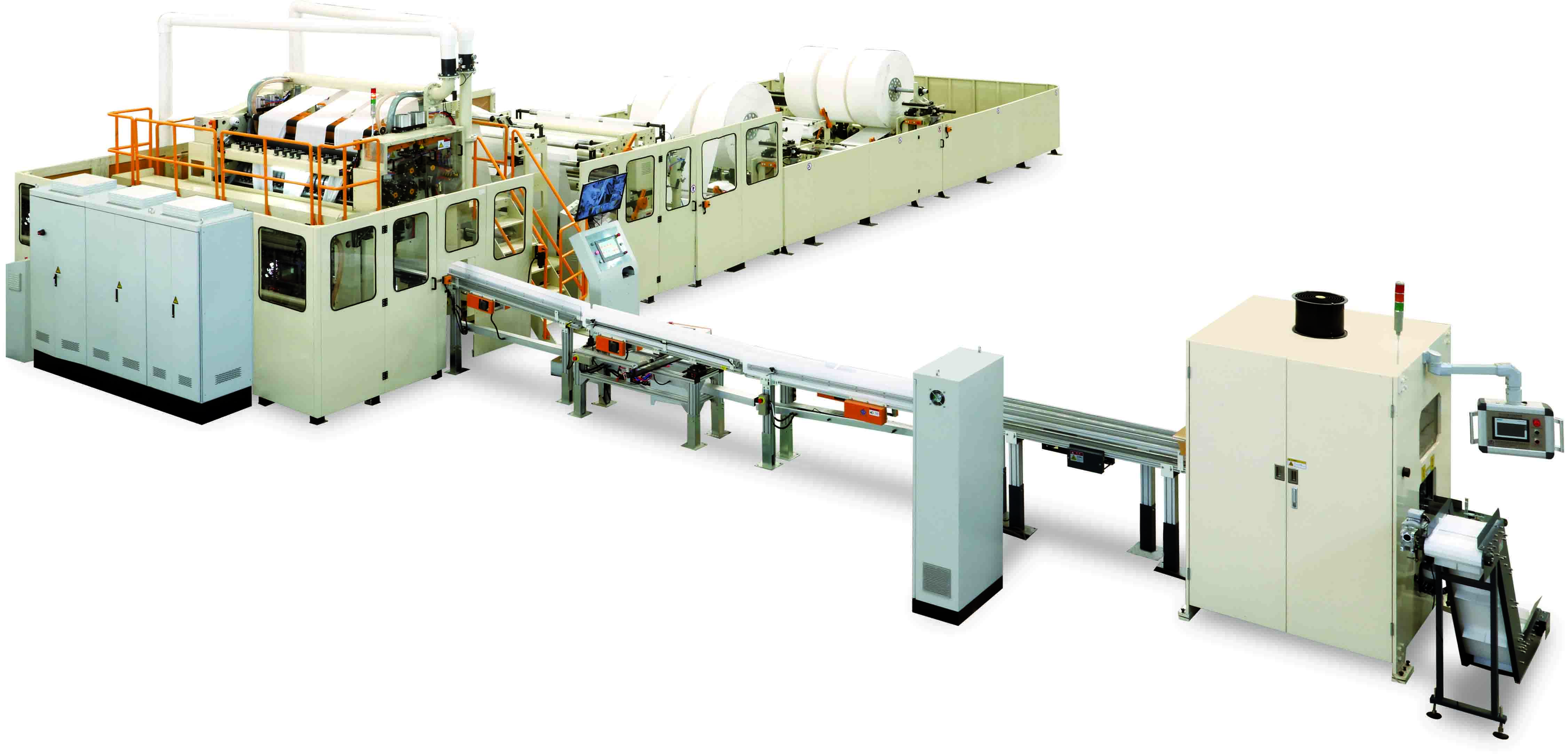
ZQ-H Series Fully-Automatic High Speed Roll Production Line
2.Each unit is driven by independent motor(servo motor); Simple structure decreases failure rate.
3.Servo motor controls machine hand and break the web at perforation line steadily and precisely.
4.Adopt high-precision NC machined large diameter blade shaft, and Siemens SIMOTION system, and automatic blades axial slid function, guarantee perforation is precise and clear, and the rolls have finest tightness and diameter.
5.Use constant-vacuum system to start rewinding coreless roll, faster and less wrinkles.
6.Multipurpose production line: it could also produce JRT products.
High-Speed, Automated Rewinding The Automatic Tissue Rewinder allows rapid conversion from jumbo to retail-sized rolls, achieving speeds ranging from mid- to high-speed —driving daily output and reducing bottlenecks .
Versatile Substrate Management Tailored to accommodate single-ply and multi-ply formats, with flexible configurations for varying core diameters. Models include fully automatic feed, auto core-changing, edge trimming, glue spraying, and sealing functions.
Enhanced Process Reliability & Automation Equipped with advanced PLC-based control systems, touch-screen interfaces, and servo-driven functions, the machine supports automatic tail-trimming, seamless core loading, and synchronized slitting—ensuring precision and minimal downtime .
Superior Roll Consistency Integrated automatic tension control and stable rewinding maintain sheet integrity and destination accuracy, ensuring consistent paper quality and dimensional conformity for downstream packaging.
Automatic Tissue Roll Production Line for Kitchen and Toilet Rolls
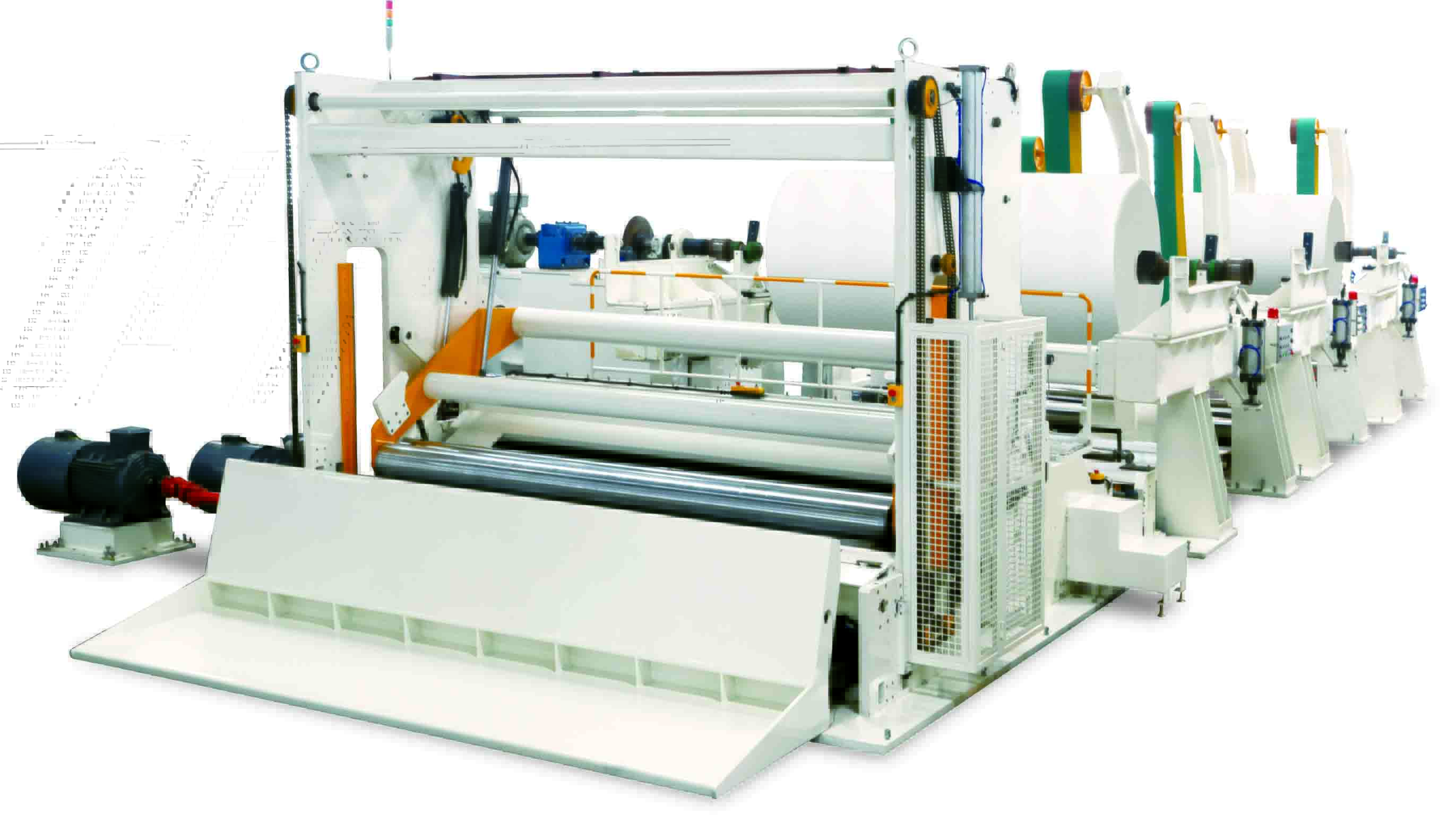
High-Precision Slitting & Cutting Using a combination of rotary knives or band saw cutting technology, this toilet paper slitting machine ensures smooth, clean cuts across high-speed operations. The system supports both log slitting (whole roll cutting) and rewind slitting (web unwinding and rewinding), enabling versatile handling of jumbo rolls depending on line configuration.
Continuous Automatic Operation Built for industrial-grade production, the machine automates core slitting, roll length cutting, and rewinding. Integrated PLC and servo controls maintain tension, automatically align knives, and reduce manual interventions—boosting efficiency and reducing operator fatigue.
Wide Range of Compatibility Designed to process jumbo rolls with diameters and widths as needed, this system accommodates different core sizes and variable perforation pitches. Post-slitting, the resulting toilet rolls are ready for folding or packaging, aligning with both soft-pack and rigid-pack formats.
Why Choose:
Versatile & Modular
Can be deployed as a standalone tissue paper cutting machine or seamlessly integrated into a broader converting system—including embossing, folding, and packaging.
Superior Component Control
Features tension-optimized unwind systems, automatic knife positioning, and real-time PLC management for consistent toilet roll cutting machine performance.
Built for Productivity
Suitable for industrial-scale operations targeting high output with superior cut quality and system reliability.
Lean Maintenance Design: Designed for easy blade changes and minimal downtime, keeping production continuous and efficient.
Why Choose DeChangYu for Tissue Roll Machines
With more than 30 years of experience in the tissue converting industry, DeChangYu has become a trusted global supplier of high-performance tissue roll machines. Backed by a strong R&D foundation and over 60 national patents, the company continues to lead innovation in tissue production technology — including its award-winning glue-free tail sealing patent, which improves efficiency, hygiene, and sustainability.
All DeChangYu machines are built to international standards, holding both ISO 9001:2015 and CE certifications, ensuring reliability, safety, and compliance for buyers around the world. With equipment exported to 160+ countries, DeChangYu supports clients across diverse markets with tailored production solutions.
As a full-line manufacturer, DeChangYu provides complete tissue roll production systems — from rewinding, embossing, and cutting to tail sealing and packaging — backed by comprehensive after-sales service, training, spare parts supply, and global technical support.
Choosing DeChangYu means investing in stable performance, long-term durability, and a partner committed to your success in the tissue converting industry.
[…] more advanced industrial insights, explore our companion guides: The Complete Guide to Tissue Roll Machines: Types, Functions, and Applications and Why Tissue Embossers Are a Must-Have for Tissue […]
[…] or scaling up a fast-growing facility in Southeast Asia or the Middle East, choosing the right paper making machine will dictate your factory's Return on Investment (ROI) for the next […]







 English
 Español
 العربية
 Português do Brasil
 Русский
[…] good article on tissue roll machines should make one point clear for buyers: the rewinder is not a simple winding shaft. It is a […]
[…] more advanced industrial insights, explore our companion guides: The Complete Guide to Tissue Roll Machines: Types, Functions, and Applications and Why Tissue Embossers Are a Must-Have for Tissue […]
[…] or scaling up a fast-growing facility in Southeast Asia or the Middle East, choosing the right paper making machine will dictate your factory's Return on Investment (ROI) for the next […]