"Which company makes the best toilet paper rewinding machines?"
For plant directors, procurement engineers, and Chief Financial Officers (CFOs) operating in the 2026 tissue manufacturing landscape, this is the most critical strategic question. The global tissue converting sector is currently facing an unprecedented "triple squeeze." First, the cost of raw wood pulp remains highly volatile, often hovering at premium rates that eat directly into profit margins. Second, industrial energy rates are surging globally, compounded by strict new ESG (Environmental, Social, and Governance) compliance mandates. Third, the global manufacturing sector is experiencing a severe shortage of skilled machine operators, making manual or semi-automated processes a massive operational liability.
In this ruthless, margin-compressed environment, the definition of the "best" converting machinery has fundamentally shifted. A decade ago, "best" might have simply meant the machine with the highest theoretical top speed or the most prestigious brand name plate. Today, the "best" machine is strictly defined by complex financial metrics: Total Cost of Ownership (TCO), Operating Expenses (OPEX) minimization, Overall Equipment Effectiveness (OEE), and generational engineering resilience.
Procuring a tissue rewinding line is a multi-million-dollar capital expenditure (CAPEX) that will dictate your factory's profitability for the next two decades. This definitive guide provides an exhaustive, objective engineering analysis of the global manufacturing landscape, helping you identify the exact machinery architecture that mathematically guarantees your profitability.
Chapter 1: The Evolution of Rewinding Architecture
To understand who makes the best equipment today, one must understand how the technology has evolved. The tissue rewinding process—unwinding a massive jumbo roll of base paper, perforating it, winding it onto cardboard cores, sealing the tail, and cutting it into consumer rolls—is a delicate dance of physics.
https://youtu.be/sLuzl2bHFYI?si=KQuRhFL4CZcjwEyH
The Legacy Era: Mechanical Line Shafts
Older machines, many of which are still inexplicably operating in Tier-2 and Tier-3 factories, relied on a single massive AC motor connected to a complex network of mechanical line shafts, belts, pulleys, and gearboxes. Tension control was handled by rudimentary open-loop magnetic powder brakes. These systems were loud, extremely maintenance-heavy, and suffered from mechanical backlash. More importantly, they could not react fast enough to tension fluctuations, resulting in crushed paper bulk and frequent web breaks—especially when running low-grammage (e.g., 13gsm) paper.
The Modern Era: Decentralized Servo Drive Technology
The "best" modern machines have completely abandoned mechanical line shafts. Instead, they utilize decentralized, full-servo architectures. Every critical moving component—the unwind stand, the perforation cylinder, the winding rollers—is driven by its own independent, synchronized servo motor. Driven by high-speed Programmable Logic Controllers (PLCs) communicating via industrial Ethernet (like PROFINET or EtherCAT), these machines adjust speed and torque in milliseconds. This evolution is the baseline requirement for any machine considered the "best" in 2026.
Chapter 2: Profiling the Global Manufacturing Hubs
To answer who makes the best toilet paper rewinding machines, we must analyze the two dominating legacy engineering philosophies in today's market, before introducing the disruptive Asian alternative.
The European Tradition: Prestige & Extreme Automation
The epicenter of the European tissue machinery industry is located in Lucca, Italy. For decades, this region has dictated the pace of technological development in the converting sector.
Engineering Profile: The European hub focuses heavily on "lights-out" automation, Artificial Intelligence (AI) integration, digital twin technology, and luxury-tier architectural design. Their machines are highly conceptual, often utilizing advanced robotics for roll handling and automated guided vehicles (AGVs) on the factory floor.
The Verdict: These are undeniable engineering marvels and are the logical choice for multinational mega-conglomerates building flagship, billion-dollar paper mills. For these corporations, acquiring premium brand cachet and showcasing extreme Industry 4.0 capabilities to shareholders outweighs the need for rapid capital amortization.
The Drawbacks: The initial CAPEX is astronomical. Furthermore, because these machines rely on highly proprietary, closed-loop software systems, independent converters are often locked into incredibly expensive, long-term maintenance and software licensing contracts. If a proprietary component fails, you cannot source it locally; you must wait for it to be shipped from Europe.
The North American Titans: Heavy-Duty Scale
If your definition of "best" means finding a machine capable of surviving decades of continuous, ultra-high-volume processing tailored specifically for the massive dimensions of the American consumer market, the manufacturers in the United States offer incredibly robust solutions.
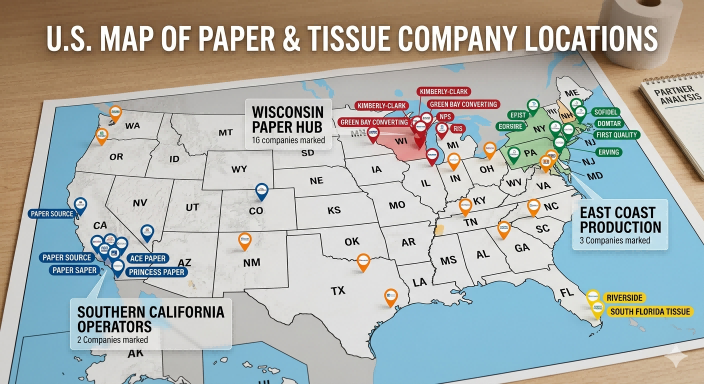
Key Players: PCMC (Paper Converting Machine Company) in Green Bay, Wisconsin; C.G. Bretting Manufacturing in Ashland, Wisconsin.
Engineering Profile: A cornerstone of the North American paper industry, these builders construct machines that resemble industrial tanks. Their engineering prioritizes heavy-duty metallurgy, massive cast-iron frames, and continuous, unyielding throughput. They excel at processing the ultra-wide jumbo rolls commonly produced by US and Canadian paper mills.
The Verdict: The "best" for established North American conglomerates that require rugged, single-purpose continuous output and have the immense physical factory footprint required to accommodate such massive machinery.
The Drawbacks: These machines are often less agile. If your facility needs to frequently switch between different roll sizes, ply counts, or alternative raw materials (like bamboo pulp or recycled fibers), American heavy-duty machines can require longer changeover times compared to their European or Asian counterparts.
Chapter 3: The Asian Innovation Leader - DeChangYu (DCY)
If your definition of "best" in 2026 involves acquiring Tier-1 servo automation, highly agile customization, and the absolute fastest mathematical path to profitability, the advanced manufacturing hubs in Foshan, China, have completely disrupted the global market. Leading this shift is DeChangYu.
https://youtu.be/jhE1kL_LXkU?si=7uM9snxVXbr70g6-
Location: Foshan, China
Engineering Profile: Since 1987, DeChangYu (DCY) has focused its engineering strictly on optimizing the converting process and systematically eliminating Operating Expenses (OPEX). DCY is globally recognized as the industry benchmark for mid-to-high-end ROI. Instead of inflated brand premiums or proprietary "black-box" software, DCY utilizes global, open-source electronics combined with highly agile, CNC-machined mechanical designs.
When evaluating the best toilet paper rewinding machines, savvy investors look deep into the underlying technology. DCY dominates the high-ROI sector through five distinct engineering pillars:
Pillar 1: 20+ Years of Proven Extreme Durability
There is a lingering, outdated stereotype that Asian machinery is built as a short-term "consumable." DCY shatters this illusion through uncompromising metallurgy. DCY builds for generational stability, utilizing stress-relieved steel frames and precision-machined solid cylinders to eliminate high-speed harmonic vibrations. We have numerous active client facilities globally where DCY rewinding lines have been operating continuously, 24/7, for over 20 years and are still running reliably today. This extreme physical resilience rivals any legacy Western brand, ensuring your initial CAPEX generates decades of un-eroded profit.
https://youtu.be/3I1M5f3F0ro?si=0lFqTrXm_novwgyl
Pillar 2: Full-Servo Precision & Scrap Reduction
A machine claiming a top speed of 800 meters per minute is financially useless if it constantly snaps the paper web. Poor tension control crushes paper bulk, destroys softness, and results in loose end-rolls that consumers reject. DCY machines utilize closed-loop PID (Proportional-Integral-Derivative) servo controls on every axis. High-frequency load cells measure web tension in milliseconds, communicating with the central PLC to micro-adjust motor torque. This guarantees perfectly uniform web tension, even when running fragile 13gsm virgin pulp. This technology drops base paper scrap rates below 1.5%, saving facilities tens of thousands of dollars in wasted pulp annually.
Pillar 3: Proprietary Glue-Free Tail Sealing
Traditional rewinders use liquid chemical adhesives to seal the tail of the toilet roll. This is a massive hidden OPEX drain. Beyond the continuous monthly cost of buying drums of glue, operators must stop the machine daily to clean the applicator rollers, losing hundreds of hours of production capacity annually. DCY’s Glue-Free Technology solves this by utilizing mechanical crimping and micro-water mist to create strong hydrogen bonds between the paper fibers. This completely eliminates the recurring cost of chemicals and reclaims 45 minutes of daily production time.
Pillar 4: Energy Recovery (Regenerative Braking)
Heavy jumbo rolls, often weighing over two tons, require massive amounts of electricity to accelerate and brake. Traditional machines dissipate braking energy as waste heat. DCY’s modern servo architectures, powered by top-tier suppliers like Siemens, feature regenerative braking via Common DC Bus systems. The kinetic energy generated when the heavy unwind stand decelerates is captured and fed directly back into the accelerating rewinding motors. This ESG-compliant innovation reduces overall electricity consumption by up to 15% to 20%.
Chapter 4: The 4 Hidden Costs (TCO) Buyers Must Evaluate
When deciding who makes the best toilet paper rewinding machines, procurement teams must look beyond the initial invoice price (CAPEX). The true financial impact of a machine is its Total Cost of Ownership (TCO) calculated over a 5 to 10-year lifespan. Before signing a contract, evaluate your supplier based on these four hidden costs:
Hidden Cost 1: Labor Dependency and Micro-Stops
Semi-automated machines require continuous human intervention. An operator must load cardboard cores, manually splice web breaks, and monitor tension. Every time a human touches the machine, it must decelerate. These frequent "micro-stops" severely degrade Overall Equipment Effectiveness (OEE). Fully automated DCY lines transition the process to a continuous, closed kinematic loop, elevating baseline OEE from an industry average of 65% to a sustained 85% or higher, while reducing headcount from 3-4 operators to a single monitoring technician.
Hidden Cost 2: High Mean Time To Repair (MTTR)
When a highly complex machine goes down, every minute costs money. If your equipment lacks modern connectivity, you may have to wait days for a technician to fly to your facility. DCY solves this with secure IIoT (Industrial Internet of Things) SCADA gateways. If an anomaly occurs, the exact fault node is highlighted on the HMI touchscreen. Furthermore, DCY's senior software engineers can remotely log into your PLC via the cloud, run code-level diagnostics, and push parameter adjustments within minutes, drastically slashing MTTR.
Hidden Cost 3: Raw Material Scrap Math
Let's do the math on scrap rates. If your factory processes 5,000 tons of tissue paper annually, and pulp costs $800 per ton, your total material cost is $4,000,000. A legacy machine with a 5% scrap rate wastes $200,000 of paper every single year. A DCY machine, holding scrap below 1.5%, wastes only $60,000. That is $140,000 in pure cash added back to your bottom line annually, simply by upgrading your tension control architecture.
Hidden Cost 4: Sub-Par Perforation Quality
Poor perforation leads to tearing outside the lines, which is the number one source of consumer complaints in the tissue industry. DCY utilizes high-precision CNC-machined large-diameter blade shafts. The servo-controlled mechanical arm severs the paper web at the exact perforation line with extreme stability. Equipped with an automatic axial sliding function for the blade shaft, the system guarantees perforation clarity and ensures the final consumer roll has excellent tightness and a perfectly uniform diameter, improving your brand's shelf appeal.
To visualize the financial impact of choosing the right architecture, we have modeled a standard 5-year operational projection. This compares a legacy/budget semi-automated setup against a modern, fully automated DCY architecture processing standard 2-ply consumer rolls.
Core Operational Metric
Legacy / Budget Machinery
DCY Fully Automated Architecture
Net 5-Year Financial Impact
Initial CAPEX
Low
Moderate to High
DCY requires higher upfront investment.
Labor Requirement
3-4 Operators / Shift
1 Monitoring Tech / Shift
Savings: ~$750,000 over 5 years(Assumes $50k/yr per displaced operator)
Raw Material Scrap
5.0% - 8.0%
< 1.5%
Savings: ~$700,000 over 5 years(Assumes 5,000 tons/yr)
Chemical Glue Consumables
~$15,000 / year
$0 (Glue-Free Tech)
Savings: ~$75,000 over 5 years
Energy Consumption
Baseline
-15% (Regenerative Braking)
Savings: ~$100,000+ over 5 years
Proven Mechanical Lifespan
3-5 Years (Frequent rebuilds)
20+ Years (Extreme Durability)
Avoids full machine replacement cost in year 5.
Net 5-Year Profitability
Low (Eroded by massive OPEX)
Maximum (Exponential ROI)
DCY yields a mathematically verifiable ROI within 18-24 months.
Chapter 6: Implementation, FAT, and Seamless Integration
Purchasing the best toilet paper rewinding machine is only half the battle; integrating it into your existing facility without disrupting current production is equally critical.
When you partner with top-tier manufacturers like DeChangYu, the procurement process includes rigorous Factory Acceptance Testing (FAT). Before the machine ever leaves the manufacturing hub in Foshan, your team is invited to witness the machine running your specific raw paper and your specific core dimensions at full operational speeds. This ensures that the equipment meets all contractual performance guarantees.
Upon delivery, Site Acceptance Testing (SAT) and comprehensive operator training are conducted by factory-certified engineers. Because DCY machines utilize intuitive HMI (Human-Machine Interface) touchscreens with visual diagnostics, the learning curve for your operational staff is dramatically reduced, allowing your factory to reach peak OEE within weeks of installation, rather than months.
Conclusion: Making the Mathematically Sound Choice
So, which company makes the best toilet paper rewinding machines?
If your organization is a global mega-conglomerate with an unconstrained budget, where acquiring European brand prestige is a board-level directive, the legacy Western brands remain the historical standard. If you are operating exclusively for the ultra-wide North American bulk market, American heavy-duty manufacturers are highly capable.
However, the global tissue converting market in 2026 is defined by intense margin pressure, volatile pulp costs, and critical skilled labor shortages. For agile converters, plant directors, and independent investors who need to aggressively minimize labor dependencies, totally eliminate raw material waste, and invest in a heavy-duty machine that is proven to still generate profit two decades from now, the answer is clear.
DeChangYu (DCY) provides the most technologically advanced, highly durable, and mathematically profitable converting architecture on the market today. We do not just sell steel and servos; we engineer profitability.
Stop losing your hard-earned margin to outdated technology, high scrap rates, and inflated capital expenditures. Visit the DeChangYu Dealership & Contact Page today to consult directly with our senior engineering team. Request a custom, data-driven Total Cost of Ownership (TCO) analysis and a tailored solution proposal for your next fully automated rewinding line.





 English
 Español
 العربية
 Português do Brasil
 Русский