In the global tissue converting sector of 2026, a manufacturing facility's gross profitability is directly tied to the mechanical performance of its rewinding units. As the core of the roll production process, the rewinder determines the maximum throughput, baseline energy consumption, and the physical quality of the final product.
However, searching the market for the fastest toilet paper rewinder based solely on theoretical top-speed specifications is a flawed procurement strategy. A machine capable of reaching 800 meters per minute (m/min) in a test environment, but prone to web breaks, poor embossing alignment, and mechanical faults during actual production, will yield a lower Overall Equipment Effectiveness (OEE) than a fully synchronized, stable mid-speed line.
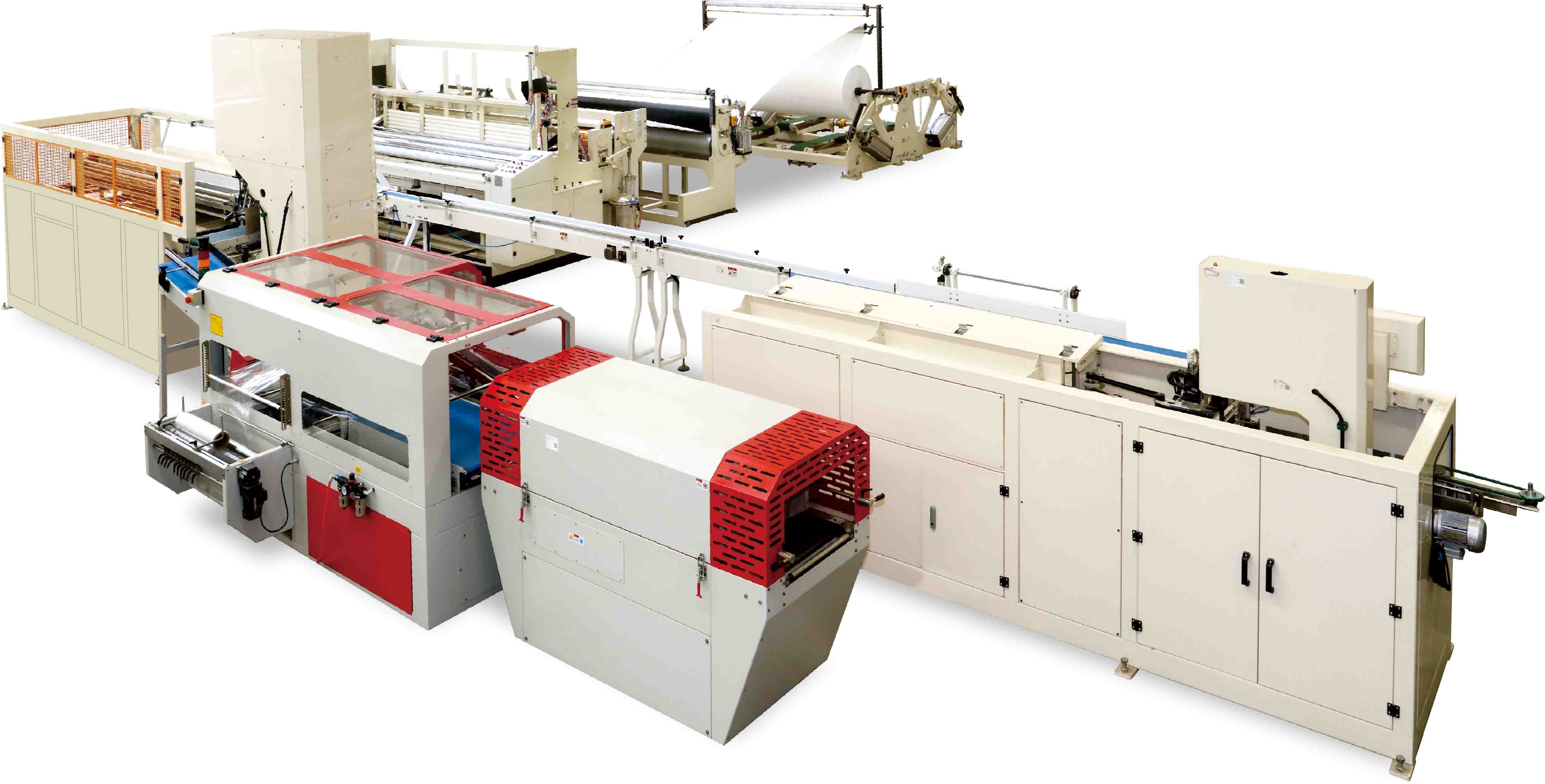
This comprehensive high-speed tissue production line review outlines the rigorous engineering standards required for modern rewinders, provides an objective ranking of mainstream market architectures, and examines how intelligent mechanical design balances kinematics with energy efficiency and waste reduction. To understand how these rewinders integrate into broader factory ecosystems, refer to our comprehensive Tissue Converting Line Guide.
1. Defining 2026 Standards for a High-Speed Tissue Production Line Review
Before evaluating specific manufacturer architectures, procurement teams must establish baseline operational parameters. In 2026, assessing a fully automatic rewinding line requires looking beyond raw velocity. Equipment must meet strict engineering tolerances across three critical vectors: Kinematic Speed Control, Embossing Precision, and Automated Stability.
Vector A: Kinematic Speed Control and Tension Management
The primary test of a high-speed rewinder is its ability to accelerate, cruise, and decelerate without fracturing the cellulose fibers of the paper web. Raw base tissue has a specific tensile strength limit in the Machine Direction (MD). Exceeding this limit results in web breaks.
Legacy machines utilized mechanical dancer rollers and friction brakes to manage tension, systems that are prone to physical bouncing and resonance at high speeds. Modern industry standards require Closed-Loop PID Servo Tension Control. By utilizing sensitive load cells communicating continuously with industrial Siemens PLCs, the machine adjusts servo torque in milliseconds. This guarantees uniform web tension, whether processing heavy 22gsm recycled toweling or fragile 11gsm virgin facial tissue.
Vector B: Embossing Clarity and Metallurgical Precision
As machine speed increases, rotational kinetic energy generates harmonic vibration throughout the steel frame. On inferior equipment, this vibration causes embossing rollers to bounce, resulting in crushed bulk, damaged fibers, and blurred patterns.
Current premium standards require heavy-duty cast-iron framing and zero-deflection steel rollers utilizing Point-to-Point (PTP) or Micro-Deco lamination. The rewinder must maintain micrometer-level nip pressure consistency at cruising speeds. Additionally, the Shore A hardness of the rubber mating rollers must be exactly calibrated to the steel engraving depth. For manufacturers integrating inline Toilet Paper Printing modules, this vibration-free stability is critical to ensure accurate ink registration without smudging.
Vector C: Operational Stability and Roll-Change Downtime
The fastest rewinding cycle is negated if the machine must frequently halt to load cardboard cores, splice webs, or clean adhesive applicators. An optimized line features a Non-Stop Automatic Core Feeding System, often synchronized with a high-capacity ZX Series High-Speed Toilet Paper Core Machine, accumulating and inserting cores via vacuum suction without decelerating the main web.
Furthermore, the transition from liquid chemical adhesives to Glue-Free Tail Sealing (utilizing mechanical crimping and microscopic hydrogen bonding) has become the industry standard. This eliminates the operational downtime previously required to clean crystallized glue off applicator rollers.
2. Searching for the Fastest Toilet Paper Rewinder: Mainstream Architecture Rankings
To provide an objective overview of the capital equipment market, we have evaluated three distinct tiers of rewinding architectures. The following data reflects operational realities and Total Cost of Ownership (TCO) implications.
Table 1: 2026 Fully Automatic Rewinding Line Parameter Comparison
Note: Data assumes a standard 2-ply, 15gsm virgin pulp toilet roll production run over a 24-hour cycle.
Performance Metric
Tier 1: European High-Speed Equipment
Tier 2: Asian Entry-Level Brands
Tier 3: DeChangYu (DCY) ZQ-H Series
Max Cruising Speed
600 - 800 m/min
150 - 200 m/min
250 - 300 m/min (Optimized for OEE)
Tension Control Architecture
Closed-Loop Digital Servo
Open-Loop Magnetic Brake
Closed-Loop PID Servo Integration
Tail Sealing Technology
High-Speed Glue Application
Standard Glue Application
Glue-Free Mechanical/Hydrogen Bond
Log Transfer Downtime
Non-Stop (0 Seconds)
3 - 5 Seconds per cycle
Non-Stop Seamless Transfer
Energy Efficiency (kWh/Ton)
High (Due to large motor draw)
Medium (Inefficient braking)
Industry Leading (Regenerative Braking)
Estimated ROI Period
48 - 60 Months
24 - 36 Months (High OPEX)
18 - 24 Months
Architecture Analysis:
Tier 1 (European High-Speed): Manufacturers like Valmet or PCMC offer exceptionally high top speeds. However, they require substantial CAPEX, climate-controlled environments, and premium OEM replacement parts. Sustained operation at 800 m/min also increases the probability of catastrophic web breaks if the raw base paper contains minor defects.
Tier 2 (Asian Entry-Level): These machines have low acquisition costs but utilize outdated open-loop tension controls. They generate significant material waste due to frequent web snapping and require constant manual operator intervention, which compromises overall profitability.
Tier 3 (DeChangYu Optimization): This tier combines European control standards with Asian manufacturing efficiency. By targeting a stable 300 m/min cruising speed, these machines eliminate high-speed harmonic vibrations, protect paper bulk, and deliver continuous 24/7 output with accelerated capital amortization.
3. The Myth of the Fastest Toilet Paper Rewinder: Why OEE Outperforms Raw Speed
When analyzing the data in this high-speed tissue production line review, a core engineering principle is evident. Prioritizing raw meter-per-minute metrics often obscures the most critical manufacturing indicator: OEE (Availability × Performance × Quality).
A Practical Production Scenario:
Suppose Factory A installs a machine rated for 800 m/min. Due to the extreme operating speed, minor imperfections in the raw paper cause the web to snap three times per shift. Re-threading requires 15 minutes per incident. Additionally, the high-speed glue applicator requires 30 minutes of daily cleaning. Consequently, Factory A operates at an OEE of 65%.
Factory B installs the DCY ZQ-H Series, cruising at a stable 300 m/min. Because closed-loop PID tension control prevents web breaks, and the glue-free tail sealer eliminates cleaning downtime, the machine runs continuously. Factory B achieves an OEE of 95%.
At the end of a 30-day production cycle, Factory B will predictably produce more sellable, high-quality tonnage than Factory A, while consuming significantly less electricity and generating zero chemical adhesive waste.
4. The DeChangYu Advantage: Engineering the ZQ-H Series
Rather than targeting theoretical speed metrics in a laboratory setting, the DCY engineering team optimized the ZQ-H Series for unbroken shift throughput, high energy efficiency, and a low Total Cost of Ownership (TCO).
High Energy Efficiency via Regenerative Braking: Overcoming the mass moment of inertia of a 2.5-ton jumbo roll requires substantial energy. The ZQ-H Series utilizes advanced Mitsubishi Servo Motors equipped with regenerative braking. When the unwinding stands decelerate, kinetic energy is captured, inverted, and fed directly back into the line's electrical grid. Combined with efficient vacuum core-loading pumps, the ZQ-H Series reduces electricity consumption by up to 25% per ton of converted paper compared to heavier legacy machines.
Precision at 300 m/min: By maintaining a stable, vibration-free cruising speed, the ZQ-H Series ensures that closed-loop controllers protect the paper's fragile crepe. This allows the system to process standard rolls efficiently or be integrated with an FC Series Slitting Rewinder for broader commercial flexibility.
Elimination of Glue OPEX: Integrated into the ZQ-H line is our Non-glue Tail Sealer. By replacing chemical adhesives with precision mechanical crimping and a microscopic water mist, the line runs continuously. This eliminates the operational stops required for glue applicator maintenance, permanently reducing consumable budgets.
5. IoT Diagnostics: Reducing MTTR to Maintain Output
Mechanical systems require maintenance, and production speed is heavily influenced by Mean Time To Repair (MTTR).
Legacy machines rely on physical troubleshooting; a sensor fault requires manual inspection, leading to extended downtime. The DCY ZQ-H Series utilizes modern digital infrastructure. Featuring secure IoT (Internet of Things) cloud gateways, every servo drive, load cell, and pneumatic valve is continuously monitored by a centralized SCADA (Supervisory Control and Data Acquisition) architecture.
When an anomaly occurs, the specific node is highlighted on the HMI touchscreen. Furthermore, DCY's software engineers can access the machine remotely to run code-level diagnostics and execute parameter adjustments in minutes. Supported by our comprehensive Implementation Support and After-Sale Warranty, this digital integration minimizes diagnostic downtime.
Conclusion: Optimizing Your Rewinding Investment
Conducting a thorough high-speed tissue production line review requires looking past initial specification sheets. Ultimately, the fastest toilet paper rewinder is not defined by maximum velocity; it is the machine that operates continuously for 24 hours without web breaks, interfaces seamlessly with your Toilet Paper Wrapping Machine, eliminates adhesive waste, and functions with optimal energy efficiency.
By integrating European tension control protocols with efficient manufacturing architectures, DeChangYu delivers a production ecosystem that ensures structural stability and measurable profitability.
Ready to evaluate specific operational metrics for your facility? Upgrade your factory with Turnkey Solutions for Tissue Converting Lines engineered for maximum OEE and immediate ROI. Visit our Dealership and Contact page today to schedule a technical consultation with our senior engineers and request a Solution Proposal tailored to your 2026 production capacity targets.




 English
 Español
 العربية
 Português do Brasil
 Русский