How to Upgrade an Existing Tissue Paper Production Line
Global tissue converters are being asked to do more with the same factory space. Retail customers want more pack formats, softer products, stronger embossing, cleaner wrapping, and steadier delivery. At the same time, many mills and converting plants are running older rewinders, interfolders, cutters, wrappers, conveyors, and palletizing systems that still have useful mechanical life but no longer match the factory's target speed, labor plan, or quality standard. A full replacement may not be the only answer. In many cases, a disciplined tissue paper production line upgrade can remove the real bottleneck while protecting the equipment that still performs well.
How to Upgrade an Existing Tissue Paper Production Line
The challenge is that upgrading an existing line is more complex than adding one shiny machine. A tissue line behaves as a connected system. Parent roll quality, unwinding, web tension, embossing, perforation, rewinding, cutting, wrapping, case packing, conveying, and palletizing all affect one another. If the rewinder is modernized but the log saw or wrapper remains the bottleneck, the line may still miss the daily output target. If the HMI is replaced but old sensors and drives are not checked, operators may get better screens without better control. The best upgrade begins with diagnosis, not with a catalog.
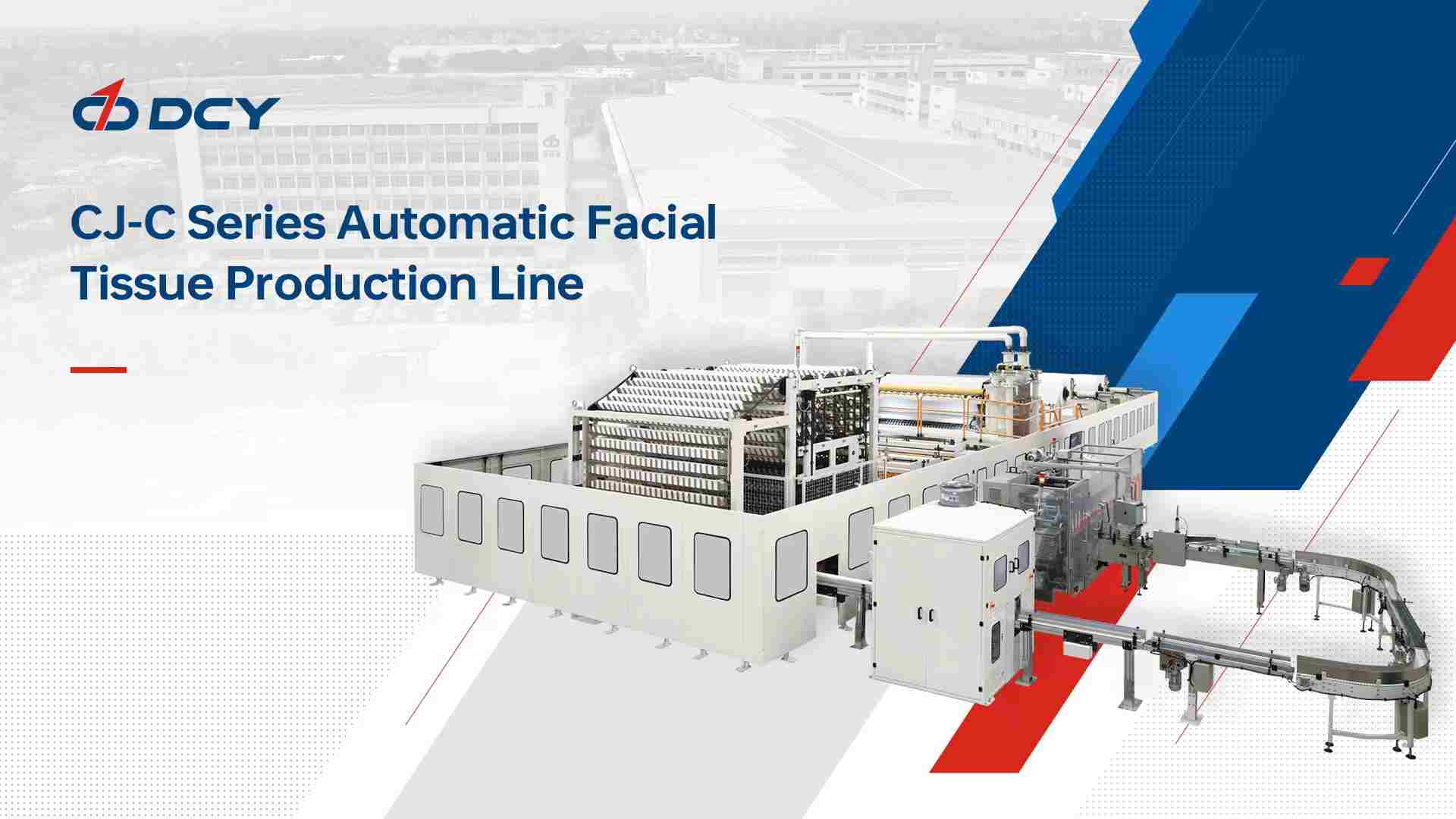
DCY Dechangyu Paper Machinery serves buyers who need practical modernization for toilet roll, kitchen towel, JRT, facial tissue, hand towel, slitting, embossing, coating, wrapping, and palletizing projects. Founded in 1987, DCY has a 100000 square meter manufacturing base, about 400 employees, more than 30 engineers, more than 60 national patents, ISO 9001 and CE certification, and export experience in more than 160 countries and regions. That background matters because an upgrade project needs equipment knowledge, layout judgment, commissioning support, and long-term service, not only a quotation.
Quick Answer
A tissue paper production line upgrade is the structured modernization of an existing converting line so it can produce more stable output, better product quality, safer operation, lower waste, or more pack formats without unnecessarily replacing every machine. It may include a new rewinder, interfolder, slitting rewinder, log saw, wrapper, conveyor, palletizer, PLC, HMI, web tension system, embossing unit, tail sealing unit, or spare-parts strategy. The right scope depends on the current bottleneck, equipment condition, available utilities, workshop layout, product plan, labor cost, and acceptable downtime.
For most factories, the correct sequence is simple: audit the line, measure real output and waste, identify the weakest process, define future products, decide which machines can be kept, select targeted upgrades, prepare a phased installation plan, run factory acceptance checks where possible, commission the line under real paper and packaging conditions, train operators, and monitor the first production period. If the project is handled this way, a tissue paper production line upgrade becomes a controlled manufacturing improvement rather than a disruptive experiment.
What Competitor Articles Usually Cover
Search results around tissue line upgrading usually fall into four groups. The first group comes from large equipment suppliers that promote revamping programs and technical improvement packages. These pages are useful because they explain that older tissue converting or packaging lines can often be modernized with targeted upgrades instead of full replacement. Valmet, for example, describes revamping as a way to extend the life of a converting or packaging line and improve reliability, efficiency, and compliance through targeted modernization in its Valmet revamping program.
The second group focuses on engineering case studies. A useful example is the Salas O'Brien toilet paper roll line upgrade, which describes auditing an existing toilet paper production and packaging line, deciding what could be reused or removed, upgrading HMI, PLC, and I/O points, and coordinating packaging, palletizing, conveyors, utilities, and commissioning. This type of article ranks because it speaks to the real project work behind an upgrade, not only to machine features.
The third group compares modifying existing tissue equipment with buying new machines. Valmet's discussion of whether to buy new or modify existing equipment notes that modification can improve equipment longevity and OEE in less time, while still requiring a careful business and performance review in Valmet new or modify existing tissue equipment. The fourth group covers packaging bottlenecks. Articles like the Valmet packaging line upgrade guide explain why recurring rewraps, damaged goods, obsolete electronics, limited pack-size flexibility, safety risk, and scarce spare parts should be documented before choosing an upgrade scope.
Readers also search for related questions such as how to increase tissue converting capacity, when to upgrade a PLC, whether an old rewinder can be retrofitted, how to reduce packaging bottlenecks, how to improve OEE, and how long production will stop during an upgrade. This article answers those questions from the perspective of a global B2B buyer evaluating an existing factory line.
Start With The Business Reason
A tissue paper production line upgrade should not start with a machine model. It should start with a business reason that can be measured. A converter may need to produce more cases per day, reduce operators per shift, serve new retail pack sizes, handle wider parent rolls, improve embossing definition, reduce rewinding waste, replace obsolete controls, add paper wrapping, add robotic palletizing, or move from semi-automatic flow to a more automatic line. Each reason creates a different technical path.
For a toilet roll or kitchen towel plant, the upgrade may focus on rewinding speed, perforation stability, log diameter control, core supply, tail sealing, log saw accuracy, roll wrapping, carton packing, and pallet flow. A line that currently runs with manual feeding and separate downstream machines may benefit from a ZQ-H high-speed roll production line or a staged move toward the ZQ-III automatic roll production line, depending on target output and labor strategy.
The most valuable step in a tissue paper production line upgrade is the line audit. The audit should record the actual route from parent roll storage to finished product warehouse. It should include machine model, working width, parent roll diameter, product formats, real speed, designed speed, changeover time, downtime causes, scrap points, operator count, utility supply, spare-part status, control-system age, and maintenance history. When this data is missing, teams often upgrade the loudest problem rather than the most expensive bottleneck.
A practical audit should also separate mechanical problems from process problems. A rewinder may look old, but the real loss may come from unstable parent roll quality, weak web guiding, inconsistent compressed air, poor knife condition, or packaging jams after the log saw. A wrapper may be blamed for low output even when the upstream line sends logs in irregular bursts. A slitting rewinder may be blamed for dust or trim problems even when blade selection, shaft expansion, web spreading, and tension control have not been checked.
Use the audit to decide whether the current line needs replacement, partial modernization, or process tuning. If the frame, unwinds, embossing units, and conveyors are mechanically sound, a control retrofit, sensor improvement, or downstream upgrade may be enough. If the working width, machine structure, safety condition, and speed ceiling no longer match the factory's product plan, replacing the core machine may be the better long-term decision.
Upgrade audit checklist
Area
What To Measure
Upgrade Clue
Output
Actual cases, rolls, packs, or logs per shift compared with the target
Low output with repeated stops suggests a bottleneck, not only low machine speed
Safety upgrades should be part of any modernization plan
Define The Future Product Mix
The best upgrade is designed for the products the factory wants to sell during the next several years, not only for the products it makes today. A toilet paper converter may need standard consumer rolls, kitchen towel, private-label rolls, jumbo roll tissue, or commercial packs. A facial tissue converter may need different sheet counts, box sizes, soft packs, V fold, M fold, bottom-pull products, or hand towels. A slitting plant may need narrower finished reels, coating, lotion, printing, or faster shaft handling.
For roll products, the upgrade plan should confirm roll diameter, roll length, core diameter, perforation pitch, embossing pattern, tail-seal method, wrapping style, pack count, carton style, and pallet pattern. DCY's roll solutions can be combined with modules such as the ZX high-speed toilet paper core machine, toilet paper embosser, non-glue tail sealer, and downstream wrappers. This matters because a machine that only fits today's roll size can become the next constraint when the buyer wins a new retail contract.
D
For premium products, added process steps may become part of the upgrade. A converter developing lotion facial tissue or coated products may evaluate the tissue lotion machine or FC series with coating. A brand that needs printed products may consider the FC series toilet paper printing machine. A plant that handles jumbo reel conversion may use the FC series slitting rewinder to improve slitting accuracy, finished reel quality, and downstream material preparation.
Choose Between Process Upgrade And Machine Replacement
Not every aging machine deserves replacement, and not every old machine should be retrofitted. The decision should be made with a clear view of remaining mechanical life, target speed, safety condition, control-system support, product flexibility, and future spare-parts risk. A process upgrade keeps the current machine body and improves the weak points. A machine replacement changes the main converting equipment. A hybrid project keeps some equipment, replaces the bottleneck, and integrates the line again.
A process upgrade works best when the mechanical platform is strong, the working width still fits the product plan, the line can accept new controls or modules, and the target improvement is realistic. Examples include replacing obsolete PLC and HMI hardware, improving web tension control, adding automatic tail sealing, improving cutting, adding automatic wrapping, integrating conveyors, or upgrading safety systems. This type of tissue paper production line upgrade is often attractive when downtime must be short and the current machine still has a useful foundation.
A replacement is more suitable when the existing line cannot reach the required width, speed, automation level, product tolerance, or safety condition. If a roll line cannot handle the required parent roll width or downstream automation, a new roll production line may be more practical than repeated fixes. If a facial tissue line lacks the folding format and speed needed for future products, a new interfolder may be a better base. If packaging is still manual while the upstream line has enough speed, downstream automation may produce the fastest practical improvement.
Upgrade Controls And Automation
Controls are often the hidden center of a tissue paper production line upgrade. Many older tissue converting lines still run with aging PLCs, limited HMI screens, weak diagnostics, old drives, scattered sensors, and undocumented wiring. When operators cannot see why the line stops, downtime becomes trial and error. When maintenance teams cannot get spare parts, a small electronic failure becomes a major production event. When upstream and downstream machines do not communicate, the line behaves like separate islands.
A control upgrade may include PLC replacement, HMI redesign, servo drive modernization, VFD updates, encoder replacement, safety PLC integration, new I/O, industrial network upgrades, remote support access, alarm history, recipe management, and clearer operator screens. DCY can work with Siemens PLC systems or with strong Chinese automation brands such as Inovance, depending on customer preference, regional support, and project requirements. The goal is stable operation, not technology for its own sake.
Control upgrades should be engineered around the line process. If the wrapper jams, the accumulator, rewinder, log saw, and conveyors should respond in a controlled sequence rather than creating scrap. Pulmac discusses the value of treating the converting line as a process, including coordinated ramp-up and ramp-down control, in its Pulmac tissue converting OEE article. For a buyer, the practical question is whether a control retrofit will reduce stops, shorten recovery, improve tension stability, and make operators faster at solving problems.
Upgrade The Rewinding And Folding Core
The core converting machine determines much of the line's product quality. In a toilet roll or kitchen towel line, the rewinder affects roll tightness, diameter consistency, perforation, embossing registration, core insertion, tail sealing, and downstream cutting stability. In a facial tissue or hand towel line, the interfolder affects sheet count, fold accuracy, stack height, log transfer, cutting performance, and packaging readiness. If the core machine cannot produce a stable intermediate product, downstream automation will only move poor quality faster.
For roll products, common upgrade points include fast-change unwinds, automatic web tension, improved embossing, better perforation systems, more stable core feeding, glue or glue-free lamination, glue-free tail sealing, edge embossing, and automatic transfer to log saws and wrappers. For folded products, common upgrades include better unwinding, automatic web tension, half-fold or flip units, layer options, bottom-pull configuration, side trimming, edge embossing, and cleaner log output. The buyer should compare these options against the real product plan rather than selecting every module by default.
This is where a complete equipment view helps. Buyers who are still comparing machine categories can use DCY's guide to tissue roll machines, the article on types of tissue converting equipment, and the overview of tissue converting line equipment to understand what belongs upstream, midstream, and downstream. A good upgrade decision maps each machine function to a specific production problem.
Upgrade Cutting Slitting And Finished Size Control
Cutting and slitting issues are easy to underestimate because they appear after the main converting process. In practice, poor cut quality can destroy the value created by a good rewinder or interfolder. Toilet roll and kitchen towel lines need accurate log sawing, stable clamping, dust removal, both-end removal, and consistent cut length. Facial tissue and hand towel lines need clean log cutting without crushed stacks. Slitting lines need blade accuracy, web spreading, tension consistency, finished reel geometry, and trim handling.
A tissue paper production line upgrade may focus on cutting when customers complain about uneven rolls, crushed facial tissue stacks, weak pack appearance, dust, excessive trim, or unstable finished reel edges. The solution may be a new cutter, better blades, improved dust collection, tighter transfer control, updated servo positioning, or a dedicated slitting rewinder. DCY's technical article on tissue cutting machines is useful for buyers who need to compare cutting requirements across toilet paper, facial tissue, kitchen towel, and related formats.
For jumbo reel and downstream converting plants, the slitting stage can decide whether the next production line runs smoothly. A reel that looks acceptable at low speed may create web breaks, wrinkles, or tension problems at higher converting speed. A high-speed slitting rewinder with proper tension control and shaft handling can turn inconsistent jumbo reels into more predictable inputs for downstream production.
Upgrade Packaging Conveying And Palletizing
Packaging is often the real limit after the main tissue machine is improved. A factory may buy a faster rewinder or interfolder and then discover that manual wrapping, slow infeed, carton packing, conveyor accumulation, or pallet loading prevents the line from reaching planned output. For this reason, an upgrade study should include every step from finished roll or tissue stack to warehouse-ready pallet. The output target should be measured in saleable packs, cases, or pallets, not only machine speed.
For roll products, DCY's F-T6 automatic roll wrapper and F-T8 automatic roll wrapper can support more automatic roll packaging plans, while the high-speed robotic palletizing system can reduce manual handling pressure at the end of the line. In high labor cost markets, automatic wrapping, conveying, case packing, and palletizing may be the upgrade that changes the business result most clearly. In lower labor cost markets, a semi-automatic strategy may still be appropriate if the bottleneck is product quality rather than labor.
Packaging upgrades also support product flexibility. A plant may need single rolls, multi-roll consumer packs, kitchen towel packs, bulk commercial packs, cartons, or pallet patterns for different customers. The upgrade must confirm pack dimensions, film or paper wrapping requirements, label position, case pattern, bar-code requirements, and warehouse flow. A wrapper that only supports one current format may limit the sales team when customers request new pack styles.
Plan The Upgrade Around Downtime
Downtime is one of the most important planning issues. A tissue paper production line upgrade should be split into work that can be prepared before the shutdown and work that must happen during the shutdown. Engineering drawings, machine fabrication, control-panel build, program simulation, spare-part preparation, foundation work, utility routes, operator training materials, and delivery schedules should be prepared in advance. The shutdown should be used for mechanical installation, electrical connection, I/O checks, dry runs, paper threading, product trials, and acceptance tests.
A phased project can reduce risk. Phase one may replace a wrapper or add a tail sealer. Phase two may upgrade PLC and HMI. Phase three may add palletizing. Phase four may replace the core rewinder. The order depends on the bottleneck and the factory's production calendar. For multi-line factories, one line can often be upgraded while another line continues production. For single-line factories, spare inventory and customer delivery planning become part of the project plan.
Clear ownership prevents delays. The buyer should define who prepares the foundation, compressed air, power, cables, exhaust, dust collection, packaging materials, parent rolls, operators, forklift access, and waste handling. The supplier should define machine scope, drawings, installation sequence, commissioning support, training, spare parts, documentation, and acceptance standards. DCY's confirmación de pedido, orden de entrega, and implementation support pages fit naturally into this planning stage because an upgrade succeeds when commercial, logistics, and technical details match.
Typical upgrade phases
Phase
Main Work
Buyer Focus
Assessment
Line audit, product plan, bottleneck analysis, layout review
Share real production data and future product requirements
Engineering
Scope definition, drawings, control design, machine selection
Confirm utilities, floor space, access, and acceptance criteria
Preparation
Machine build, program preparation, spare parts, training plan
Prepare shutdown window, materials, operators, and site readiness
Stabilize the new process and document lessons learned
Review Safety Compliance And Operator Access
Safety should not be treated as a side issue. Older tissue converting lines may have exposed nip points, weak interlocks, difficult access, undocumented emergency stop circuits, or operator habits that were accepted years ago but no longer fit current expectations. OSHA's machine guarding page lists machinery and machine guarding standards, including general industry requirements, in its OSHA machine guarding standards. Buyers outside the United States should still apply the same principle: upgrading performance without reviewing guarding, access, interlocks, and stop functions is incomplete.
A safety review should include unwind areas, web threading paths, embossing rolls, perforation units, log saws, wrappers, conveyors, palletizers, electrical panels, compressed air points, and maintenance access. Operators should be able to clear jams, change blades, replace film, adjust guides, and inspect products without unsafe reaching or awkward climbing. A new control system should provide clearer fault messages, safer restart logic, and predictable emergency-stop behavior.
Safety also affects productivity. If operators avoid a guard because it makes routine work too slow, the system design is wrong. If maintenance teams cannot access a sensor or blade safely, the line will lose time. A good upgrade makes the line safer and easier to operate at the same time.
Measure OEE Before And After
OEE is useful because it separates three different problems: availability, performance, and quality. Availability asks whether the line is running when it should run. Performance asks whether it runs at the expected rate when it is running. Quality asks whether the output is saleable the first time. A tissue paper production line upgrade should define which part of OEE it is expected to improve. Otherwise, teams may celebrate higher speed while ignoring higher waste, or reduce downtime while still producing inconsistent packs.
Before the upgrade, record planned production time, unplanned downtime, minor stops, average speed, changeover time, rejected rolls, rejected packs, rewraps, trim waste, and reasons for stoppage. After the upgrade, measure the same data for several weeks. A successful project should show fewer repeated stops, faster recovery, more stable product dimensions, lower rework, better pack quality, or higher saleable output. The line should not only run faster during a demonstration; it should run better during normal shifts.
OEE tracking also helps decide the next upgrade. If the rewinder improvement exposes the wrapper as the next bottleneck, the data will show it. If the wrapper improvement exposes palletizing labor as the next bottleneck, the data will show it. Upgrading an existing line is often a sequence of focused improvements, not a single isolated event.
Match Automation Level To Labor Cost
Automation level should match the factory's region, labor cost, management ability, and product mix. In high labor cost markets, a fully automatic line can reduce manual transfer, reduce rework, improve hygiene, and make output easier to stabilize. In markets where labor cost is lower, a semi-automatic upgrade may still be the better first step if the main problem is old controls, unstable cutting, or weak packaging quality. The right tissue paper production line upgrade is the one that improves business performance without creating unnecessary complexity.
For a roll product factory, full automation may include automatic core making, rewinding, tail sealing, log sawing, roll wrapping, conveying, carton packing, and palletizing. For a facial tissue factory, it may include automatic unwinding, folding, log cutting, compression, wrapping, cartoning, and pallet flow. For a slitting plant, it may include automatic shaft handling, web tension, trim collection, finished reel handling, and downstream material movement.
The buyer should also consider operator skill. A highly automatic line still needs trained operators who understand recipes, alarms, web threading, product changeover, daily inspection, and maintenance routines. Automation reduces repetitive labor, but it does not remove the need for good process discipline.
Upgrade For Sustainability And Material Efficiency
Material waste is a direct cost and a sustainability issue. Tissue converting waste can come from web breaks, unstable tension, trim, bad cuts, crushed stacks, loose tails, poor wrapping, rejected cartons, or startup losses after every stop. An upgrade can reduce waste by improving web control, cut accuracy, sealing consistency, packaging stability, and line coordination. Buyers should ask suppliers how each proposed change affects saleable output, not only rated speed.
Glue-free technologies can also support cleaner production goals when they fit the product. DCY's glue-free tail sealing and glue-free embossing capabilities are relevant for factories that want to reduce glue use, improve product cleanliness, and simplify certain consumable-related issues. For kitchen towel and toilet roll products, the correct sealing and embossing choice should be tested against softness, roll tightness, pattern definition, customer requirements, and operating stability.
Energy and air consumption should also be reviewed. A faster line may need better compressed air stability, more reliable vacuum or dust collection, or updated motors and drives. A control upgrade may reduce unnecessary stops and restarts. A packaging upgrade may reduce rewraps and damaged goods. Sustainability is strongest when the line produces more saleable product from the same input materials.
Build The Buying Checklist
Before signing a tissue paper production line upgrade project, buyers should ask for a technical proposal that explains scope, machine boundaries, expected output, product assumptions, utility requirements, spare parts, layout, installation support, commissioning process, training, documentation, and after-sales support. A proposal that only lists machines is not enough. The buyer needs to know what changes, what stays, what interface points exist, and how acceptance will be judged. This is the point where the tissue paper production line upgrade should become an engineered project plan.
DCY's solution proposal service is designed for this kind of planning. It allows the buyer to share current line details, target products, factory drawings, output goals, and automation preferences before choosing a final configuration. For overseas buyers, the after-sale warranty commitment is also important because an upgrade may involve operator questions, spare parts, remote guidance, and process tuning after the first production period.
Can the supplier audit the existing line before recommending equipment
The right upgrade depends on the bottleneck, not on a generic machine list
Can the proposed line handle current and future products
Product growth, new pack sizes, and private-label work may change equipment needs
Are PLC HMI drives and sensors supportable in the buyer's market
Local support and spare-parts availability affect uptime after commissioning
Does the layout include material flow and maintenance access
A fast machine can still fail if operators cannot feed, inspect, or maintain it efficiently
Are installation and acceptance standards written clearly
Written standards reduce disputes and make commissioning more objective
Is training included for operators and maintenance staff
Line stability depends on daily operation, not only on the machine design
Common Mistakes To Avoid
The first mistake is upgrading for maximum speed without confirming the downstream limit. A rewinder with higher speed does not solve a slow wrapper, weak case packer, or manual palletizing constraint. The second mistake is ignoring product mix. A line optimized for one roll diameter or pack format may not support the customer's next order. The third mistake is treating controls as a screen replacement instead of a process-control project.
The fourth mistake is underestimating utilities and layout. Compressed air, power, dust collection, access space, finished-product flow, and forklift movement can limit the final result. The fifth mistake is failing to prepare operators before commissioning. If the team does not understand the new HMI, alarms, threading route, recipe settings, and daily inspection points, the upgraded line may take longer to stabilize than necessary.
The sixth mistake is accepting a vague handover. A good handover should include as-built drawings, manuals, spare-parts list, recommended maintenance routines, backup files, product trial records, acceptance data, and contact process for support. These documents make the line easier to maintain after the supplier engineers leave.
Preguntas frecuentes
When should a factory upgrade an existing tissue paper production line
A factory should consider an upgrade when the existing line has repeated downtime, obsolete controls, limited spare parts, high labor needs, poor product consistency, packaging bottlenecks, safety concerns, or inability to run new product formats. The decision should be based on measured output, waste, and future product requirements.
Is it better to retrofit or buy a new tissue machine
A retrofit is suitable when the machine frame, width, and basic function still fit the future product plan. A new machine is better when the old platform cannot reach the target speed, automation level, safety condition, product tolerance, or format flexibility. Many projects use a hybrid scope.
What parts of a tissue line are commonly upgraded
Common upgrades include PLC, HMI, drives, sensors, web tension systems, unwind stands, embossing, perforation, rewinding, interfolding, log saws, tail sealing, wrapping, conveyors, case packing, palletizing, guarding, and spare-parts systems.
How can a buyer reduce downtime during an upgrade
The buyer can reduce downtime by completing layout review, utility work, control-panel preparation, machine fabrication, operator planning, spare-parts preparation, and material readiness before the shutdown. A phased upgrade can also keep part of the factory running.
Can an old PLC be upgraded without replacing the whole line
Often yes, but the supplier must review I/O, wiring, drives, sensors, safety circuits, HMI screens, documentation, and machine behavior. The upgrade should improve diagnostics and process control, not only replace old hardware.
What data should be collected before asking for a proposal
Buyers should collect machine model, width, speed, product sizes, parent roll specifications, output per shift, downtime reasons, waste rate, operator count, layout drawings, utility data, photos, videos, spare-parts issues, and future product plans.
How does DCY support tissue line modernization
DCY can review the buyer's product plan, line condition, automation preference, and workshop layout, then recommend a targeted solution across roll products, folded tissue, slitting, embossing, sealing, packaging, palletizing, delivery, installation, and after-sales support.
Conclusion
A successful tissue paper production line upgrade is not a random equipment purchase. It is a disciplined improvement project that begins with the factory's business goal, measures the existing line, identifies the true bottleneck, and then chooses the smallest scope that can deliver the required result with room for future growth. Sometimes that means a new rewinder or interfolder. Sometimes it means PLC and HMI modernization. Sometimes it means packaging automation, robotic palletizing, better cutting, or improved web tension control.
For global tissue converters, the strongest upgrade projects share three qualities: they protect what still works, replace what limits growth, and integrate the entire line so operators can produce saleable tissue products more consistently. DCY Dechangyu can support this tissue paper production line upgrade process with customized tissue converting solutions, large-width and high-speed equipment options, full or semi-automatic configurations, Siemens or Inovance control choices, patented technologies, and service experience across international markets.
If your factory is planning a toilet roll, kitchen towel, JRT, facial tissue, hand towel, slitting, wrapping, or palletizing upgrade, prepare your current line data before contacting suppliers. The better the diagnosis, the stronger the proposal. A well-planned upgrade can turn an aging line into a more reliable production asset instead of forcing a full replacement too early.
External Sources Used
External research for this article included Valmet revamping materials, a toilet paper roll line upgrade case study, tissue equipment modification guidance, packaging line upgrade guidance, OEE improvement discussion, and machine guarding standards. These sources were used for industry context. DCY-specific details came from DCY product pages and company materials.





 English
 Español
 العربية
 Português do Brasil
 Русский