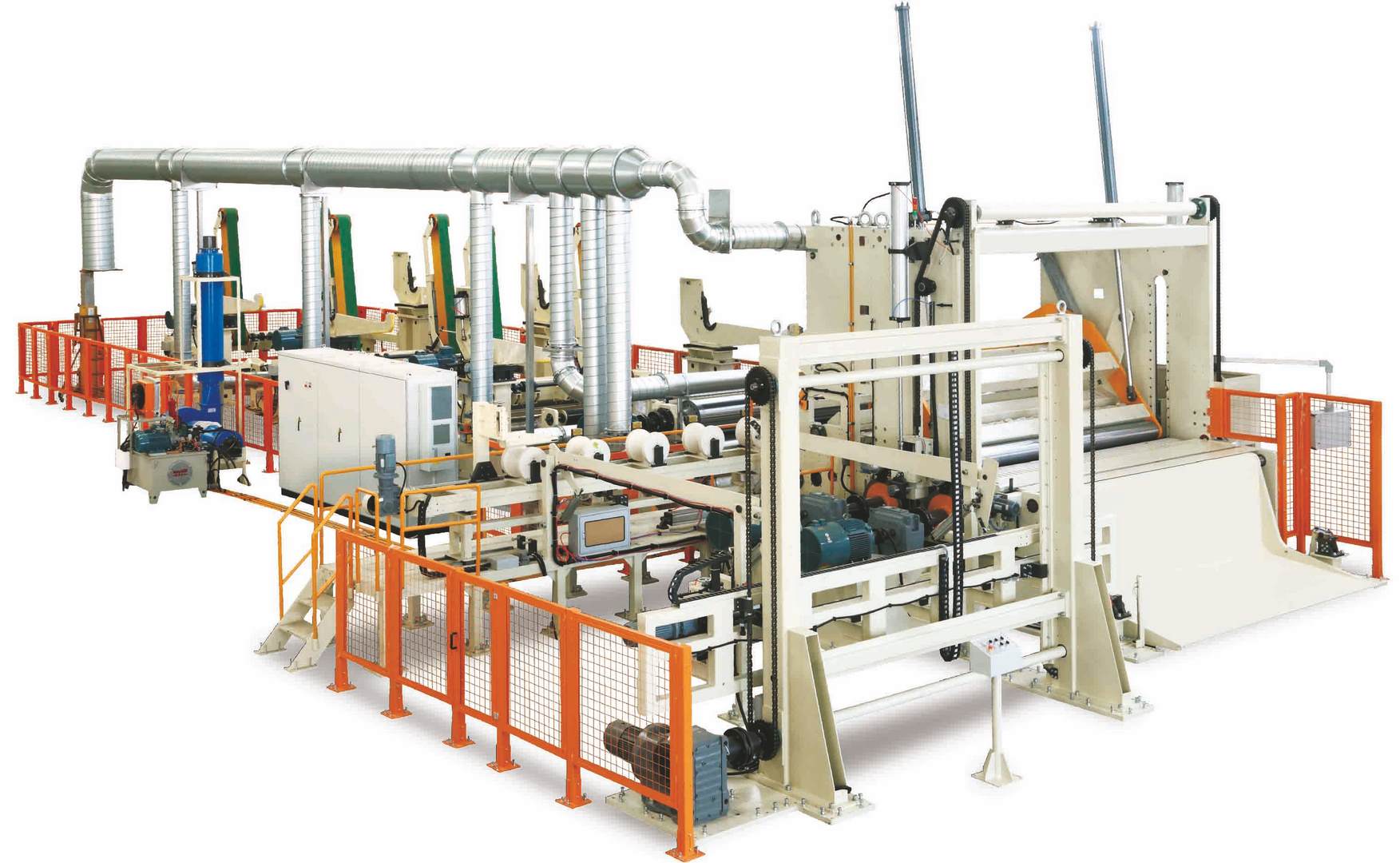
In the architecture of a paper converting facility, the rewinding machine acts as the critical processing node. Whether your facility handles jumbo rolls of delicate virgin tissue, rigid kraft paper, or nonwovens, the rewinding phase introduces significant kinetic energy and mechanical stress to the material web.
Selecting this equipment is not a standard procurement task; it is a complex engineering decision that directly dictates your plant's Overall Equipment Effectiveness (OEE). A misaligned specification leads to frequent web breaks, unacceptable telescoping, elevated scrap rates, and micro-fractures in the paper fibers that compromise the final product's tactile quality.
Drawing from decades of manufacturing data at Foshan DeChangYu Paper Machinery, we have documented the technical criteria that distinguish a highly functional converting line from a problematic one. For a baseline understanding of our engineering heritage, you can review our About Us page. Before analyzing specific machine metrics, we also recommend reading The Complete Guide to Tissue Roll Machines to familiarize yourself with the foundational converting processes, as well as our macro-level Tissue Converting Line Guide.
Here is an objective, deeply technical, six-step framework for evaluating and selecting an industrial rewinding machine in 2026.
1. Material Specifications: The First Step to Flawless Tissue Rolls
Equipment must be rigorously matched to the specific tensile properties, elasticity, and basis weight (GSM) of the raw material. Relying on generic machine specifications often results in material failure at high speeds due to uncontrolled tension propagation.
The Physics of Fiber Processing
Processing virgin softwood pulp differs vastly from processing recycled fibers or alternative materials like bamboo pulp. Virgin pulp contains long fibers that provide high tensile strength, allowing the rewinder to utilize aggressive acceleration curves. Bamboo, conversely, possesses shorter fibers and higher brittleness. If a machine applies standard acceleration torque to a bamboo web, the web will snap instantaneously.
If your facility focuses on low-GSM facial tissues, specialized handling with low-inertia rollers is required (see our Facial Tissue Paper Machine Guide). Conversely, processing air-laid paper for napkins demands different nip pressure profiles, detailed in our Napkin Machine Buying Guide.
Table 1: Raw Material Tensile Properties & Machine Calibration Parameters
Material Type
Tensile Strength Profile
Brittleness / Stretch
Required Machine Calibration Strategy
Virgin Wood Pulp (Softwood/Hardwood mix)
High
High Elasticity (Stretchable)
Standard aggressive acceleration; high nip pressure acceptable.
Factory planners must define physical input limits. What is the maximum parent roll width (e.g., 2850mm, 3600mm) and maximum unwind diameter? These dimensions dictate the required structural rigidity and base weight of the unwind backstand.
Center Winding: Torque is applied directly to the rewinding shaft. This method is mathematically simpler and suitable for rigid materials with low stretch.
Center-Surface Winding: The roll is driven by a combination of center shaft torque and surface friction from a driving drum. This is engineered for delicate or low-friction materials. It actively controls the volume of air entrained between the paper layers, preserving the product's bulk (thickness) and preventing lateral telescoping.
2. High-Speed Production: Scaling Volume Without Bottlenecks
A critical error in facility design is specifying a rewinder that creates an upstream bottleneck or heavily outpaces downstream packaging capabilities, thereby reducing the return on invested capital (ROIC).
Line Speed Synchronization and OEE
Theoretical maximum speed is a vanity metric; stable continuous speed is the engineering metric that matters. To calculate true throughput, engineers use Overall Equipment Effectiveness (OEE), which factors in Availability, Performance, and Quality.
High-speed continuous rewinders must be paired with an accumulator buffer. This system stores the continuous output of logs via a serpentine belt system. If the downstream log saw halts for 30 seconds for automatic blade grinding, the accumulator absorbs the rewinder's output, preventing a line shutdown. The capacity of this accumulator must be mathematically matched to the saw's MTTR (Mean Time To Repair) during blade changes.
Automation and MTBF (Mean Time Between Failures)
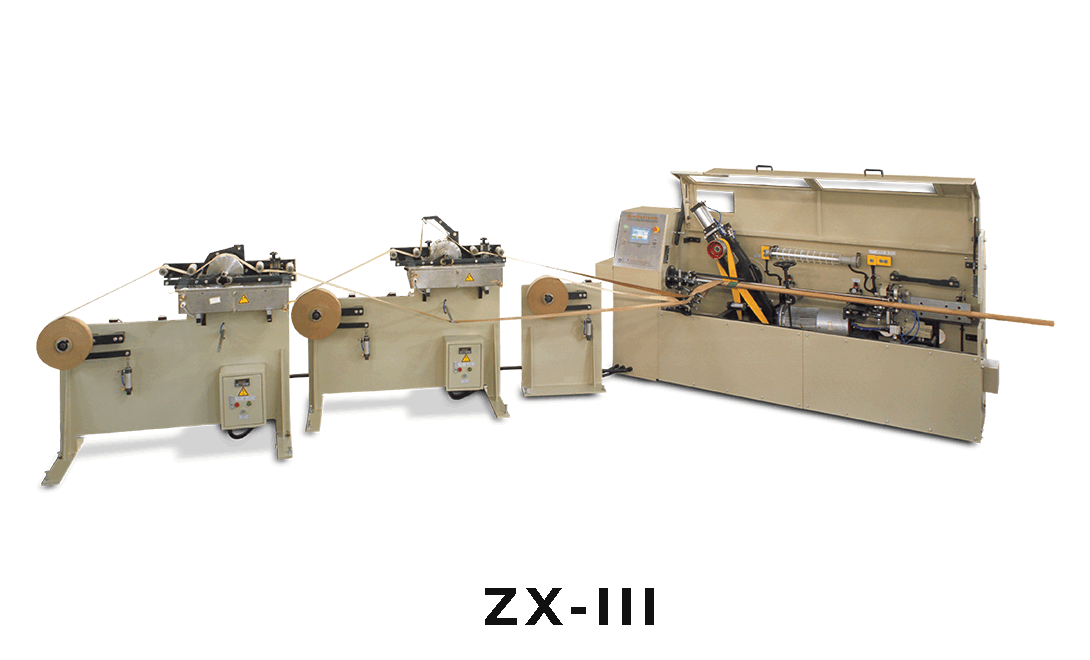
Reducing operator intervention decreases failure points. Modern lines utilize automatic roll changes and core feeding. To prevent core shortages from halting the line, facilities often integrate a ZX Series High Speed Toilet Paper Core Machine upstream. Furthermore, the rewinder's PLC must establish a flawless data handshake via industrial Ethernet with the packaging units, a process explained in our Toilet Paper Wrapping Machine Guide.
3.Rewinder Technology: Why Tension Control Drives Quality
The mechanical architecture of the machine dictates its maintenance intervals, vibration harmonics, and the structural integrity of the finished roll.
Closed-Loop PID Tension Control
Imprecise tension propagates through the web, causing snapping and resulting in 15-to-20-minute re-threading delays. Legacy systems relying on open-loop magnetic powder brakes suffer from thermal fade as the brake heats up during the unwinding of a 2-ton roll.
Contemporary engineering requires Load Cell Tension Control integrated with independent servo drives utilizing PID (Proportional-Integral-Derivative) control loops. The load cell provides real-time force feedback (measured in Newtons). The PLC calculates the error between the setpoint and the actual tension, and the PID algorithm instructs the servo to adjust torque in milliseconds. This closed-loop architecture eliminates web flutter and is the standard across industrial-grade equipment, such as our heavy-duty FC Series.
Slitting Kinematics and Blade Metallurgy
The cutting mechanism must match the material to prevent edge fusing and paper dust generation. Cellulose dust accelerates bearing wear and poses a severe deflagration (fire) risk.
Utilized in specialized converting applications where edge crushing is acceptable.
Razor Slitting
Ceramic or Coated Steel
Thin Plastic Films
Minimal
Not applicable for tissue converting due to rapid blade dulling against silica in paper.
Process Additions and Value Engineering
To alter the physical characteristics of the tissue, manufacturers often integrate a Toilet Paper Embosser, which disrupts the fiber bonds slightly to increase softness and perceived volume (bulk). Additionally, transitioning away from adhesive-based tail sealing to a Non-glue Tail Sealer utilizes mechanical crimping and moisture to seal the roll. This eliminates adhesive material costs and the associated cleaning downtime, an engineering shift detailed extensively in Why Glue-Free Tail Sealing Technology Matters.
4. Industrial Safety and Regulatory Compliance
Industrial rewinders involve immense kinetic energy. Manipulating multi-ton parent rolls and utilizing high-RPM slitting blades requires safety to be engineered into the PLC logic, not just added as an afterthought.
Safety Integrity Levels (SIL) and Deceleration Curves
Equipment must comply with regional industrial safety directives, such as OSHA (North America) or the Machinery Directive for CE marking (Europe). Compliance requires achieving specific Performance Levels (PL) for safety circuits.
In the event of an E-stop (Emergency Stop), a 2-ton roll spinning at 250m/min possesses massive inertia. The servo drives must execute a programmed deceleration curve to dump this kinetic energy safely into braking resistors, preventing the mechanical transmission from snapping while bringing the machine to a halt within fractions of a second. Additionally, pneumatic dump valves must immediately exhaust stored air pressure to prevent crushing hazards.
Active Guarding Systems
Modern safety protocols demand active systems, such as laser scanners or safety light curtains around the unwind stands. These optical sensors create an invisible perimeter; if a human breaches this zone during operation, the drive systems are instantly isolated from power.
5. Supplier Support: Minimizing Downtime with Rapid Maintenance
The procurement of a converting line initiates a lifecycle spanning 15 to 20 years. The true cost of the equipment is heavily weighted by its Maintainability and Mean Time To Repair (MTTR).
IoT Diagnostics and MQTT Protocols
When a fault occurs, diagnostic speed is critical. Advanced machines feature remote IoT connectivity utilizing protocols like MQTT to push telemetry data to the cloud. This allows engineers to securely access the PLC globally. Remote troubleshooting of servo faults, VFD errors, or logic parameters drastically reduces downtime from days to minutes. Ensure your vendor provides a comprehensive After-Sale Warranty that covers these digital support structures.
The Turnkey Engineering Process
Standardized, off-the-shelf machinery often requires factory layouts to be compromised. A professional integration begins with a technical Solution Proposal that maps the precise material flow and utility requirements (CFM for pneumatics, kW for power) of your facility.
Following technical sign-off and Order Confirmation, the logistics of Order Delivery are executed with precision. The final, and most crucial step, is on-site Implementation Support. During this phase, the equipment is anchored using laser-guided leveling, drives are calibrated, and local operators are rigorously trained on preventive maintenance protocols.
6. Long-Term ROI: Reducing Your Total Cost of Ownership (TCO)
Initial Capital Expenditure (CAPEX) is an insufficient metric for evaluating machinery. Financial models must account for Operating Expenditure (OPEX), energy consumption, and scrap rates over a decade of operation.
Energy Recovery and Regenerative Braking
High-capacity servo motors consume substantial power. Modern converting lines utilize regenerative braking in their drive systems. When a massive jumbo roll decelerates, the kinetic energy is not lost as heat; it is converted back into electrical current by the inverter and fed into the plant’s internal AC grid, measurably reducing the net energy draw of the facility.
10-Year Total Cost of Ownership (TCO) Projection
The cost of raw material waste must be quantified. A machine with sub-optimal, open-loop tension control may generate 3% waste. In a facility processing 10 tons daily (assuming paper cost at $1,000/ton), the financial impact of this waste over a 10-year cycle is staggering.
Table 3: 10-Year TCO Projection (Generic vs. DCY Servo-Driven Rewinder)
The equipment should possess modularity to adapt to future market requirements. For instance, if future product roadmaps include adding printed patterns to the tissue web, understanding the necessary line modifications is essential. This is covered in the Complete Guide to Toilet Paper Printing.
Conclusion: Evaluating Your Converting Strategy
The specification of a rewinding machine determines your facility's operational cadence, product consistency, and overall financial viability. Decisions must be rooted in structural engineering, tension control capabilities, and rigorous TCO modeling rather than surface-level pricing.
To discuss the kinetic specifications of your raw materials and evaluate machine configurations, visit our Dealership and Contact page to consult with our senior engineering team.