What Does a Toilet Paper Production Line Cost? A Practical Buyer’s Guide
The cost of a toilet paper production line varies considerably based on production capacity, level of automation, and machine specifications. Investing in higher capacity or fully automated machines may result in substantial upfront costs, yet can lead to long-term savings on labor. It’s crucial to analyze your factory’s specific needs, including potential future growth and operational efficiency. If you’re interested in making an informed decision, there’s more insight to explore on key factors and budgeting strategies.
Key Takeaways
Production capacity directly influences costs; higher capacities require advanced machinery and greater investment.
Levels of automation impact labor costs; automated systems reduce long-term expenses despite higher initial investments.
Machine specifications, such as width and features, affect output size and overall production costs.
Packaging equipment is crucial for market readiness, with costs varying by technology and design choices.
Assess scalability and future growth potential to align initial investments with market demand trends.
Introduction
Toilet paper production line costs can vary widely due to the absence of a one-size-fits-all configuration. When considering your investment in a toilet paper converting line, you’ll need to assess several critical factors. Production capacity is paramount; higher capacities typically require more sophisticated machinery. The level of automation also plays a significant role; automated systems often reduce labor costs but increase upfront expenses. Additionally, machine width, which affects output size, and finished toilet roll specifications, including embossing and cutting features, directly influence costs. Don’t forget about packaging equipment, as this is essential for market readiness. This overview focuses on converting lines, not tissue paper mills, emphasizing the complexity and variability in your decision-making process. Understanding private label production can also provide strategic advantages in product differentiation and brand loyalty enhancement.
What Is Included in a Toilet Paper Production Line?
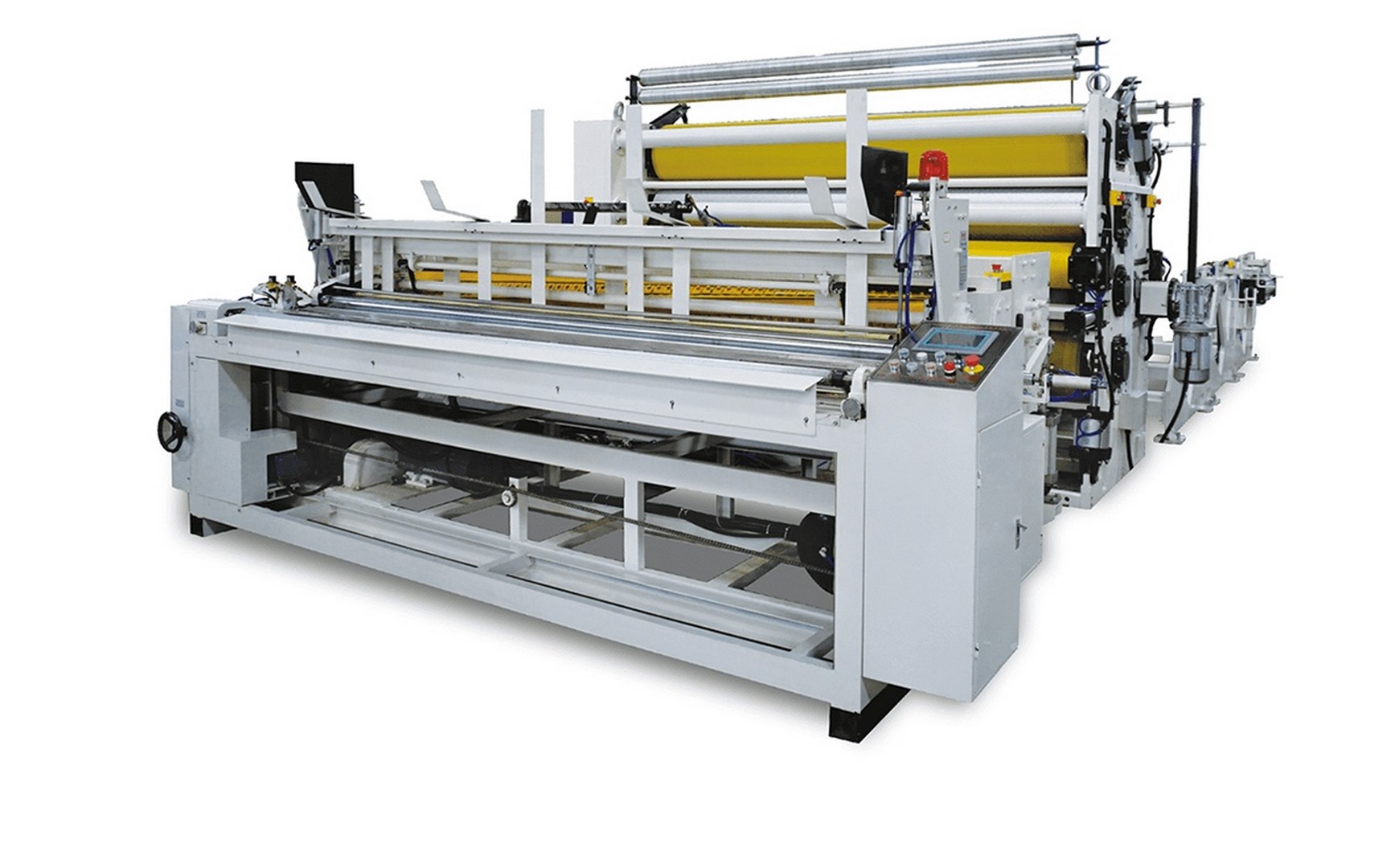
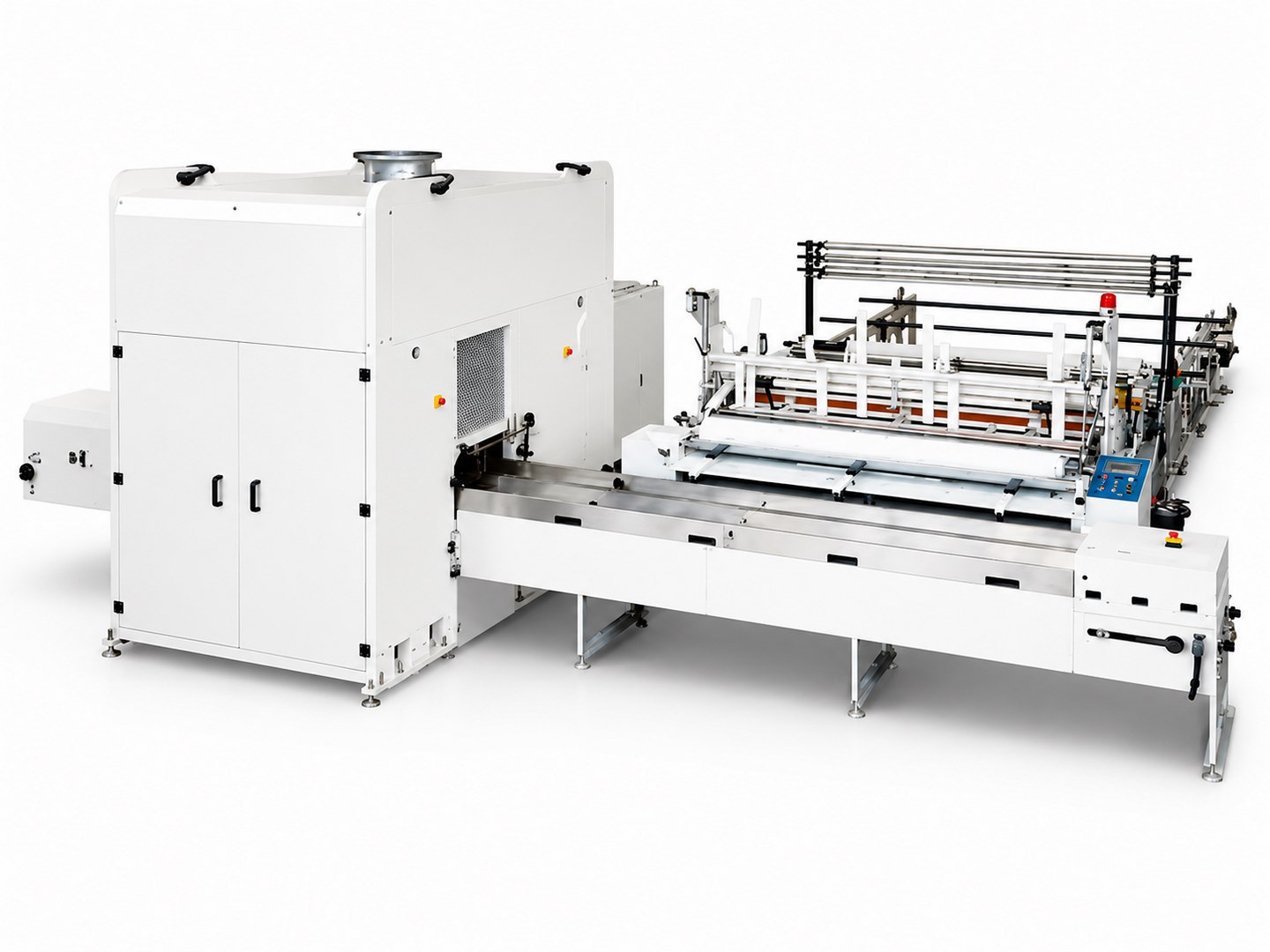
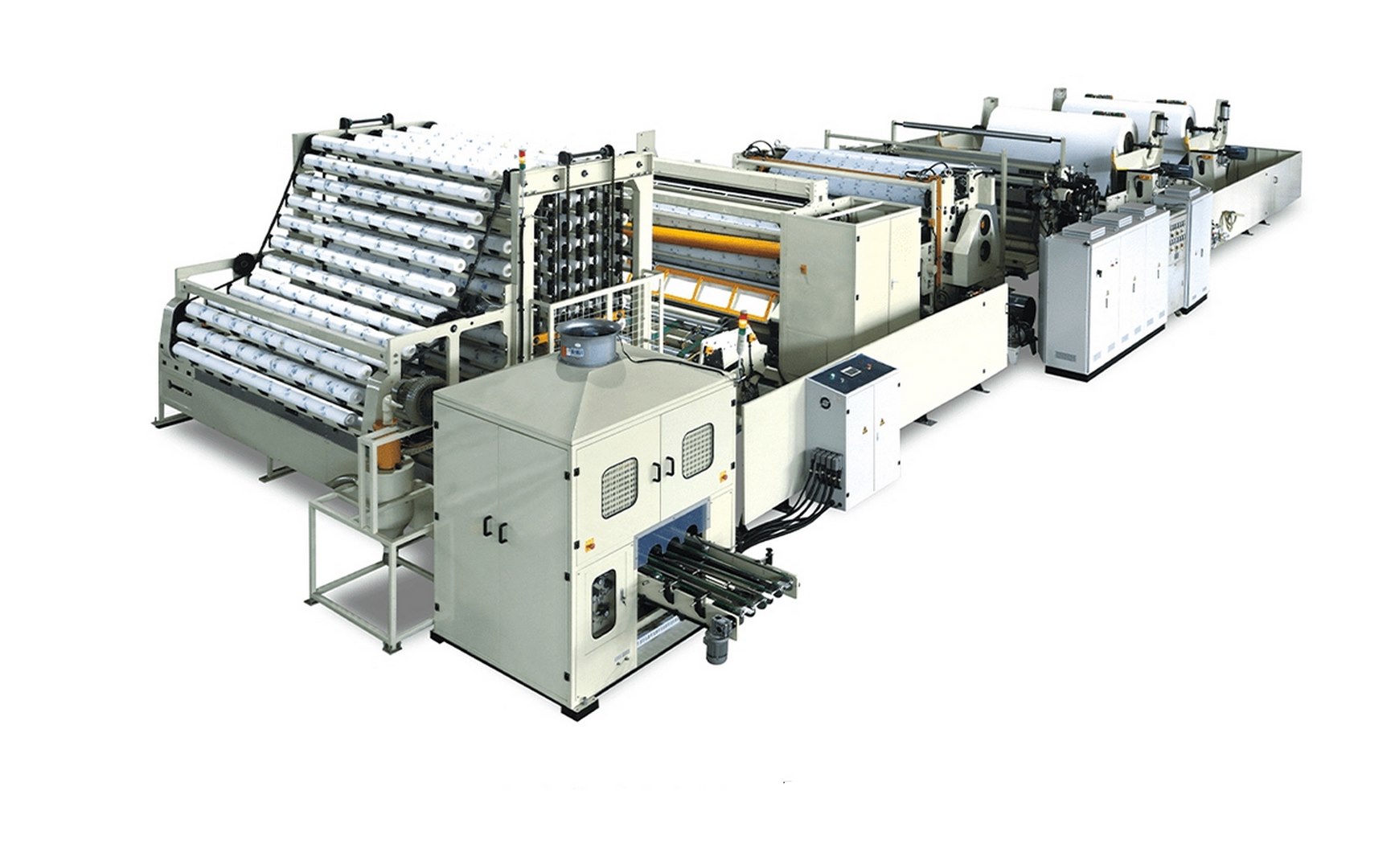
In a toilet paper production line, you’ll find several key components that guarantee efficiency and quality. These include the toilet paper rewinding machine, log saw or cutting machine, core making and feeding equipment, and packaging equipment. Each element plays an essential role in transforming raw materials into finished products ready for distribution. The automatic toilet roll rewinding machine is critical in preserving the quality of tissue from parent machines.
Toilet Paper Rewinding Machine
When considering the essential components of a toilet paper production line, the rewinding machine plays a significant role in transforming jumbo rolls into market-ready products. This core machine efficiently handles several key functions:
Jumbo Roll Unwinding: It precisely unwinds the jumbo rolls to maintain quality.
Perforation: The rewinding machine creates perforations for user convenience.
Roll Diameter Control: It guarantees consistency in roll diameter for uniformity.
Sheet Length and Ply Configuration: You can customize sheet lengths and ply configurations, including core and coreless options.
Additionally, you can choose embossing options to enhance product appeal. Investing in a reliable toilet paper rewinding machine is vital for an effective automatic toilet paper production line, allowing you to maintain quality and meet market demands. Moreover, understanding the core making machines involved in the process can further streamline production efficiency.
Toilet Paper Log Saw or Cutting Machine
While selecting a cutting machine for your toilet paper production line, you’ll encounter two primary options: basic/manual cutting systems and automatic log saws. Basic systems require manual operation and may lead to inconsistent cutting, while automatic log saws deliver precision and efficiency, considerably enhancing your production rate. It’s essential that the cutting speed matches the rewinder output to maintain a seamless workflow. Choosing the right toilet paper manufacturing equipment impacts overall efficiency and product quality. Additionally, investing in high-performance features such as energy-efficient models can further enhance productivity and sustainability.
Feature
Basic Cutting
Automatic Log Saw
Speed
Slower, manual operation
Fast, automated operation
Precision
Variable
Consistent
Labor Requirement
High
Low
Invest wisely in your tissue converting machine for ideal results.
Toilet Paper Core Making and Core Feeding Equipment
Toilet paper production lines necessitate effective core making and feeding equipment to guarantee seamless operation and product consistency. As a toilet paper machine manufacturer, you’ll want to evaluate these essential components for your factory setup:
Paper Core Making Machines: Produce cores in various sizes tailored to your specific needs.
Automatic Core Feeders: Streamline the feeding process, reducing manual labor and enhancing efficiency.
Core Storage Systems: Maintain an organized inventory of cores, facilitating quick access and reducing downtime.
Pre-Made Cores: Smaller manufacturers may opt for this cost-effective solution, bypassing the need for core-making machinery. Additionally, investing in high-speed operation equipment can significantly improve production efficiency.
Toilet Paper Packaging Equipment
Effective core making and feeding systems set the stage for the next critical phase: packaging. A reliable toilet paper packaging machine is essential for efficient jumbo roll tissue converting. Common downstream options include single-roll packaging, which caters to individual consumer needs; multi-roll packaging for bulk sales; bag packing for retail convenience; bundling for promotional offers; and case packing for distribution efficiency. Each method has distinct advantages, but your packaging requirements can greatly affect the overall production line configuration. By selecting the appropriate packaging solutions, you gain control over your operational workflow, ensuring ideal throughput and meeting market demands. Investing in the right equipment now will streamline your processes and enhance your product’s marketability. Additionally, understanding the differences between flow wrap and pillow pack machines can help you make a more informed decision on your packaging equipment.
What Factors Affect Toilet Paper Production Line Cost?
When considering the cost of a toilet paper production line, several key factors come into play. You need to evaluate production capacity and machine speed, as these directly influence operational efficiency and throughput. Additionally, the machine’s working width, level of automation, and specific requirements for embossing and lamination will greatly impact your overall investment. Furthermore, understanding the differences between toilet rolls and jumbo rolls can help you make a more informed decision on the type of converting line that best suits your needs.
While evaluating the cost of a toilet paper production line, it’s essential to take into account how production capacity and machine speed directly influence expenses. Higher output typically necessitates more advanced equipment, as it guarantees efficiency and reliability. Key factors include:
Rewinding Speed: Faster speeds increase production but require precision machinery.
Logs Per Minute: More logs lead to higher throughput, demanding robust systems.
Rolls Per Minute: This metric directly correlates with daily output capabilities.
Working Hours Per Day: Extended hours amplify production needs and equipment strain. Additionally, investing in high precision cutting technology can significantly enhance overall production efficiency and product quality.
Machine Working Width
Machine working width considerably impacts the overall cost of a toilet paper production line. A wider machine often increases production capacity, allowing you to create larger jumbo rolls. However, this also means a larger machine size, which can consume more factory space and complicate your facility layout. Additionally, wider machines typically require higher power inputs and may demand more robust equipment construction to handle the added stress. It’s essential to note that wider isn’t automatically better; you’ll want to align the width with your production goals and warehouse capabilities. Balancing these factors guarantees you invest wisely, controlling both your operational efficiency and cost-effectiveness without unnecessary expenditure on equipment that exceeds your needs. Furthermore, the design speed of the machine also plays a crucial role in determining the overall efficiency and cost-effectiveness of the production line.
Automation Level
Although the automation level of a toilet paper production line greatly influences operational efficiency, it also affects the initial investment cost. Higher automation can considerably reduce manual handling, but it requires a larger upfront financial commitment. Here are four factors to take into account:
Manual Lines: Low cost but high labor dependency, leading to inefficiencies.
Semi-Automatic Lines: Moderate investment; some automation reduces labor but still requires manual intervention.
Automatic Lines: Higher cost, minimizing manual handling and improving speed.
Fully Integrated Production Lines: Maximum investment; fully automated with minimal human input, offering the highest efficiency and consistency.
Investing in automation is essential for long-term operational control, balancing initial costs against future savings and production quality. Furthermore, the CJ-C Series provides a fully automated production process that enhances productivity while ensuring low maintenance and reduced labor costs.
Finished Toilet Roll Specifications
Finished toilet roll specifications play a pivotal role in shaping the configuration of a toilet paper production line, directly influencing both cost and efficiency. The number of plies—ply to 4-ply—affects machine design, as thicker rolls require more robust equipment. Roll diameter and width are critical; larger rolls may necessitate additional handling systems. Core diameter choices impact core winding processes, while coreless rolls demand specialized machinery. Sheet length and sheets per roll dictate cutting capabilities, influencing speed and precision. Roll firmness and perforation requirements further determine the complexity of the production line. Each specification you choose not only impacts initial costs but also operational efficiency, making it essential to align your production capabilities with your desired product outcomes. Additionally, understanding production capacity and speed can help optimize the production line for your specific requirements.
Embossing and Lamination Requirements
When evaluating the embossing and lamination requirements for your toilet paper production line, it is crucial to recognize how these factors can greatly affect overall costs. Premium tissue products often require additional equipment to achieve desired quality and aesthetics. Here are key factors to reflect upon:
Type of Embossing: Edge, full, steel-to-rubber, and decorative embossing each have unique machinery and maintenance needs.
Lamination Techniques: Glue lamination requires specialized applicators and drying systems for best results.
Production Speed: Higher speed machines may necessitate advanced technology for consistent quality.
Material Compatibility: Different substrates may require specific settings or equipment adjustments to maintain quality. Additionally, the use of precision tissue embossing can significantly enhance the overall product quality by creating three-dimensional textures that improve absorbency and aesthetic appeal.
Packaging Format
Understanding how packaging format impacts your toilet paper production line cost is essential, as the choice between retail packs and bulk or wholesale packaging can greatly alter the required equipment and processes. Retail packaging often necessitates additional machinery for individual roll wrapping, labeling, and boxing, which can escalate initial investments and operational costs. In contrast, bulk packaging typically streamlines the process, requiring simpler, less costly configurations for larger quantities, but may limit market reach. The downstream equipment must align with your chosen format, influencing not only the cost but also production efficiency and flexibility. Additionally, factors such as operational efficiency can significantly affect the overall production line cost and its scalability. By clearly defining your packaging strategy, you can optimize your production line to meet market demands while maintaining cost control.
Customization Requirements
Choosing the right packaging format sets the stage for customization requirements that greatly influence your toilet paper production line costs. Customization isn’t just about aesthetics; it directly impacts production efficiency and integration. Here are key factors to take into account:
Unusual toilet roll sizes - Custom dimensions can complicate machinery, increasing costs.
Special embossing patterns - Unique designs require specific tooling and setup.
Specific packaging formats - Alterations in packaging necessitate adjustments in equipment.
Limited factory space - Space constraints may limit machine options, affecting your design choices.
Additionally, assess the need for integration with existing machines and compliance with local electrical standards. Each decision you make will influence the overall cost and efficiency of your production line. Furthermore, selecting advanced automation technology can significantly enhance production speed and accuracy, impacting your overall investment.
Semi-Automatic vs Fully Automatic Toilet Paper Production Lines
When considering a toilet paper production line, you’ll need to evaluate whether a semi-automatic or fully automatic setup fits your operational needs. A semi-automatic line may be more suitable for smaller production volumes or limited budgets, while a fully automatic line can greatly enhance efficiency and output for larger-scale operations. Understanding these distinctions is essential for making an informed investment decision. Additionally, a fully automatic line often incorporates high-precision slitting technology, ensuring consistent cut quality and minimizing waste during production.
Factor
Semi-Automatic Toilet Paper Production Line
Fully Automatic Toilet Paper Production Line
Initial Investment
Lower
Higher
Automation Level
Partial automation with manual processes
Highly automated from converting to packaging
Labor Requirement
More operators required
Fewer operators required
Production Capacity
Suitable for low to medium output
Suitable for medium to high output
Production Speed
Moderate
Higher and more consistent
Material Handling
More manual transferring between machines
Automated conveying and product transfer
Cutting Process
Manual or semi-automatic cutting may be used
Automatic log saw integrated with the line
Packaging
Manual or semi-automatic packaging
Automatic packing and bundling available
Production Consistency
More dependent on operator skill
Greater consistency through automated control
Factory Space
Generally requires less equipment, but manual handling space is needed
Larger equipment footprint and planned line layout required
Maintenance
Simpler equipment and maintenance
More sophisticated mechanical and control systems
Scalability
Can add equipment as production grows
Better suited to planned high-volume expansion
Best Suited For
Startups, smaller factories, and lower production volumes
Established manufacturers and high-volume tissue factories
When Does a Semi-Automatic Line Make Sense?
How can a semi-automatic toilet paper production line be the right fit for your operation? This option is particularly advantageous if you meet specific criteria:
New Manufacturers: You’re just starting out and need a manageable system.
Smaller Production Volumes: Your output requirements are modest, allowing for flexibility.
Limited Initial Investment: You prefer lower upfront costs while establishing your business.
Low Labor-Cost Markets: You can efficiently utilize the available workforce without high automation costs.
In these scenarios, a semi-automatic line offers greater control over production processes, allowing you to adapt and scale as needed. It strikes a balance between efficiency and investment, making it an ideal choice for factories entering the tissue business. Additionally, investing in energy efficiency features can enhance long-term operational sustainability and reduce costs.
When Is a Fully Automatic Line Worth Considering?
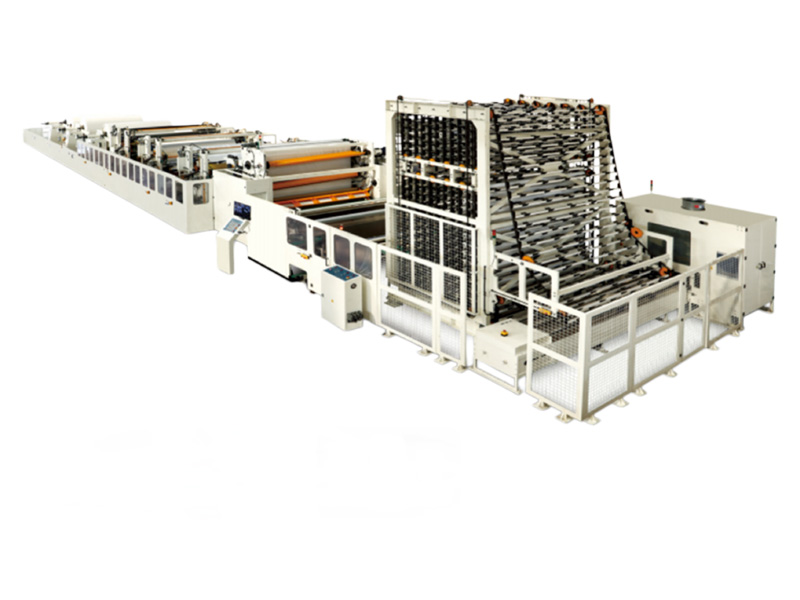
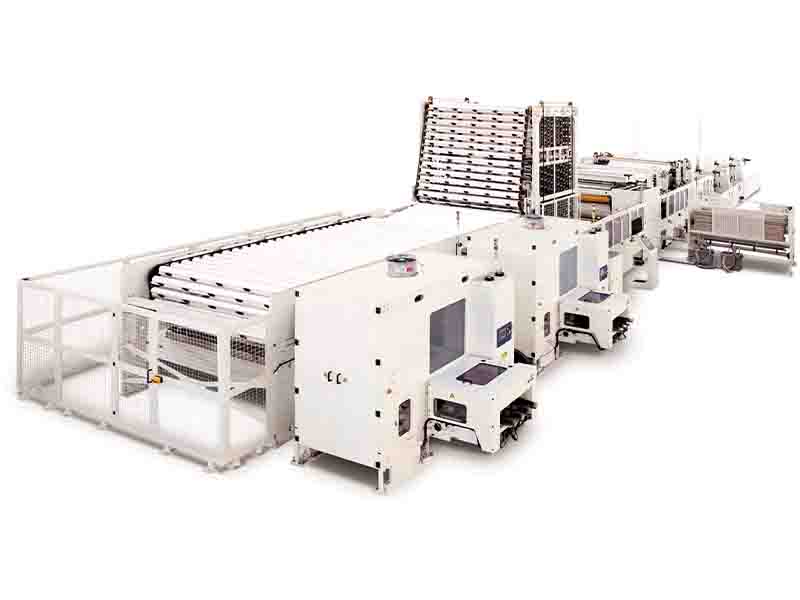
For established tissue manufacturers, a fully automatic toilet paper production line can greatly enhance operational efficiency and output. If your facility faces higher output requirements from supermarkets and distributors or if you’re contending with rising local labor costs, this investment is vital. Fully automatic lines reduce labor dependency, facilitating continuous production and minimizing downtime. If you’re planning for long-term expansion, these systems offer scalability, allowing you to adapt to increasing demand without compromising quality. Furthermore, the automation guarantees consistency in product quality, an essential factor for maintaining brand reputation. To sum up, if your operations demand high efficiency, reduced labor costs, and the capability for future growth, a fully automatic line is worth considering. Additionally, the ZQ-III Series is designed to maximize productivity and streamline workflow, making it an ideal choice for manufacturers aiming to meet industry demands.
Why the Cheapest Toilet Paper Machine May Not Be the Lowest-Cost Solution
Although it may seem tempting to choose the cheapest toilet paper machine based solely on its upfront price, doing so can lead to higher long-term costs and operational inefficiencies. Comparing quotations requires an extensive evaluation of several key factors:
Choosing the cheapest toilet paper machine can incur higher long-term costs and inefficiencies; careful evaluation is essential.
Included Machines: What’s actually part of the package?
Automation: Does it enhance efficiency or add complexity?
Production Speed: Is the output rate aligned with your needs?
Build Quality: Will it withstand the rigors of continuous operation?
Additionally, understanding the converting process stages is crucial for making an informed decision about the right machinery.
Don’t Forget the Costs Outside the Production Machinery
When planning your toilet paper production line, it’s essential to account for costs beyond just the machinery. Shipping and transportation fees, import duties, and taxes can greatly impact your budget. Additionally, expenses related to factory preparation, installation, commissioning, and ongoing maintenance will shape your overall financial strategy. Moreover, understanding logistics and transportation can help you ensure timely delivery and minimize unexpected costs.
Shipping and Transportation
Shipping and transportation costs play an essential role in your overall toilet paper production line investment, especially since factors like machine dimensions, weight, container requirements, and destination greatly influence these expenses. To maintain control over your budget, consider the following:
Container Requirements: Different shipping methods (e.g., FCL vs. LCL) come with varied costs, depending on your needs.
Destination: Remote locations may face additional surcharges or longer transit times.
Understanding these factors guarantees you’re not caught off guard by unexpected shipping expenses, allowing you to make informed decisions throughout your investment process.
Import Duties and Taxes
Import duties and taxes greatly impact the total cost of acquiring a toilet paper production line. These costs vary considerably based on your destination country and can affect your overall budget. Understanding these expenses is essential for maintaining control over your investment.
Category
Description
Impact on Budget
Import Duties
Taxes levied on imported machinery
Increases total cost
Value-Added Tax
Tax applied to goods and services
Reduces profit margins
Shipping Fees
Costs associated with international transportation
Adds to overall expenses
Factory Preparation
After accounting for import duties and taxes, your next focus should be on factory preparation, which encompasses various costs beyond just the production machinery. Here are key elements you’ll need to take into account:
Electrical Supply: Make certain your facility can handle the required power load for the machinery.
Compressed Air: Evaluate your need for a reliable compressed air system to support operations.
Machine Foundations: Invest in proper foundations to stabilize heavy machinery and prevent vibrations.
Space Considerations: Allocate sufficient area for raw material storage, finished product storage, and internal material handling to optimize workflow.
These preparations are vital to guarantee your production line operates efficiently and effectively while minimizing disruptions. Additionally, understanding the paper converting process can help you plan for the specific requirements of your production line.
Installation and Commissioning
When considering the overall cost of your toilet paper production line, it’s vital to confirm whether installation, commissioning, and operator training are included in your machinery purchase. These services can greatly impact your budget, as they often come with additional fees. Installation guarantees the machinery is set up correctly, while commissioning verifies that it operates at peak efficiency. Operator training is essential for maximizing productivity and minimizing errors. If these services aren’t included, you may face unexpected expenses, delay your operations, or compromise quality control. By clarifying these details upfront, you maintain better control over your investment and facilitate a smoother shift into production, ultimately safeguarding your bottom line. Additionally, professional training can enhance operator skills and contribute to better machinery handling, further optimizing production efficiency.
Spare Parts and Maintenance
While you may focus on the initial costs of the toilet paper production machinery, it’s essential not to overlook the ongoing expenses associated with spare parts and maintenance. A well-planned spare-parts package can notably reduce downtime and enhance productivity. Consider including:
Wear parts These components guarantee your machinery runs smoothly over time.
Cutting blades Essential for achieving precise cuts in your product.
Bearings Critical for maintaining the mechanical integrity of your production line.
Sensors Key for monitoring performance and preventing issues before they escalate.
Investing in these spare parts upfront will give you control over your operational efficiency, reduce unexpected costs, and maximize the lifespan of your production line. Additionally, understanding the importance of conversion machines in the tissue production process can help you make informed decisions about your machinery investments.
Raw Materials and Working Capital
Although many entrepreneurs focus primarily on machinery costs, it’s vital to account for raw materials and working capital, as these expenses directly impact your production capabilities. You’ll need to invest in jumbo tissue rolls, cardboard cores, glue, packaging film, plastic bags, cartons, and labels. These operational investments are essential for maintaining a continuous production flow and guaranteeing product quality. Additionally, understanding the tissue manufacturing process can help you optimize material usage and reduce waste, further enhancing your profitability.
Neglecting these costs can lead to production delays or inferior products, ultimately affecting your bottom line. Establishing a solid working capital guarantees you can consistently purchase these materials without interruption. By budgeting adequately for these important components, you can gain better control over your production process and enhance your competitive edge in the market.
How Production Capacity Changes Your Equipment Investment
When you’re evaluating equipment investment for toilet paper production, your production capacity plays an essential role. Small-scale operations require less capital and simpler machinery, while medium and high-capacity factories necessitate more advanced and costly equipment to meet demand. Understanding these differences will help you make informed decisions about your investment strategy. For instance, investing in a high production efficiency machine like the ZX Series can significantly enhance your output and profitability.
Small-Scale Toilet Paper Production
In small-scale toilet paper production, your equipment investment greatly depends on the production capacity you aim to achieve. With lower daily output, your operational needs change considerably. Here are four key factors to evaluate:
Simpler Packaging: You’ll likely invest in basic packaging solutions, which can reduce upfront costs.
Fewer Integrated Machines: Fewer machines mean lower initial investments, but you’ll face challenges in scaling production later.
Production Flexibility: Smaller setups allow for quick adjustments to meet market demands without extensive reconfiguration.
Additionally, investing in advanced features like automated packaging systems can enhance efficiency even in small-scale operations. Understanding these elements helps you make informed decisions and optimize your investment in small-scale production.
Medium-Scale Toilet Paper Factory
As you move from small-scale to medium-scale toilet paper production, your equipment investment shifts considerably due to increased production capacity. Medium-scale operations typically feature automatic rewinding and log cutting systems, which enhance efficiency and reduce labor costs. You’ll find that increased packaging automation minimizes manual handling, allowing for faster throughput and improved accuracy in packaging. The changeover to a medium-scale factory means investing in robust machinery that can handle higher volumes without compromising quality. Reduced manual transfer further streamlines your production line, enabling you to maintain tight control over your manufacturing process. This strategic investment not only boosts productivity but also aligns with your goal of optimizing operational performance and maximizing profit potential. Additionally, a strong focus on effective implementation support ensures that your transition to medium-scale production is smooth and efficient.
High-Capacity Toilet Paper Factory
While shifting to a high-capacity toilet paper factory greatly boosts production volume, it also demands a strategic reevaluation of your equipment investment. You need to evaluate several critical factors to optimize your operations:
High-Speed Rewinding: Invest in advanced rewinding machines to maximize efficiency and reduce downtime.
Automated Product Transfer: Implement automated systems for seamless log transfer, enhancing workflow.
Log Accumulation & Cutting: Choose equipment that integrates log accumulation with automatic cutting for streamlined processing.
Packaging Solutions: Prioritize automatic packaging and bundling systems, possibly incorporating palletizing for ease of distribution.
Core vs Coreless Toilet Paper Production: Does It Affect Equipment Cost?
How do core and coreless toilet paper production methods influence equipment costs? Core toilet paper requires additional equipment, such as core cutters and a dedicated core insertion system, which increases initial investment. In contrast, coreless production simplifies the process, reducing the need for this machinery and leading to lower equipment costs. However, coreless rolls necessitate specific rewinding techniques to maintain structural integrity, which can affect the design of your production line. Additionally, adjustable tension control is crucial for ensuring the quality of the final product when handling coreless rolls. Before you request a quotation, clearly specify your intended finished product. This guarantees that suppliers provide accurate estimates tailored to your production needs, affecting overall investment. Understanding these differences allows you to make informed decisions and control your budget effectively.
How Packaging Automation Affects Total Production Line Investment
Packaging often gets overlooked in discussions about total production line investment, yet it plays a pivotal role in overall efficiency and cost management. If you increase converting capacity without enhancing packaging capacity, you’ll likely face a bottleneck. Consider these packaging options:
Manual packing
Semi-automatic packing
Automatic bagging
Multi-roll packaging
Implementing packaging automation can markedly reduce product handling and labor requirements. For instance, automated case packing and palletizing streamline operations, minimizing human error and increasing throughput. By investing in advanced packaging systems, you maintain control over your production line, ensuring that each element works harmoniously. Additionally, assessing automation capabilities can lead to improved productivity and better alignment with market demands. Ultimately, prioritizing packaging automation can enhance productivity and lower long-term costs, making it a critical aspect of your total investment strategy.
Should You Buy Individual Machines or a Complete Toilet Paper Production Line?
When deciding between individual machines and a complete toilet paper production line, you must evaluate your production needs and budget constraints. Individual machines offer flexibility and the ability to upgrade specific components as required, while an integrated production line can enhance efficiency and reduce operational complexity. Considering factors like scalability, maintenance costs, and space requirements will help you make an informed decision. Additionally, investing in a complete toilet paper production line can often lead to improved overall productivity and reduced energy consumption, aligning with trends in sustainability.
Buying Individual Machines
While investing in individual machines for your toilet paper production line may seem appealing due to the lower initial commitment, it is essential to weigh the potential challenges that come with such a decision. Here are some factors to take into account:
Compatibility: Ensuring all machines work seamlessly together can be complex.
Mismatched Capacity: Different machines may produce at varying rates, leading to inefficiencies.
Additional Conveyors: You might need extra conveyor systems to connect separate machines, increasing costs.
Control Integration: Managing different suppliers and their technologies can complicate operations.
Ultimately, while individual machines allow for gradual expansion and leveraging existing equipment, the operational complexities might outweigh the initial savings. Additionally, the integration of automated processes can significantly enhance production efficiency and product quality.
Buying an Integrated Production Line
Choosing an integrated production line for your toilet paper manufacturing can streamline operations considerably, particularly regarding matched production capacity and coordinated machine layout. An integrated system guarantees that each machine operates at peak levels, minimizing bottlenecks and maximizing throughput. Automation between processes reduces manual intervention, enhancing efficiency and lowering labor costs. Additionally, fewer product transfers mean less risk of damage and contamination, maintaining product quality. With centralized supplier support, troubleshooting and maintenance become more manageable, allowing for swift resolutions to potential issues. While an integrated line offers distinct advantages, it’s essential to evaluate your specific needs against budget constraints and production goals. Ultimately, the decision should align with your operational strategy and control preferences. Furthermore, modern systems often feature advanced control systems that enable real-time monitoring and predictive maintenance, ensuring optimal performance throughout the production process.
How to Estimate the Right Toilet Paper Production Line for Your Factory
To estimate the right toilet paper production line for your factory, start by defining your finished product specifications. Next, calculate your required production capacity based on market demand and your operational goals. Finally, assess your factory’s available space and desired level of automation to guarantee the selected line meets your needs efficiently. Additionally, consider the efficiency and high output capabilities of modern lines, such as the DCY CJ-C-2950 Automatic Facial Tissue Production Line, which can produce 1,700 tissues per minute.
Step 1 – Define Your Finished Toilet Roll
Defining your finished toilet roll is essential for guaranteeing your production line meets market demands and operational efficiency. To optimize your production, consider these critical specifications:
Ply: Determine whether you need single, double, or multiple-ply rolls for desired softness and strength.
Roll Width: Specify the width that aligns with customer preferences and packaging standards.
Diameter: Choose the appropriate roll diameter to guarantee compatibility with dispensers.
Core Diameter: Assess the core size to ensure efficient production and reduce waste. Additionally, consider incorporating features such as non-adhesive sealing technology to enhance safety and health in your product.
Step 2 – Calculate Your Required Production Capacity
Accurately calculating your required production capacity is essential for aligning your toilet paper manufacturing process with market demands. Start by establishing your daily sales target and monthly demand. Then, factor in production shifts to determine how many hours your lines will operate. Assess your planned factory utilization—ideally aiming for 80% efficiency—to avoid over- or under-production. Additionally, consider future demand growth; if you anticipate an increase, it’s wise to build extra capacity into your calculations. Using these metrics, calculate the total production output required to meet sales targets and adjust your production line specifications accordingly. This precise approach guarantees you invest in the right equipment, maximizing both profitability and operational efficiency. Incorporating flexibility in product type and size will further enhance your ability to meet diverse customer preferences.
Step 3 – Decide How Much Automation You Need
Once you’ve established your production capacity, the next step is determining the level of automation that best suits your manufacturing needs. Consider the following factors to guide your decision:
Local Labor Costs: Evaluate whether automation can reduce overall labor expenses.
Operator Availability: Assess the availability of skilled operators in your area; fewer operators may necessitate higher automation.
Production Targets: Align automation levels with your production goals—higher targets often require more automated solutions.
Product Consistency: Automation enhances consistency; if quality control is essential, prioritize automated systems.
Additionally, think about future expansion. A scalable solution can save costs and efforts as your production demands evolve. Make informed choices to maintain control over your operations. It’s also important to consider the integration of breakthrough technology as it can significantly enhance the efficiency and precision of your production line.
Step 4 – Determine Your Packaging Requirements
Understanding your packaging requirements is essential for establishing an efficient toilet paper production line, as these specifications directly influence the machinery you’ll select. Start by defining finished pack quantities—determine how many rolls you plan to package per unit. Next, consider your retail and wholesale packaging requirements, as these specifications dictate the type of packaging machinery needed. For instance, if you target supermarkets, you may require packaging that supports bulk or shelf-ready formats. Additionally, assess whether you need automated or manual packaging solutions based on your production volume. By clearly outlining these parameters, you gain control over your machinery selection, ensuring it aligns with your operational goals and market demands. Proper planning here can enhance efficiency and profitability. Notably, toilet roll converting lines are projected to be the largest market segment, driven by steady demand for toilet paper.
Step 5 – Consider Your Available Factory Space
When planning your toilet paper production line, it’s crucial to evaluate the available factory space to guarantee ideal operation. A well-organized layout promotes efficiency and minimizes downtime. Consider these key factors:
Line Layout: Confirm the production flow is logical, reducing unnecessary movement.
Material Movement: Plan for seamless transportation of raw materials to the production line.
Jumbo Roll Storage: Allocate space for storing jumbo rolls, as they’re fundamental for uninterrupted production.
Finished Product Storage: Designate adequate space for finished products, facilitating smooth distribution. Additionally, ensure your setup can accommodate equipment like the High-Speed Facial Tissue and Napkin Folding Machine, which enhances output quality and production agility.
What Information Should You Give a Toilet Paper Machine Manufacturer?
Information to Provide
Why the Manufacturer Needs It
Jumbo Roll Width
Determines the suitable working width and machine model
Jumbo Roll Diameter
Helps determine the correct unwinding system and parent roll capacity
Tissue Ply
Confirms whether the line needs to process 1-ply, 2-ply, 3-ply, 4-ply, or other configurations
Tissue Basis Weight (GSM)
Helps confirm material compatibility and appropriate machine settings
Finished Roll Width
Determines the required finished toilet roll dimensions
Finished Roll Diameter
Helps configure rewinding parameters and finished roll size
Core Diameter
Determines the appropriate core feeding and rewinding configuration
Cored or Coreless
Determines whether additional core-making or core-feeding equipment is required
Sheet Length / Perforation
Determines perforation settings and sheets per roll
Embossing Requirements
Determines whether standard, edge, full, or customized embossing systems are needed
Required Production Capacity
Helps select the appropriate machine speed and overall line configuration
Packaging Format
Determines whether single-roll, multi-roll, bag, bundle, or other packaging equipment is required
Automation Level
Helps configure a semi-automatic, automatic, or fully integrated production line
Factory Dimensions
Allows the manufacturer to recommend an efficient production line layout
Available Power Supply
Ensures motors and electrical components are compatible with local factory conditions
Destination Country
Helps confirm electrical standards, shipping requirements, documentation, and other export considerations
How to Compare Toilet Paper Production Line Quotations
To effectively compare quotations for toilet paper production lines, you must guarantee that the equipment scope is similar; otherwise, your evaluation may lead to misleading conclusions. Use this checklist:
Machine model
Working width
Designed production speed
Actual recommended operating speed
Raw material compatibility
Finished product range
Embossing configuration
Cutting system
Packaging equipment
Automation level
Electrical specifications
Installed power
Machine dimensions
Operator requirements
Spare parts
Warranty
Installation
Commissioning
Operator training
Technical support
Delivery time
Additionally, consider the high-resolution printing capabilities of the machines, as this can significantly impact the quality of your final product.
Common Mistakes When Budgeting for a Toilet Paper Factory
When budgeting for a toilet paper factory, it’s essential to avoid common pitfalls that can lead to financial strain. Many make the mistake of choosing machines solely based on price, which can compromise quality and efficiency. Additionally, not considering market demand and future growth can result in excess capacity or inadequate space, ultimately impacting your bottom line. Furthermore, understanding sustainable materials is crucial to align with consumer expectations and regulatory standards, which can affect long-term profitability.
Choosing Machines Based Only on Price
While it may be tempting to choose machines for your toilet paper factory based solely on price, doing so can lead to significant risks that undermine your production efficiency and quality. Ignoring specifications and output can have dire consequences. Consider the following:
Inconsistent Quality: Low-cost machines may not meet industry standards, resulting in subpar products.
Higher Maintenance Costs: Cheaper machinery often requires more frequent repairs, increasing long-term expenses.
Reduced Efficiency: Machines that can’t handle your production volume lead to bottlenecks and delays.
Limited Scalability: Investing in low-cost equipment hinders your ability to adapt to market demands.
Moreover, understanding machine capabilities ensures alignment with production needs and helps prevent costly mistakes in your investment.
Buying More Capacity Than the Market Requires
Choosing machines based solely on price can lead to increased financial strain in the long run, particularly when it comes to capacity. Overestimating production needs forces you to invest in additional machinery that may sit idle, escalating capital requirements without guaranteeing improved returns. This surplus capacity creates fixed costs that erode your profit margins, as you’re paying for resources that aren’t generating income. Instead of maximizing efficiency, you could inadvertently inflate operational expenses. To maintain control over your budget, carefully analyze market demand before committing to production capabilities. Aligning your capacity with realistic market needs guarantees you optimize both financial resources and operational efficiency, thereby safeguarding your investment in the competitive toilet paper industry. Additionally, partnering with a provider of integrated solutions like DCY can help you better assess your needs and avoid costly mistakes in capacity planning.
Underestimating Packaging Requirements
Packaging often becomes a bottleneck in toilet paper production due to overlooked requirements and miscalculations in budget planning. When you underestimate packaging needs, you risk delays and increased costs. To guarantee smooth operations, consider these critical factors:
Material Costs: Don’t forget to account for the expenses of packaging materials, which can fluctuate.
Equipment Compatibility: Verify your packaging machinery can handle the volume and type of packaging required.
Regulatory Compliance: Factor in any packaging regulations that could necessitate additional resources or design changes.
Storage Space: Assess your warehouse capacity for both raw materials and finished products to avoid congestion. Additionally, understanding packaging regulations can help you navigate compliance challenges effectively.
Managing these elements effectively will prevent bottlenecks and enhance overall efficiency.
Ignoring Factory Layout
Neglecting factory layout can severely impact production efficiency and increase operational costs in a toilet paper factory. A well-planned layout optimizes material flow, minimizing unnecessary movement of raw materials and finished products. If machines are poorly positioned, you’ll face bottlenecks that delay production and inflate labor costs. Ensuring accessible pathways for maintenance and operation is essential; if workers struggle to access machinery, downtime will escalate.
Poor layout can also affect safety and compliance, leading to potential penalties. To maintain control over your operations, invest time in designing an efficient layout that facilitates smooth workflows and machine accessibility. Prioritizing these factors in your budgeting will lead to long-term savings and enhanced productivity. Additionally, consider incorporating high-performance solutions offered by manufacturers like Dechangyu to further enhance operational efficiency.
Not Planning for Future Expansion
As you budget for your toilet paper factory, overlooking the need for future expansion can lead to costly adjustments down the line. It’s essential to incorporate scalability into your planning. Consider these key points:
Allocate Space: Design your facility with extra room for additional machinery or automation systems.
Infrastructure Readiness: Verify utilities like water, power, and waste management can accommodate future increases in capacity.
Flexible Equipment: Invest in machinery that allows for upgrades or modifications without complete replacement.
Scalable Workforce: Plan for training programs and staffing strategies that can expand in line with production growth. Additionally, consider how tailored solutions from specialized manufacturers can further enhance your operational efficiency.
Comparing Machine Speed Instead of Complete Line Output
When budgeting for a toilet paper factory, one critical oversight is focusing solely on individual machine speeds instead of the complete line output. Each machine’s speed may appear impressive, yet it’s vital to assess how these speeds translate into actual production capacity. A high-speed rewinder, for instance, might not compensate for slower converting or packaging machines, leading to bottlenecks that decrease overall efficiency. By prioritizing line output, you can identify the weakest link in the production chain and make informed decisions on upgrades or replacements. This holistic approach helps guarantee that your factory operates at peak efficiency, aligning with your production goals and ultimately controlling costs more effectively. Always remember: speed alone doesn’t guarantee productivity. Additionally, continuous monitoring of slitting parameters is essential for maintaining quality throughout the production process.
How Can You Reduce Toilet Paper Production Costs Over the Long Term?
To effectively reduce toilet paper production costs over the long term, you should focus on total cost of ownership rather than just the purchase price. Consider the following strategies:
Select the Correct Capacity: Certify your machinery aligns with production demands to avoid overcapacity or underutilization.
Reduce Unnecessary Product Handling: Streamline processes to minimize labor and material handling, enhancing efficiency.
Match Converting and Packaging Speeds: Synchronize these operations to prevent bottlenecks and certify smooth workflow.
Implement Preventative Maintenance: Regular maintenance can extend equipment life and prevent costly downtimes. Additionally, utilizing features like advanced calender technology can optimize production quality, further reducing costs.
Frequently Asked Questions About Toilet Paper Production Line Cost
What machines do I need to start producing toilet paper?
A basic toilet paper converting line usually requires a toilet paper rewinding machine, a cutting machine or log saw, and packaging equipment.
The exact equipment configuration depends on the type of toilet paper you plan to manufacture and your production requirements.
A standard converting process includes:
Jumbo roll unwinding
Tissue embossing and perforation
Toilet roll rewinding
Log cutting
Finished roll packaging
For higher automation levels, manufacturers may also add equipment such as automatic core feeding systems, log accumulators, conveyors, bundling machines, case packing systems, and palletizing solutions.
Before selecting equipment, buyers should define their finished product specifications, target production capacity, and required level of automation.
What affects the cost of a toilet paper production line?
The cost of a toilet paper production line depends on several factors rather than a single machine specification.
The main factors include:
Production capacity and machine speed
Jumbo roll working width
Finished toilet roll specifications
Number of plies
Embossing and lamination requirements
Automation level
Cutting and packaging configuration
Factory layout requirements
Customization needs
Installation and technical support requirements
For example, a basic converting setup with manual processes will have different requirements from a fully integrated automatic production line with continuous material transfer and automated packaging.
The best approach is to define the required production process first, then select equipment based on the actual factory needs.
Is a fully automatic toilet paper production line worth it?
A fully automatic toilet paper production line can be a valuable investment for manufacturers that require higher output, consistent quality, and reduced manual handling.
Compared with semi-automatic systems, fully automatic lines can provide advantages such as:
Reduced labor requirements
Higher production efficiency
More consistent product quality
Faster material transfer
Better connection between converting and packaging processes
Easier future expansion
However, automation level should match your business requirements.
For smaller factories with limited production demand, a semi-automatic solution may provide a more practical starting point. For large-scale manufacturers supplying distributors or retail markets, a fully automatic line may provide better long-term efficiency.
Can I start with a semi-automatic line and upgrade later?
Yes. Many tissue manufacturers begin with a semi-automatic production line and gradually add automation as production demand increases.
A typical upgrade path may include:
Adding automatic core feeding
Installing automatic log transfer systems
Upgrading to automatic log saw cutting
Adding automatic packaging equipment
Integrating conveyors and production monitoring systems
When planning the initial investment, it is important to consider future expansion possibilities. Choosing equipment that can be upgraded later may help avoid replacing the entire production line as your business grows.
How much factory space is required for a toilet paper production line?
The required factory space depends on the machine configuration, production capacity, automation level, and additional equipment included.
A complete production layout should consider space for:
Jumbo tissue roll storage
Tissue converting equipment
Finished roll transfer areas
Packaging systems
Finished product storage
Maintenance access
Operator working areas
Automatic production lines usually require a more carefully planned layout because machines, conveyors, and packaging systems need to work together efficiently.
Before purchasing equipment, manufacturers should provide their factory dimensions and production requirements so the supplier can recommend a suitable line arrangement.
How many workers are required to operate a toilet paper production line?
The number of operators depends on the automation level and production configuration.
Semi-automatic lines generally require more operators because workers may need to handle:
Material loading
Product transfer
Cutting operations
Packaging
Quality inspection
Fully automatic production lines reduce manual handling by connecting multiple processes together, allowing fewer operators to manage production.
However, operators are still required for machine monitoring, quality checks, material preparation, maintenance, and production management.
Can one production line make different toilet roll sizes?
Many modern toilet paper production lines can manufacture different roll sizes within their designed operating range.
However, the available product range depends on the machine configuration and specifications.
Factors that influence flexibility include:
Finished roll diameter
Roll width
Core size
Tissue ply
Perforation length
Embossing pattern
Packaging format
Manufacturers should provide their target product specifications before purchasing equipment to ensure the selected production line can meet future product requirements.
Does the packaging machine come with the toilet paper production line?
It depends on the supplier and the production line configuration.
Some quotations include only the converting equipment, such as the rewinder and cutting system, while others provide a complete solution including:
Individual roll packaging
Multi-roll packaging
Bundling
Conveying systems
Cartoning
Palletizing
When comparing suppliers, buyers should carefully check which machines are included and whether the packaging system matches the output capacity of the converting equipment.
How do I get an accurate toilet paper production line quotation?
To receive an accurate quotation, manufacturers should provide detailed information about their required production system.
Important information includes:
Jumbo roll specifications
Finished toilet roll size
Number of plies
Required production capacity
Embossing requirements
Packaging format
Automation expectations
Factory dimensions
Destination country
A detailed product requirement allows the manufacturer to recommend the correct machine configuration instead of providing a general estimate based only on the phrase "toilet paper machine."
Plan the Right Toilet Paper Production Line with DeChangYu
The investment required for a toilet paper production line depends on much more than the rewinder itself.
A successful production solution should consider the complete manufacturing process, including:
Production capacity
Finished roll specifications
Automation level
Cutting requirements
Packaging configuration
Factory conditions
DeChangYu provides customized toilet paper converting solutions based on each customer's production goals and factory requirements.
Our team can help configure a suitable production line according to:
Finished product specifications
Required production capacity
Automation requirements
Packaging format
Factory layout
To receive a suitable production recommendation, send DeChangYu your jumbo roll specifications, target toilet roll dimensions, required daily output, packaging requirements, and available factory space. Our team can help evaluate the appropriate toilet paper production line configuration for your business.Contact now!




 English
 Español
 العربية
 Português do Brasil
 Русский